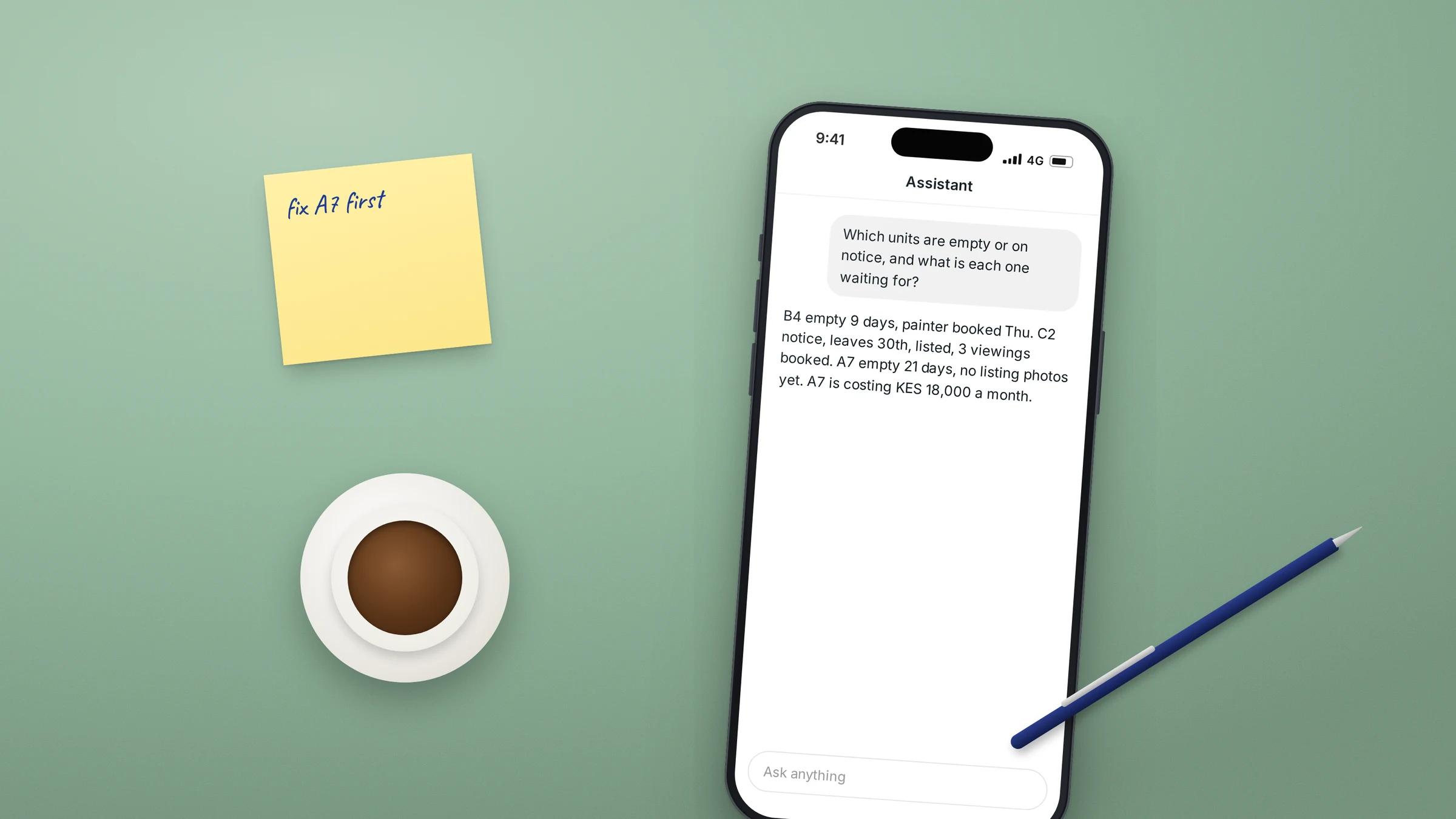
Picture a block of twenty units in Kasarani. A tenant in A7 gives notice on the first of the month. She leaves on the thirtieth. The caretaker locks the door, and for a week nothing happens, because the agent is waiting for the landlord to approve painting. The painter comes in week two. Somebody takes photos in week three. The first viewing is in week four. The new tenant moves in five weeks after the old one left.
The market did not cause that gap. The rent was fair and people were looking. The gap came from a handover that started a month too late. At KES 18,000 a month, five empty weeks is about KES 21,000 gone, from one unit, once.
Start the clock at notice, not at move-out#
The most useful change is also the simplest: treat the notice date as day one of finding the next tenant. Notice gives you thirty days or so in which the unit is still occupied, still earning, and can already be listed.
On the day notice arrives:
- Record it with the move-out date, so the unit shows as "on notice" wherever you track units, not only in someone's memory.
- Agree viewing times with the outgoing tenant. Most will accept two fixed slots a week if you ask politely and give a day's warning.
- List it with the photos you already have, the rent, the deposit and the date it is free.
- Book the work you know will be needed, such as painting or a plumber, for the days just after move-out, not "once we see it".
If you already handle lease renewals with notice dates, this is the same habit pointed the other way.
A listing that answers questions before they are asked#
A large part of the gap is back-and-forth with people who were never going to take the unit. Every enquiry that ends in "oh, I need parking" or "the deposit is how much?" costs the caretaker a trip and the unit a day.
Write the listing so it filters for you. Include:
- Rent, deposit, and any service charge or water arrangement, in KES.
- The date it is available.
- Parking, water storage, floor, and whether pets are allowed.
- Four or five clear daylight photos, including the kitchen and bathroom.
- Viewing slots ("Tuesdays and Saturdays, 10am to 1pm").
The same text goes on every platform and WhatsApp status you use. Write it once, keep it with the unit, and update it when the rent changes.
Viewings: fewer trips, faster yes#
Viewings are where most time disappears. Group them. Five people on a Saturday morning is one trip for the caretaker and a little healthy pressure for the people viewing. Ask each person three questions before you book them: when do they want to move, how many people will live there, and do they have the deposit ready. You are not being rude; you are saving everyone's morning.
After each viewing day, note who was interested and send them the application steps the same evening. Interest cools quickly. A reply on Monday to someone who viewed on Saturday often finds they signed elsewhere on Sunday.
Make the gap visible#
You cannot shorten what you cannot see. For every empty or on-notice unit, keep five dates: notice given, move-out, unit ready, first viewing, new lease signed. That is enough to answer the question that matters: where does the time go?
After three or four turnovers, the pattern is usually obvious. In the Kasarani example, it was the week waiting for paint approval. One fix followed: the landlord agreed in advance that the agent may approve painting up to a set amount without asking. That single rule took a week off every turnover in the block.
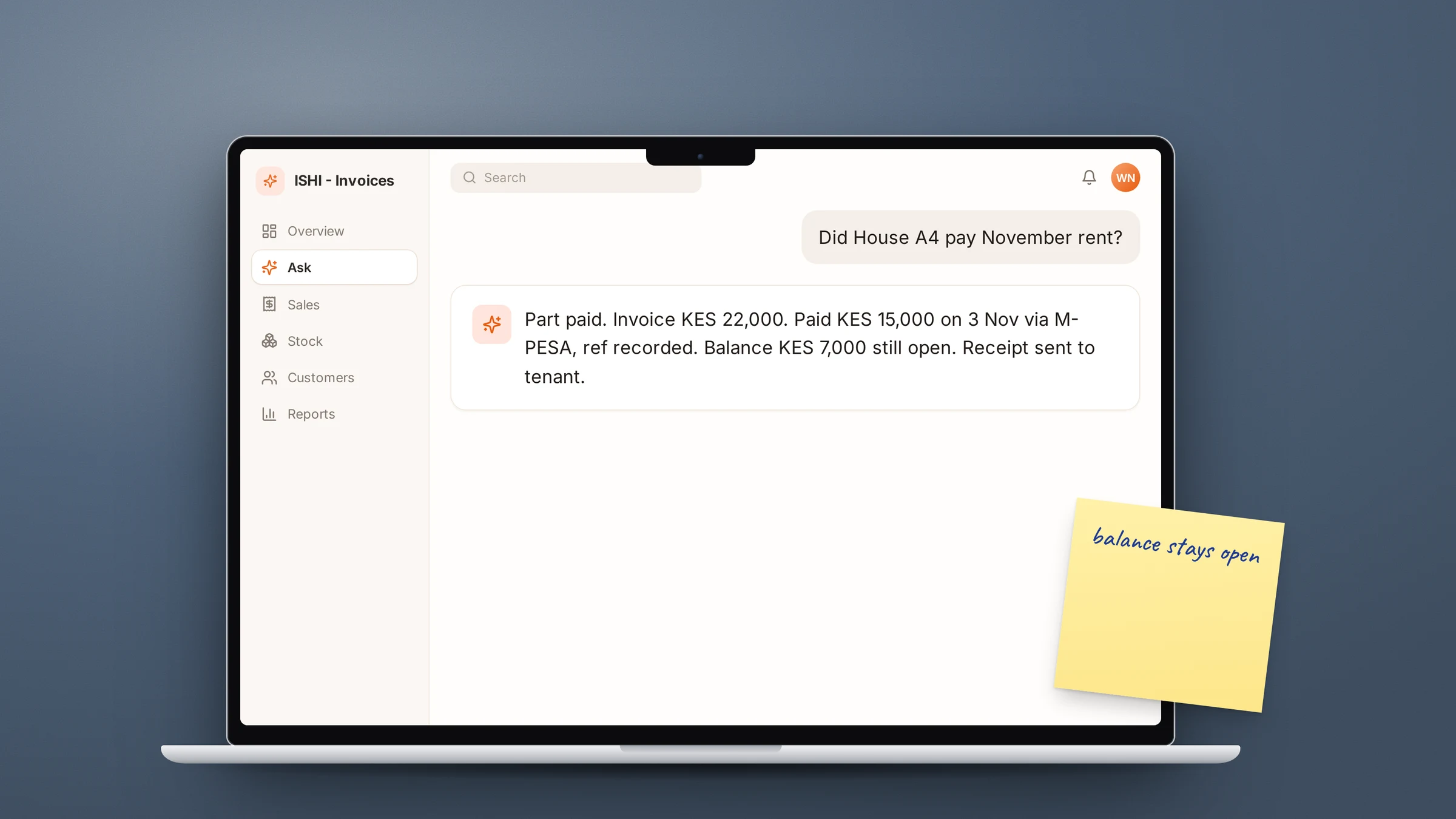
A tool such as ISHI, our tenant management system, keeps units, leases and tenant communication in one place, which makes those dates easy to keep. But a shared spreadsheet with five date columns will teach you the same lesson. Getting new tenants in cleanly matters too: see tenant onboarding that lives in one system.
What to do this week#
List every unit that is empty or on notice. For each, write the next action and who owns it. Any unit with no next action is your gap, right there. Then pick one rule you can agree in advance with your landlords, such as pre-approved painting, so the next turnover does not wait on a phone call.