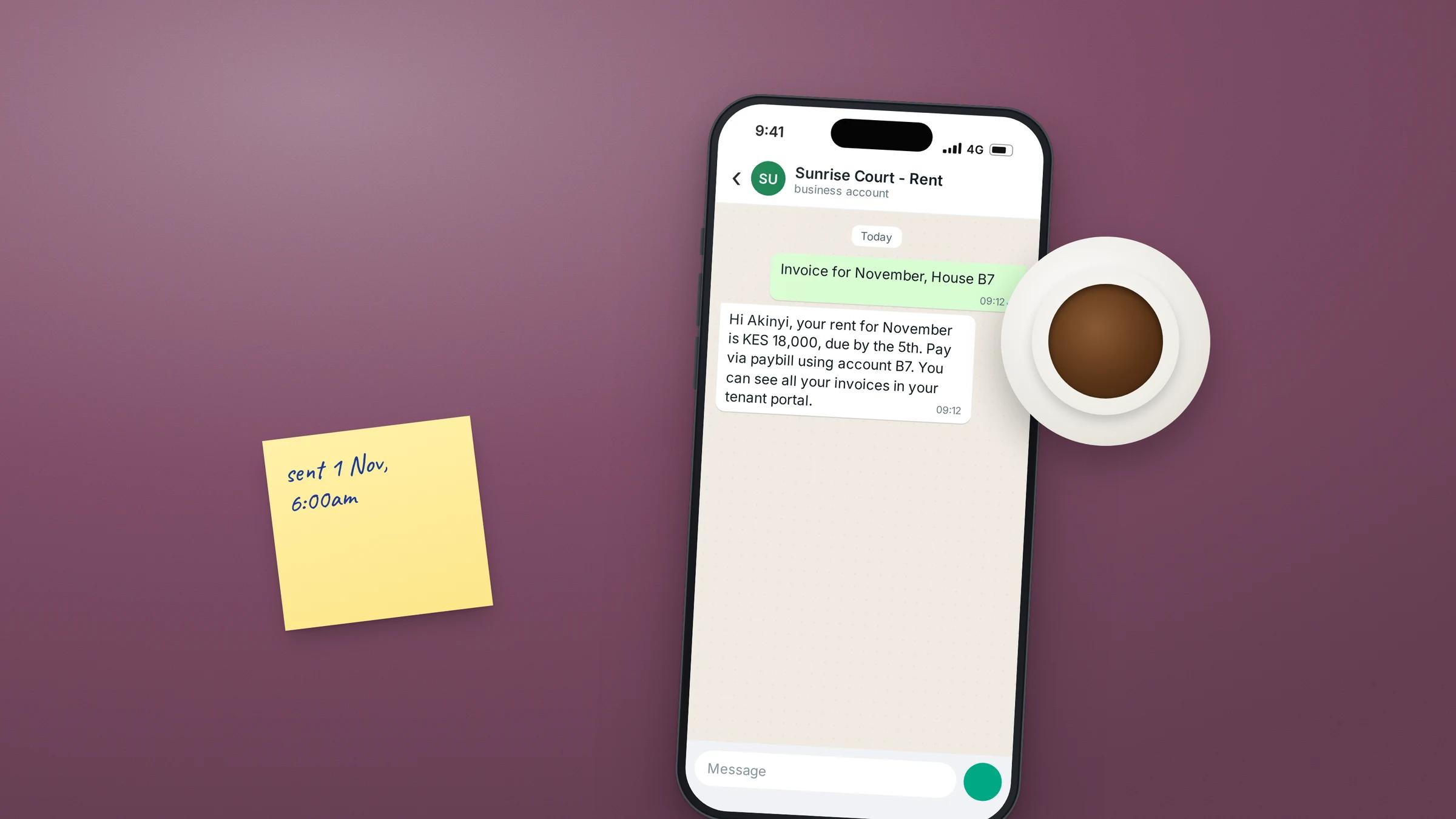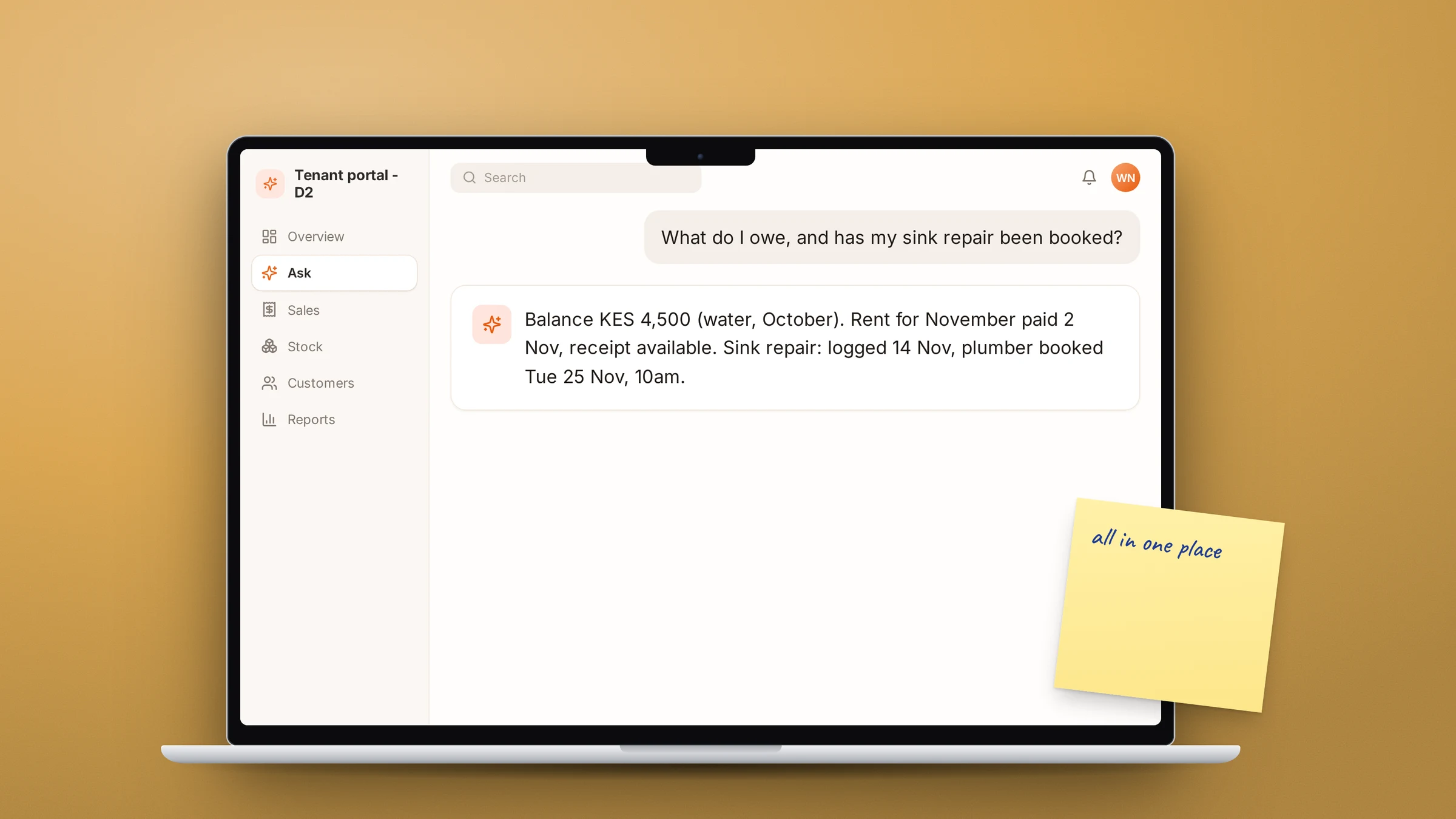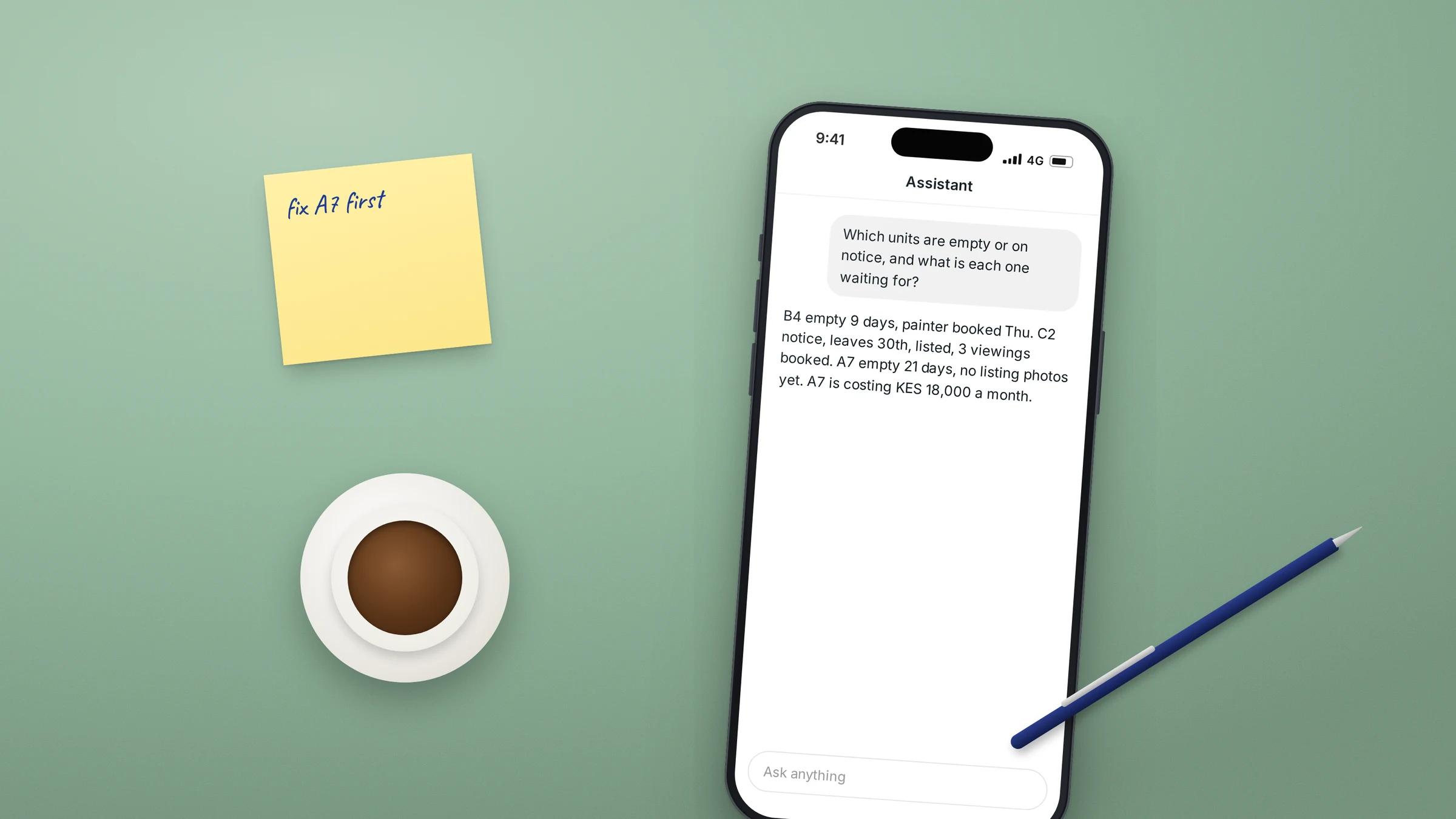
A tenant pays rent on M-PESA and sends a screenshot to the caretaker's WhatsApp. The caretaker forwards it to the office. Someone in the office opens the paybill statement, scrolls to find the amount, and tries to work out whether "M. OCHIENG" who paid KES 15,000 is the tenant in A4 or the one in C1, both of whom are called Ochieng. With 100 tenants, that is days of work every month, and it is the work that produces the angry "but I paid!" calls when a payment lands on the wrong house.
That is the problem in episode 2 of Solved in Nairobi, our video series that takes one real business problem per episode and shows the software solving it on screen. Episode 1 showed ISHI sending rent invoices on its own. Episode 2 picks up the other half: the money coming back.
What the episode shows#
The episode follows one payment from start to finish:
- The tenant opens their invoice in the ISHI tenant portal and taps Pay with M-PESA.
- An M-PESA prompt arrives on their phone. They enter their PIN.
- Seconds later, the payment is on the right invoice. The balance updates and the tenant has a receipt.
- In the back office, the invoice is already reconciled, with the M-PESA reference recorded against it.
Nobody sends a screenshot. Nobody scrolls a statement. Nobody decides which Ochieng paid.
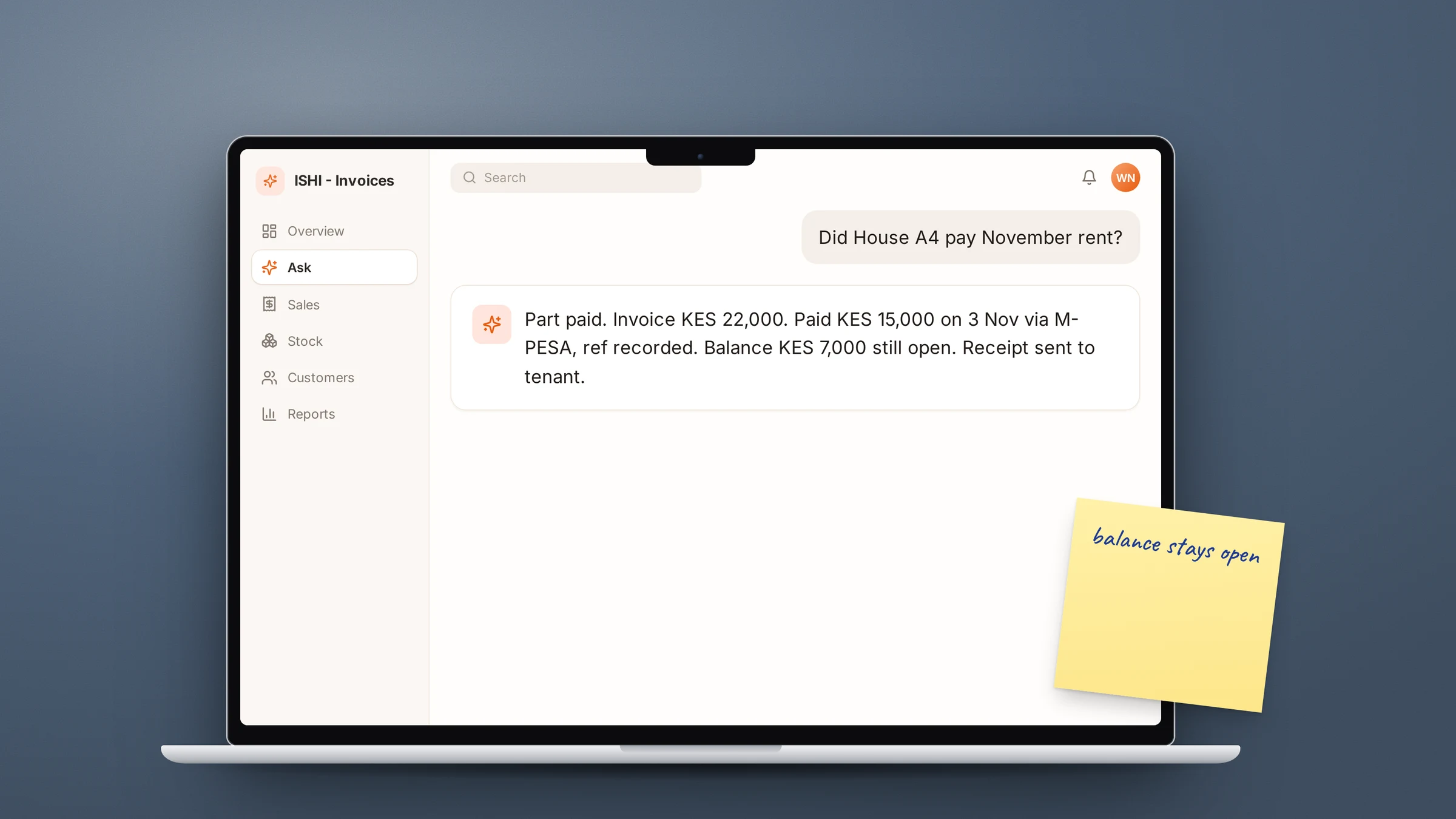
The episode also shows what happens with a part payment. If the tenant pays KES 15,000 against an invoice of KES 22,000, the payment is recorded and the balance of KES 7,000 stays open. That matters more than it sounds: the office always knows who still owes what, without anyone keeping a side list.
The design decision: build around the paybill#
The decision explained in this episode is that ISHI is built around the paybill, because that is how Kenyan tenants already pay.
It would be possible to design a rent system around a card form, a bank transfer or a new app. Each would ask tenants to change a habit, and software that asks people to change their habits usually fails. Tenants know M-PESA; they trust the PIN prompt; they keep the confirmation message. So the system fits the habit, and adds the one thing the habit was missing: a link between the payment and the invoice it was for.
The payment was never the hard part. Knowing which invoice it belonged to was.
Why matching at the source works#
Most reconciliation pain comes from trying to match a payment after the fact, from clues: an amount, a name, a time, a screenshot. Clues are ambiguous. Two tenants pay the same amount; names are spelled differently; a relative pays on someone's behalf.
Starting the payment from the invoice removes the guessing, because the system knows which invoice the prompt was for before the money moves. The M-PESA reference recorded against it gives an audit trail anyone can check against the statement later. For developers, the mechanics behind this kind of matching, including handling the same confirmation arriving twice, are in M-PESA callbacks, idempotency and matching payments.
What to take from it, with or without ISHI#
Give every tenant an account reference, and use it everywhere. Even without a portal, a paybill account number per unit (A4, C1) printed on every invoice and reminder means most payments arrive with the answer attached. Repeat it until tenants use it by habit.
Record the M-PESA code against the invoice, every time. Whether matching is automatic or by hand, the reference is what settles a dispute in thirty seconds instead of thirty minutes.
Let part payments stay part payments. Do not round a partial payment into "paid" or leave it out until the rest arrives. Record what came in and keep the balance open.
Separate the exceptions. Payments that cannot be matched, such as a wrong account number or someone paying for a neighbour, should land in one short list for one person to sort, rather than mixed into everything else.
What to do this week#
Watch episode 2 on the Solved in Nairobi page. Then take last month's paybill statement and count how many payments arrived with a usable account reference and how many needed detective work. That count tells you how much time matching costs your office today, and how much of it a clear reference on every invoice could save before you change any software.