A tenant in a Ngong Road block sends the caretaker a WhatsApp message on a Sunday evening: "How much do I owe? I think I paid September already." The caretaker does not know. He forwards it to the office. On Monday the office checks, replies on Tuesday, and the tenant, who wanted to pay on Sunday, now pays on Friday.
That small exchange is why tenant portals exist. When they work, the tenant answers their own question on Sunday, pays, and gets a receipt. When they do not, they are a link nobody opens. The difference is usually not technology. It is whether the portal does the few things tenants actually come for, and does them well.
What tenants come back for#
Ask tenants why they would open a portal and the same three answers come up again and again:
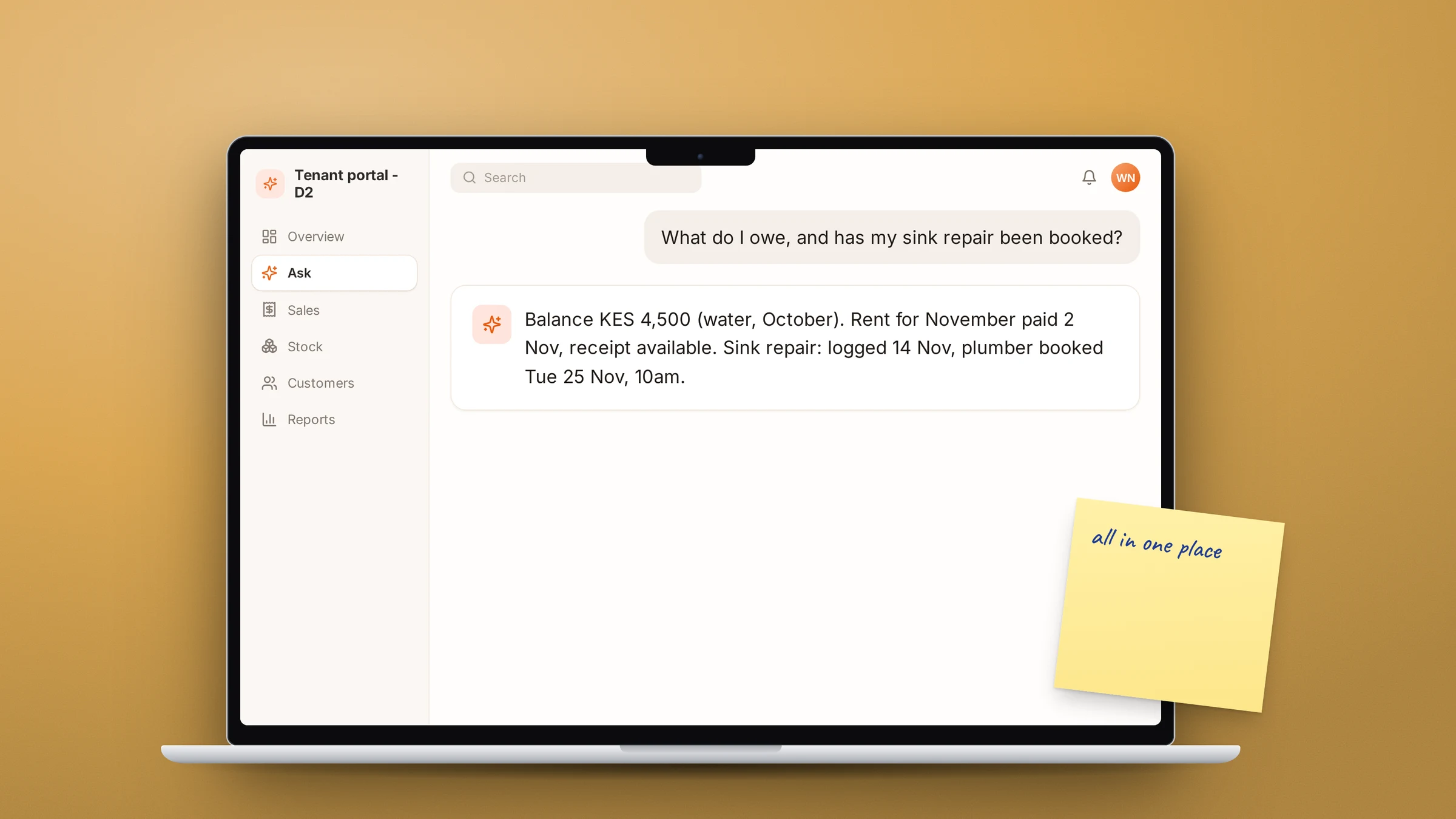
- What do I owe? The current balance, broken down: rent, water, service charge, anything overdue.
- Proof I paid. A receipt for each payment, with the date and the M-PESA reference, that they can show a spouse, an employer or the caretaker.
- Something is broken. A way to report a leak, a broken lock or a dead socket, and to see that someone has picked it up.
Everything else - community notice boards, document libraries, chat - gets used rarely. That does not mean it is useless; a copy of the lease is handy once a year. But if the three main things are weak, nobody stays long enough to find the rest.
Balances: show the working#
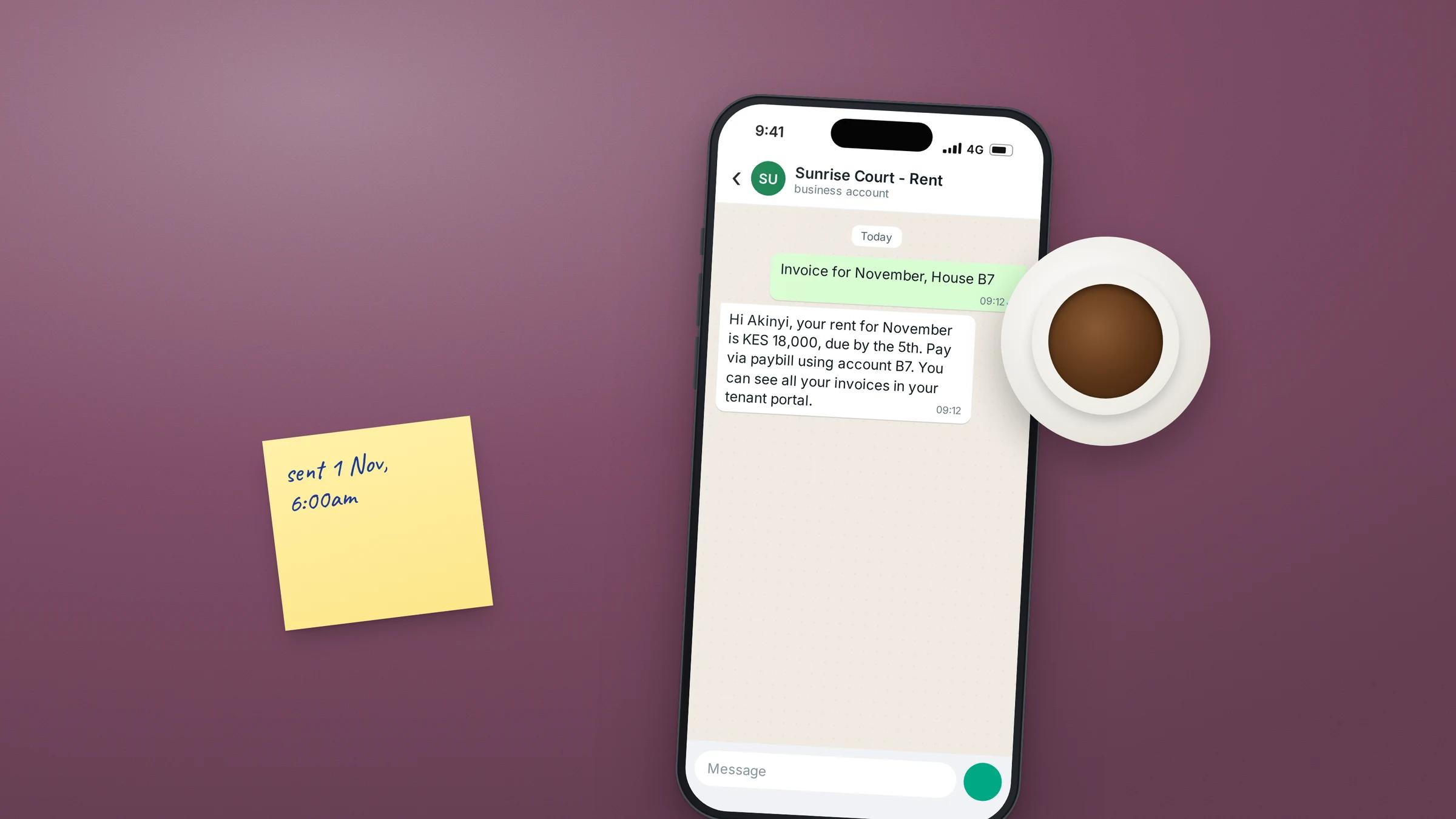
A balance on its own invites argument. "KES 4,500" makes a tenant ask "for what?". The portal should show each invoice, each payment and what is still open, so the tenant can follow the arithmetic themselves. Water charges should show the readings and the rate, not only the amount; disputes about water are almost always about trust in the number.
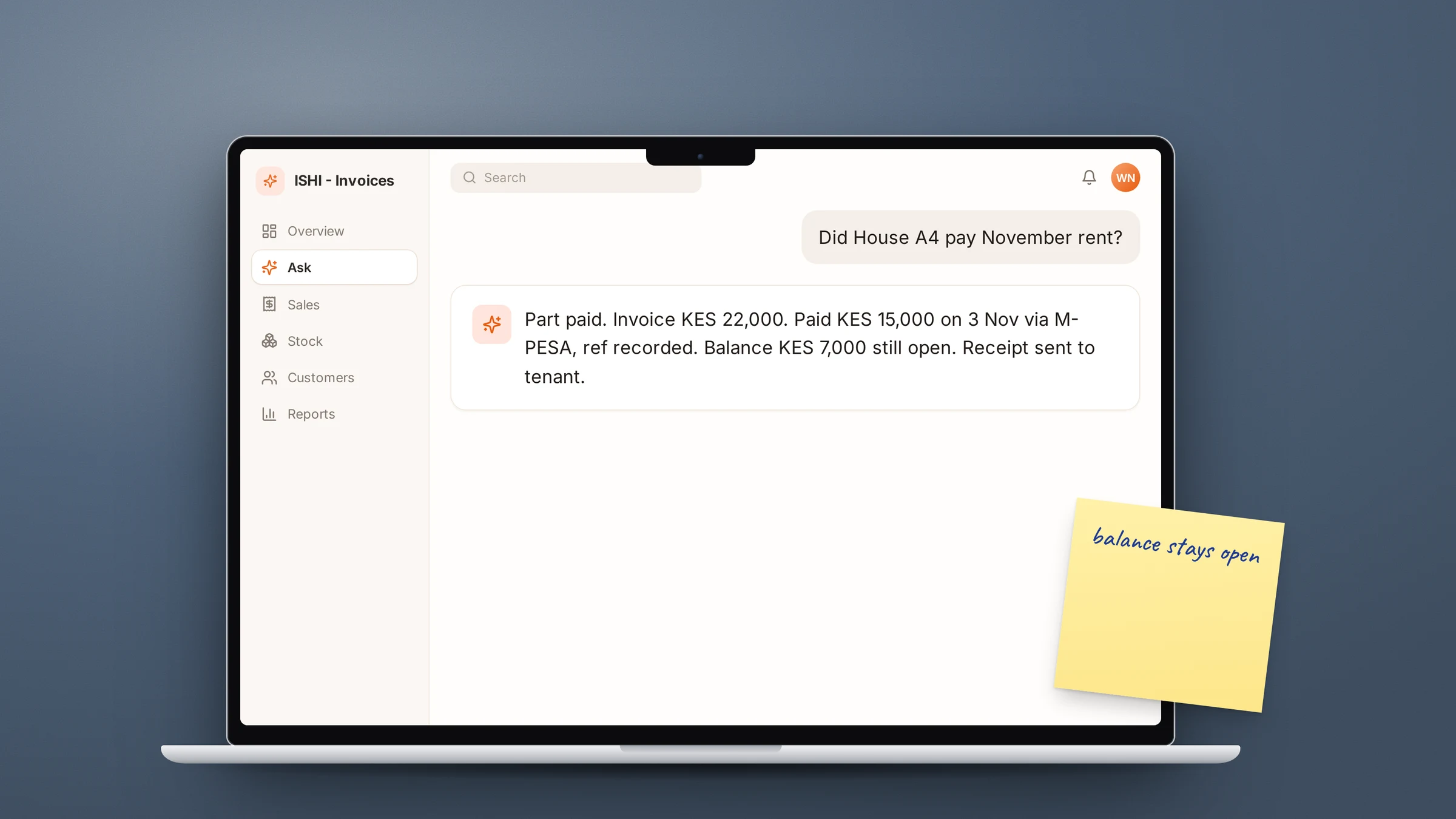
Part payments must be clear: "Invoice KES 16,000, paid KES 10,000, balance KES 6,000". A portal that shows a partly paid invoice as simply "unpaid" generates exactly the angry message it was meant to prevent.
The most useful thing beside the balance is a Pay button. In Solved in Nairobi #2 we showed how this works in ISHI: the tenant taps Pay with M-PESA on the invoice, gets the prompt on their phone, and the payment lands on that invoice with a receipt. Paying from the balance removes the "which account number?" problem entirely.
Receipts: instant, permanent, downloadable#
Tenants want receipts for reasons landlords do not always think about: proof for an employer's housing allowance, a record for a visa application, an argument with a relative over who paid. A good portal gives:
- a receipt the moment a payment is matched, without anyone in the office acting;
- every past receipt, not only the last few months;
- a download the tenant can share, showing the property, unit, period, amount and reference.
A full statement of account for the whole tenancy, downloadable on request, saves the office many "can you send me my payment history?" emails.
Requests: logged, assigned, visible#
Repair requests are the third pillar, and the one where portals most often disappoint. The tenant reports a leak, and then hears nothing, so they message the caretaker anyway.
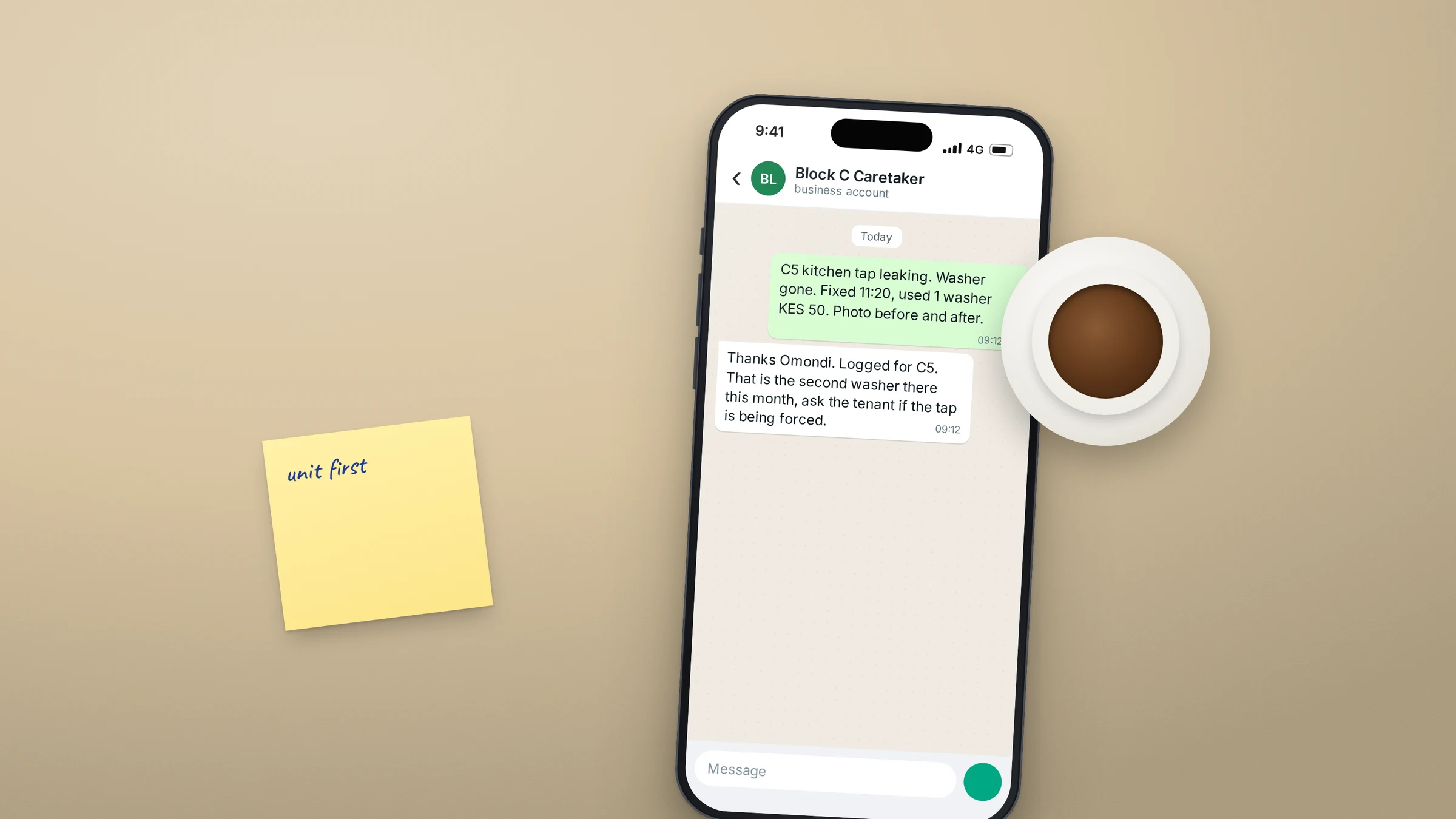
What makes requests work is visibility. The tenant describes the problem, adds a photo, and then sees each stage: received, assigned to a named person, visit booked for a date, done. Each change sends a short message to their phone. The office sees every open request with its age, and anything open longer than the agreed time is flagged.
That flow, from WhatsApp report to closed job, is covered in maintenance requests by WhatsApp. The portal is simply where the tenant can see it.
Measure what is used#
Once a portal is live, check what tenants actually open each month. If most visits go to the balance and receipts, keep improving those. If requests are rarely made through the portal, ask a few tenants why; it may be that they prefer WhatsApp, in which case the portal should show requests made on WhatsApp too.
What to do this week#
Ask five tenants, in person or by message, what they last needed to ask your office. Sort the answers into balance, receipt, repair and other. If most fall into the first three, check whether your tenants could have answered those themselves on a Sunday evening. That gap is your portal plan.