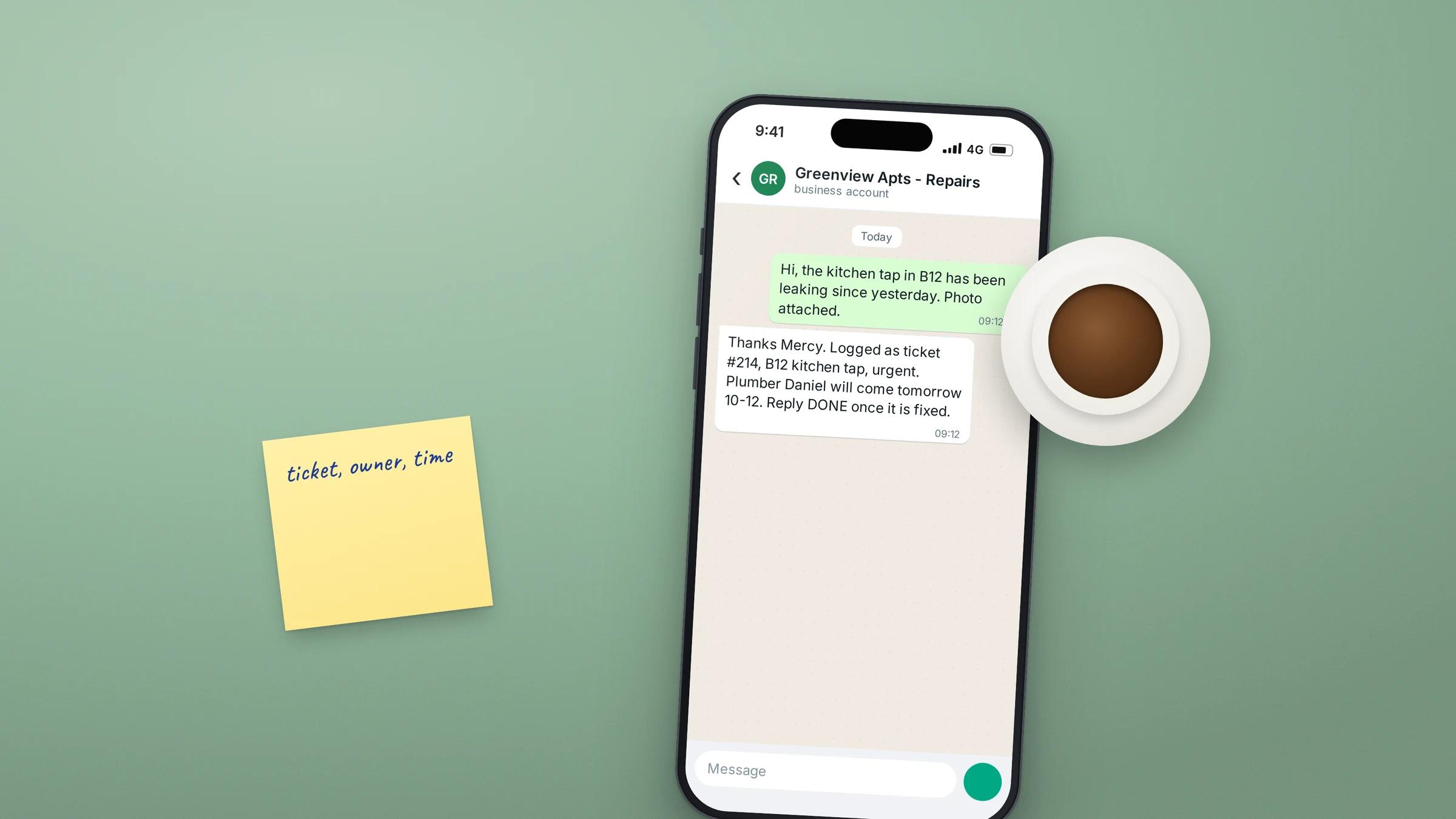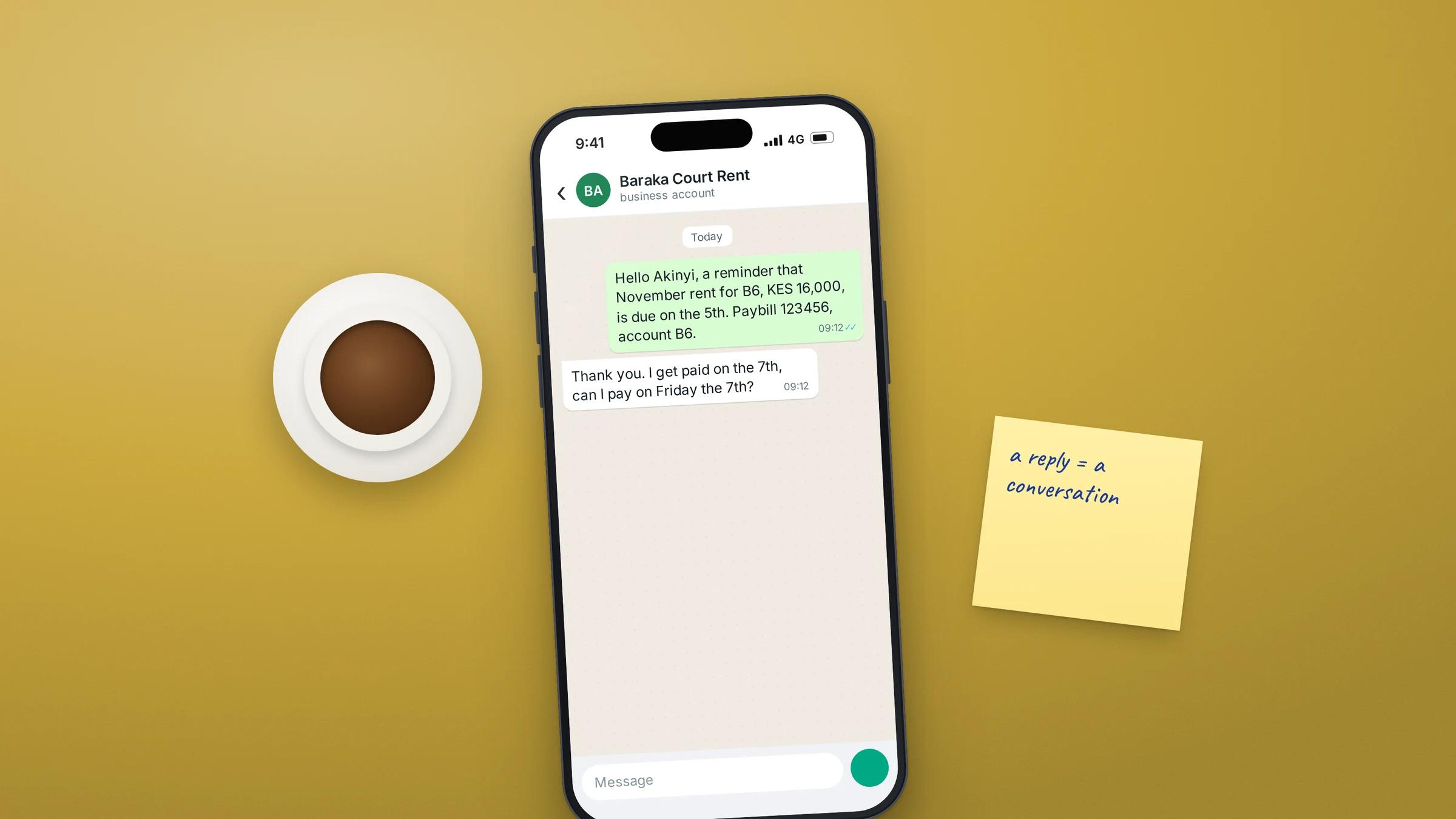
Take Omondi, an illustrative caretaker who looks after forty units in two blocks in Umoja. In a normal day he opens the gate for the water bowser, chases a tenant about rubbish, fixes a tap in C5, lets a plumber into A2, checks the water meter, and answers about thirty calls. He has a phone with WhatsApp and a cracked screen. He is good at his job.
His landlord once bought a property app and asked Omondi to log every repair in it. The app had eleven fields per job, a login that expired every week, and a dropdown for "category" that never had the right category. Omondi used it for nine days. Then he went back to telling the landlord things on the phone, and nothing was written down again.
The lesson is not that caretakers do not use tools. It is that they use tools shaped like their day. Here are the ones that work.
Rule one: start from the phone they already have#
Do not ask a caretaker to learn a new app as the first step. Most have WhatsApp, a camera and a voice note button. Those three cover almost everything a landlord or agent needs from the ground.
The test for any tool is simple: can it be done with one hand, standing up, in under a minute? A form that needs typing on a small screen fails that test. A photo with a short caption passes it.
Habit 1: every photo starts with the unit number#
The most useful single habit: every message about a unit begins with the unit number.
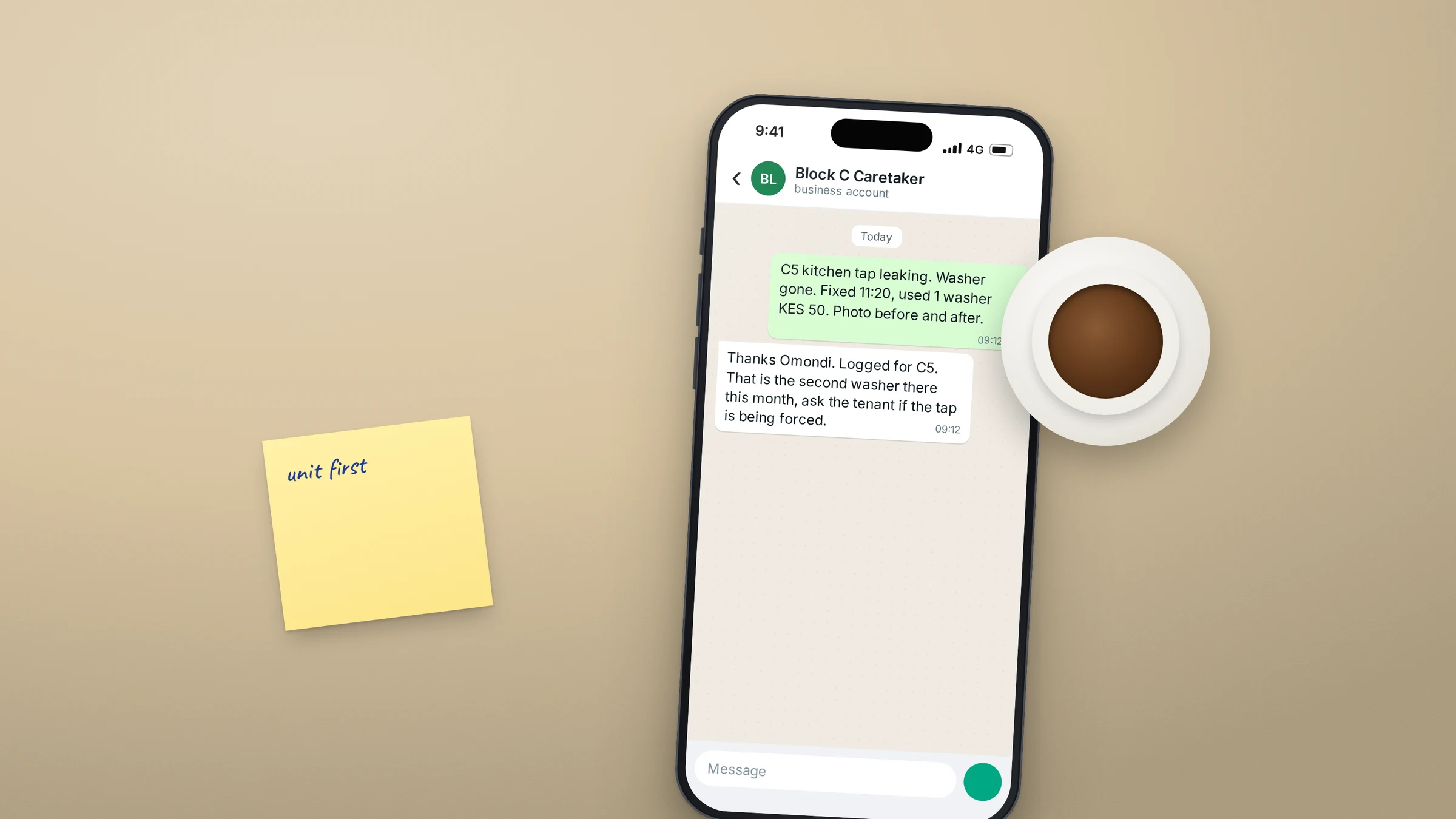
"C5 kitchen tap leaking" instead of "the tap is leaking at that lady's place". It costs two seconds and it makes every later step possible: finding all jobs in C5, seeing that the same tap has failed twice, charging the right tenant for damage.
Add a before and an after photo for every repair. Photos settle most arguments with tenants, landlords and fundis, and they are faster than writing a description.
Habit 2: one group, one format#
Create one WhatsApp group per property for operations only: the caretaker, the agent or landlord, and perhaps the regular plumber. No greetings, no forwarded videos. Pin a message with the format:
UNIT - PROBLEM - DONE OR WAITING - COST
For example:
- "A2 - toilet blocked - WAITING plumber 3pm - "
- "C5 - kitchen tap washer - DONE 11:20 - KES 50"
- "GATE - padlock broken - DONE - KES 450"
Four parts, one line. Omondi can manage that from the stairwell. Someone in the office can copy the lines into a simple sheet at the end of the week, and that sheet becomes your maintenance record. If you want to take this further, see maintenance requests by WhatsApp: log, assign, close.
Habit 3: a two-minute evening voice note#
Caretakers often know things nobody asks about: the tenant in B3 who has not been seen for a week, the crack spreading in the stairwell wall, the water pressure dropping on the top floor. These never make it into a report because there is no report.
Ask for one voice note every evening, under two minutes, covering three things:
- What was fixed today.
- What is waiting, and for what.
- Anything strange.
Voice suits caretakers who are more comfortable speaking than typing, in Swahili, English or a mix. The person who listens can write down anything important. Later, when you are ready, an assistant can turn those voice notes into a typed summary, but the habit comes first.
What makes caretakers keep going#
The tools above are easy. Keeping them going depends on what the caretaker sees in return:
- Reply to every message, even with "seen". A report into silence stops quickly.
- Pay small costs fast. If a KES 50 washer posted in the group is refunded by M-PESA the same day, the caretaker will keep posting costs. If it takes three weeks, costs will be "forgotten" or rounded up.
- Use what they send. When the landlord says "I see C5's tap went twice; let us replace it", the caretaker learns that the photos matter.
- Never use the record only to blame. If the group becomes a place to be scolded, it goes quiet.
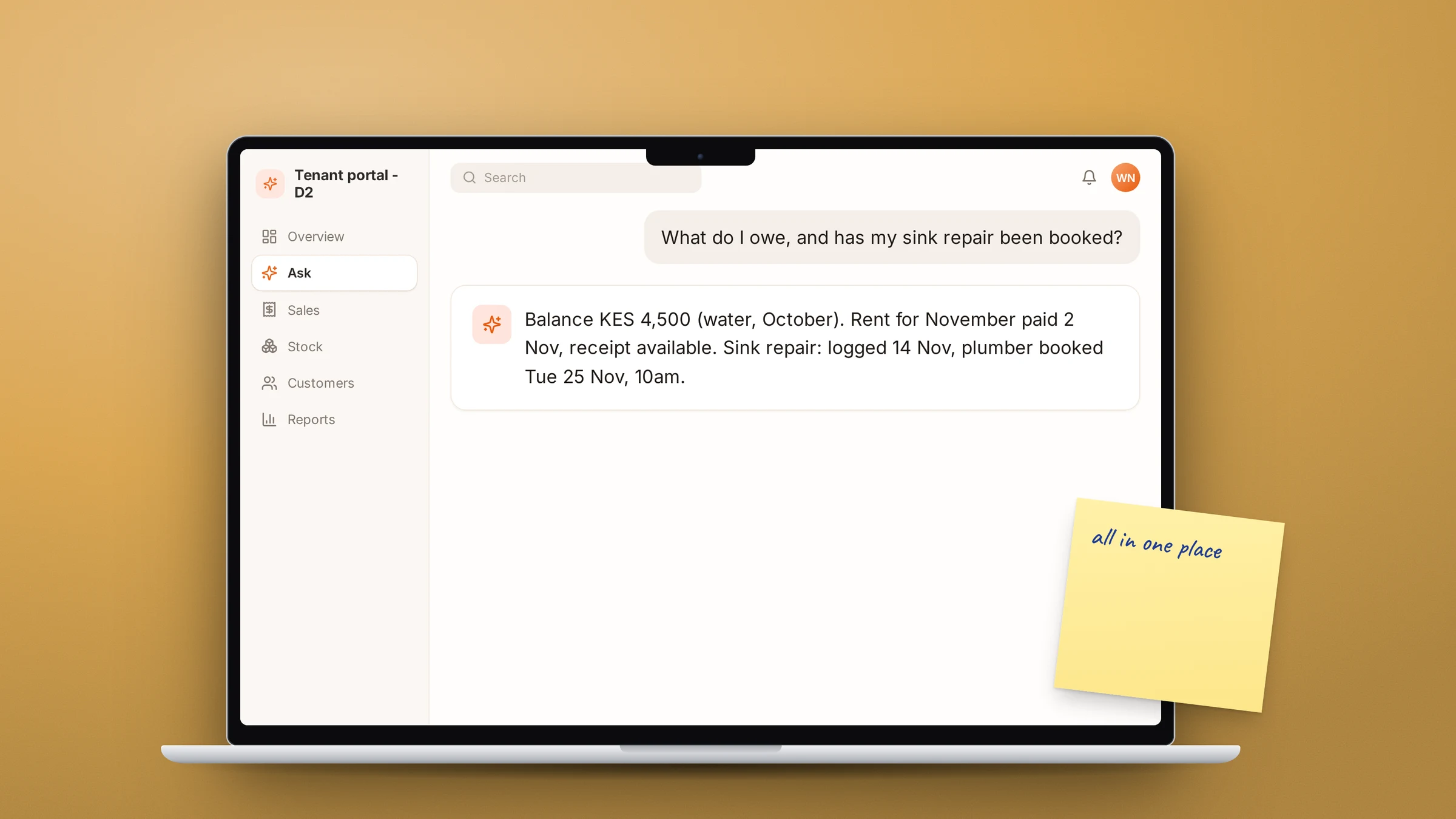
This is stage 0 work on the NGAZI ladder: getting the business written down. It is the foundation everything else stands on. A property system can come later, and when it does, it will be fed by habits the caretaker already has.
What to do this week#
Set up one operations group for one property. Pin the four-part format. Explain it to your caretaker in person, show two examples, and agree on the evening voice note. Then reply to every message for two weeks. At the end of the fortnight, copy the lines into a sheet and see what you learn.