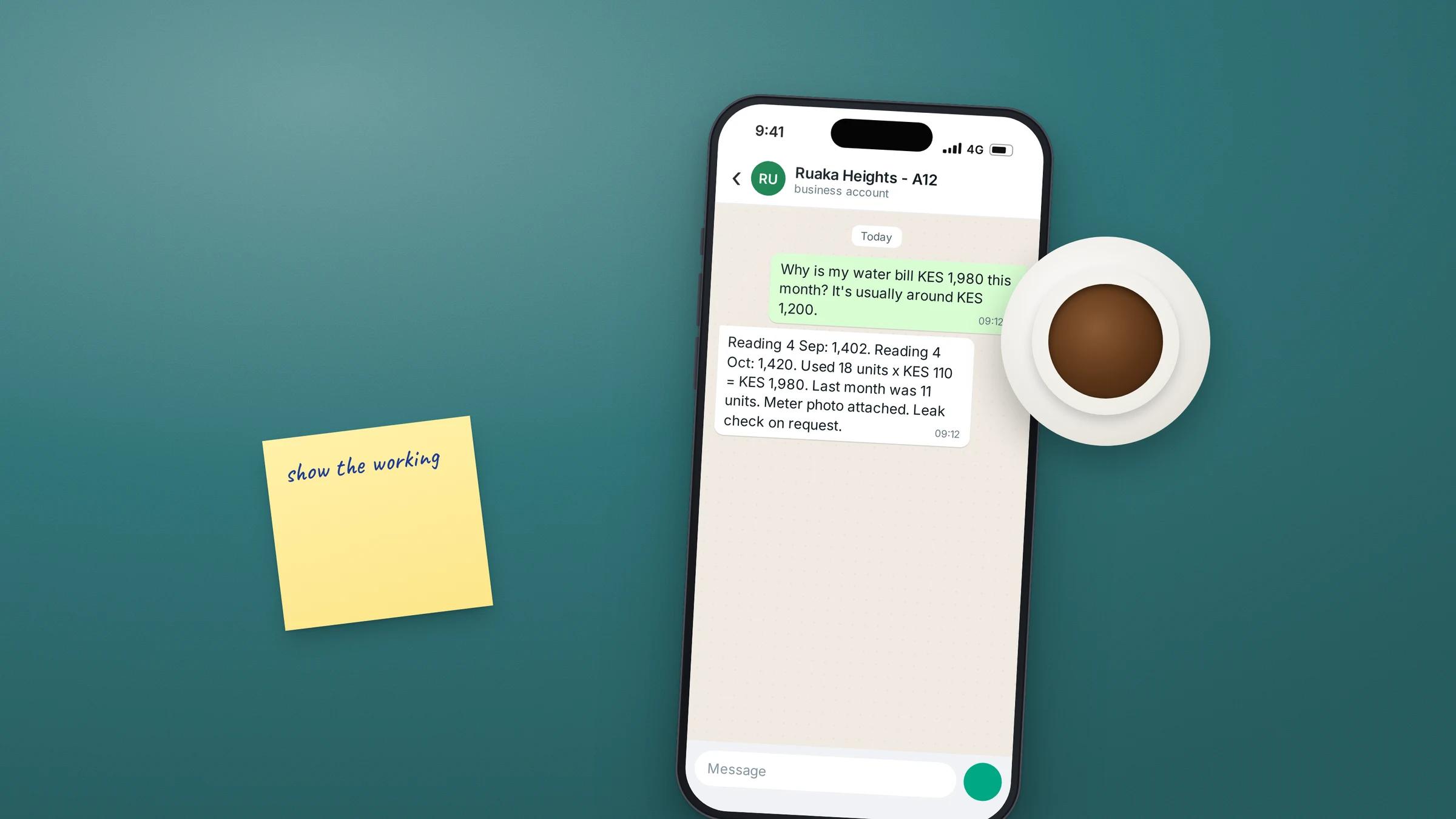
Take a 24-unit block in Ruaka, used here as an example. Every month the caretaker walks round with a notebook, reads the meters, and the agent sends each tenant a message: "Water for September: KES 1,980." Every month, three or four tenants reply asking why. The agent does not have the readings to hand, the caretaker is not answering his phone, and by the time the numbers are found, the tenant has decided the landlord is overcharging.
The amount may well be right. The problem is that nobody could see how it was worked out.
What a trustworthy bill shows#
A tenant should be able to check the bill without asking anyone. That needs five things on it:
| Line | Example |
|---|---|
| Previous reading and date | 1,402 on 4 September |
| Current reading and date | 1,420 on 4 October |
| Units used | 18 |
| Rate per unit, as set in the lease or notice | KES 110 |
| Amount | 18 x 110 = KES 1,980 |
If there is a fixed charge, such as a meter rent or a shared pump cost, it goes on its own line with its name. Never fold it into the rate. A hidden extra discovered later does more damage than an honest one shown from the start.
The rate itself should be something the tenant agreed to, in the lease or a written notice. If it changes, tell tenants in writing before the month it applies, not on the bill.
The meter photo#
The cheapest trust tool in property management is a phone camera. When the caretaker reads a meter, he photographs it, with the unit number visible or written on a card beside it. The photo goes with the bill.
Now the conversation changes. A tenant who queries a bill gets the photo back in the same thread. Either the reading is right, and the question becomes "why did I use more water?", or it is wrong, and you fix it the same day. Both outcomes are better than an argument.
Catch the odd ones before they go out#
Most disputes come from a small number of bills: the ones that jumped. Before bills are sent, look for any unit whose usage is far above its own usual level, say more than one and a half times its average. Then check those, and only those, before sending.
A big jump usually means one of four things: a misread (a 7 read as a 1), a leak in the unit, a leak in the pipe before the meter, or more people living there. The first two you want to find before the tenant does. A tenant who hears "your usage doubled, we think you may have a leak, can our plumber check?" before the bill arrives is a tenant who trusts the next bill.
Where AI fits#
This is Stage 3 on the NGAZI ladder: AI doing defined tasks inside the process, with a person in charge of the final step. In a system like ISHI, where units, leases and tenant communication sit together, the work divides naturally:
- The caretaker sends meter photos. AI reads the number from each photo and matches it to the unit.
- It compares the reading with last month's and the unit's usual usage, and flags anything unusual or unreadable.
- The agent reviews the flagged readings, corrects any misreads, and approves the batch.
- Bills go out with readings, units, rate and the photo. When a tenant replies "why so high?", the assistant can answer with the figures from the record and hand over to the agent if the tenant disputes it.
The approval step is not optional. A misread digit turned into a bill and sent to a tenant is exactly the kind of silent mistake we argue against in no silent writes.
What to do this week#
Change next month's bill format, whether or not you change anything else. Add the two readings, the dates, the units and the rate. Ask the caretaker to photograph every meter during the next round, and keep the photos in one folder per month, named by unit.
Then, before sending, sort the units by usage compared with last month and check the top three. If you also manage rent collection, the same habit of showing the working helps there; see our monthly arrears routine.