Before AI can answer anything about your shop, something has to be writing it down
The most common reason an AI tool disappoints a business owner is not the AI. It is that the business was never recording the thing they wanted answered.
6 min read
Ngazi is Swahili for a ladder. Adopting AI is a climb, not a leap - five rungs, each one earning the next. This is the plain-language map, so you can find the rung you are actually on and take the one real next step.
The whole idea in one picture
Each rung stands higher than the last. Tap any rung to jump to it.
Three things to hold in mind
You cannot skip a rung. Each stage is what makes the next one possible - and safe.
Your next step is the rung just above where you are today - not the summit. That is the whole trick.
Most businesses are further down than the hype suggests. That is good news: the climb is where the value is.
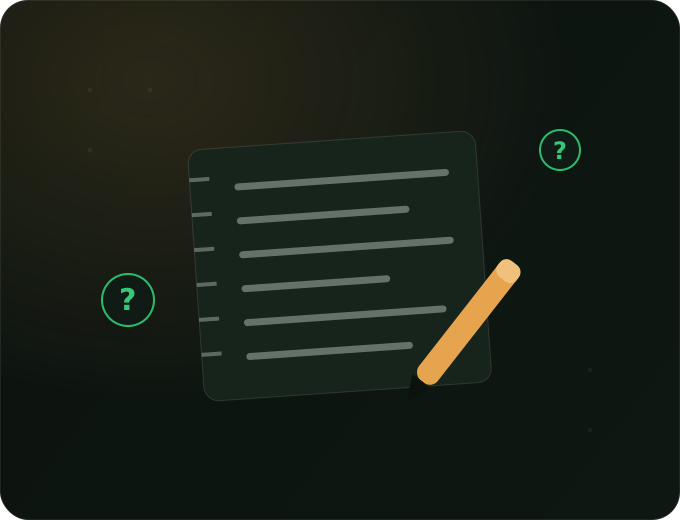
Your business is not written down anywhere a computer can read yet.
In plain terms: Like running a shop from a notebook and your memory: it works, but nothing can be searched, counted, or added up on its own.
At Stage 0, almost nothing about the business is written down in a way a computer can read. Sales live in a paper book or a cash drawer, stock is counted by eye, and the real record of what happened is in the owner’s memory and a hundred WhatsApp threads.
This is not a failing - it is where most small businesses genuinely are, and plenty run well like this. But it is important to be honest: at this stage, AI has almost nothing to work with. You cannot summarise, search, or reason over data that does not exist yet.
The work here is not AI at all. It is starting to capture the basics digitally - sales, stock, customers - even in the simplest system. That single step turns the lights on for everything above it.
For exampleA shop owner who knows their business inside out - but every sale, price, and customer lives in a notebook and a busy WhatsApp inbox.
Ready for the next rung when: The day-to-day of the business - what sold, what is in stock, who the customers are - is being recorded digitally somewhere, however simply.
The most common reason an AI tool disappoints a business owner is not the AI. It is that the business was never recording the thing they wanted answered.
A client came ready to pay for an AI project. We told them to keep their money and do a cheaper thing first. Here is why that was the right call - and what it tells you about who to trust.
The most honest AI advice we can give some businesses is: do not buy AI yet. If your sales live in a paper book, there is a cheaper, more valuable move to make first - and it is the one that makes everything else possible.
There are five stages of using AI in a business, from paper records to full operational intelligence. Nearly all the advice you read is written for stage four. Here is the whole ladder, and how to find the rung you are actually on.
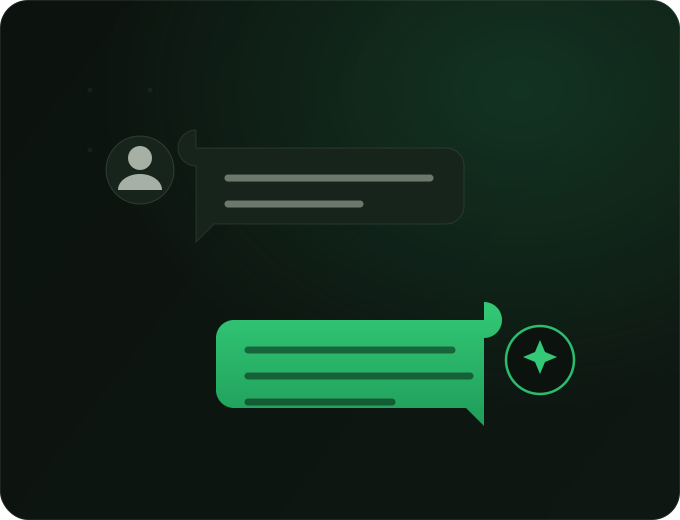
You ask an AI assistant to help with everyday tasks, in plain words.
In plain terms: Like hiring a fast, capable new assistant you brief in plain language - it drafts, and you read, fix, and sign.
Stage 1 is where nearly every business should start, and where the fastest wins are. You use a general assistant the way you would brief a capable new colleague: draft this reply, summarise this long message, give me ten ideas, tidy up these notes.
Nothing is connected to your systems yet, and that is fine. The value is immediate and the risk is low, because you read and approve everything before it leaves your hands. It drafts; you sign.
This stage builds the single most important skill for everything above it: briefing clearly and judging the result. Those are human skills, and they transfer straight up the ladder.
For exampleTurning three rushed bullet points into a polished, friendly customer message in about ten seconds.
Ready for the next rung when: Using an assistant for everyday language tasks is a habit, and you can tell a good answer from a confident wrong one.
Chasing a late-paying customer is a message most owners dread and delay. Here is the single prompt that writes it - firm, professional, and ready to send in under a minute.
Four or five writing jobs every shop owner does weekly - supplier emails, customer replies, official letters - done in two minutes each with an AI assistant. What it costs, and how to brief it so the result is actually usable.
A walk through writing a whole product catalogue with an AI assistant - the messy input, the prompt that worked, the output, and the ones we had to fix. This is stage 1: AI as a fast, capable assistant you brief and check.
You don't need a strategy, a budget, or a technical team to begin. You need one boring task and thirty minutes. Here's the honest first step.
If AI advice online feels like it is written for someone else, that is because it usually is. Here is the mismatch in one minute - and the fix.
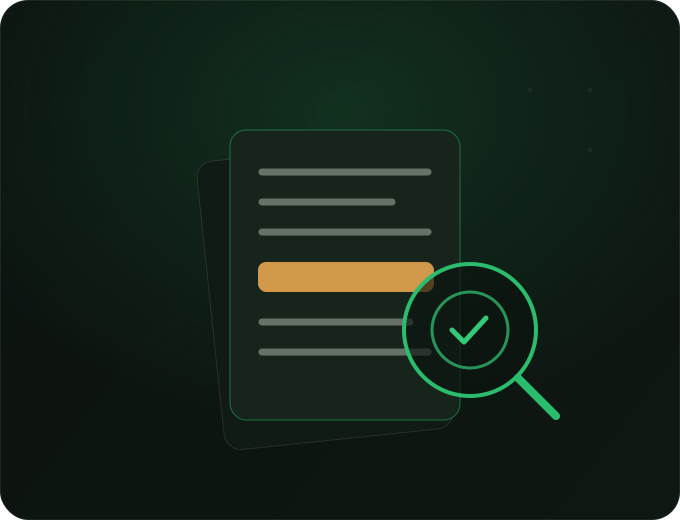
The AI answers using your own files, not the whole internet.
In plain terms: Like handing that assistant your filing cabinet, so answers come from your prices, policies, and records - not a guess.
At Stage 2, the assistant stops answering from general knowledge and starts answering from yours - your price lists, policies, product sheets, past tickets. The technique is retrieval: find the relevant text first, then answer using only that.
This is the first stage that needs real engineering discipline, because the failure mode is subtle: an assistant that sounds right while quoting a document it never actually read. Done well, it becomes a search engine for everything your business knows.
Getting here depends on Stage 0 being real - there must be documents and records to point it at - and Stage 1 being a habit, so people trust and verify what it returns.
For exampleA staff member asks, “what’s our refund policy for opened items?” and gets the exact answer, straight from your own policy document.
Ready for the next rung when: People can ask questions of your own documents and get answers grounded in the actual source, with a way to check them.
A quick demonstration: a badly-lit, angled photo of a carbon-copy delivery note, turned into clean typed data in seconds. Stage 2 works on real paper, not just tidy files - with one thing you must always check.
Comparing supplier quotes by eye is slow and easy to get wrong - different formats, hidden extras, different units. Upload them and get one clear table in two minutes. A simple, repeatable stage 2 win.
Hand an AI your own M-PESA statement and ask the questions you actually care about - who owes me, where is the money going, what changed this month. Here is how, what it answers well, and the wrong answer you must watch for.
Retrieval-augmented generation, explained for people who ship. The architecture, a minimal implementation, and the failure modes that bite in production.
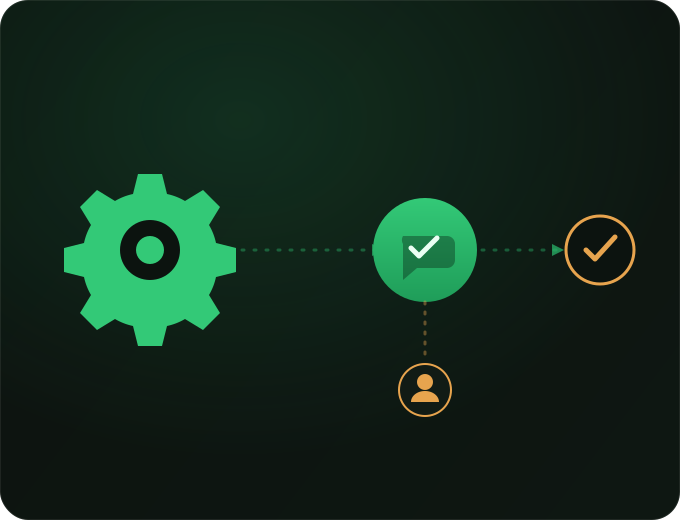
The AI does not just advise - it does tasks inside your process.
In plain terms: Like an assistant who can actually reply to the customer, route the enquiry, and book the appointment - within limits you set, handing off when unsure.
Stage 3 is where AI stops advising and starts acting: replying to a customer on WhatsApp, routing an enquiry to the right person, booking an appointment, updating a record. It lives inside the workflow rather than in a separate chat window.
The stakes rise here, because a mistake is now visible to customers and touches real records. So this stage is defined less by cleverness and more by guardrails: clear limits, a confident hand-off to a human, and knowing exactly when the AI should stop and ask.
You do not skip to Stage 3. It rests on trustworthy data (Stage 0), a team fluent in delegating to AI (Stage 1), and reliable grounding in your own information (Stage 2).
For exampleA customer asks, “are you open Sunday, and is the 50-inch TV in stock?” - answered and logged, without a staff member touching it.
Ready for the next rung when: AI reliably handles defined tasks end-to-end inside a real process, and hands off cleanly the moment it is out of its depth.
UpeoXpense turns a WhatsApp photo of a receipt into a validated, posted ERPNext expense. AI reads the receipt; plain, auditable code makes every decision. Here is how it works, the accounting model behind it, the full tech stack, and how to adapt it to your own business - it is MIT-licensed and open source.
Most money wasted on AI is spent by businesses that were not ready to spend it. Six honest checks - about your data, your goal, and your foundation - that tell you whether to buy now, or take a cheaper step first.
How a retail business moved its most repetitive customer questions onto an AI assistant inside WhatsApp - the design, the guardrails, and the honest trade-offs.
The first three stages happen in a chat window. Stage 3 is different - the AI acts inside your process: invoices landing in the ERP untouched, a WhatsApp agent answering from live stock. Here is what that actually looks like, and the guardrails that make it safe.

The AI reasons over years of your business to spot patterns and support decisions.
In plain terms: Like an analyst who has read every sale, message, and record you have ever kept - and quietly points out what you would never spot yourself.
Stage 4 is the top of the ladder: AI reasoning over the full history a business has accumulated - years of sales, conversations, stock movements, and outcomes - to surface patterns a person would never spot and to support real decisions.
This is where operational intelligence lives: which customers are quietly slipping away, which products move together, where money leaks. It is only possible because every rung below it has been climbed - the history is captured, trustworthy, grounded, and flowing through live workflows.
Very few businesses are here yet, and that is fine. Stage 4 is a destination, not a starting point. The point of the ladder is that the climb itself compounds: each rung makes the next one both possible and more valuable.
For exampleA morning summary: “These 12 regulars haven’t bought in 60 days, and your best-seller runs out on Thursday.”
At the summit: This is the summit - the work becomes continuous: keeping the history clean and asking ever-better questions of it.
The whole ladder, in one breath
Most businesses are further down than the hype suggests - and that is good news, because the climb is where the value is. Start with the honest first step, then come back to the ladder.
Where to actually startBrowse all articlesWe build the systems we write about - for retail, clinics, workshops and property businesses across Africa. Tell us what you run, and we will tell you honestly where AI would help and where it would not.