Most retail businesses already run their customer conversations on WhatsApp. So the useful question is rarely "should we add a chatbot to our website" - it is "can the channel we already use answer the same ten questions without a person retyping the answer for the hundredth time today?"
That is a Stage 3 move on the NGAZI ladder: AI inside the workflow, not just drafting on the side.
The problem#
A retail team was answering the same questions all day: is this in stock, what does it cost, are you open, where are you. Each one is quick; together they ate roughly [CLIENT FIGURE] hours a day and pulled staff off the floor and away from customers who were ready to buy.
What we built#
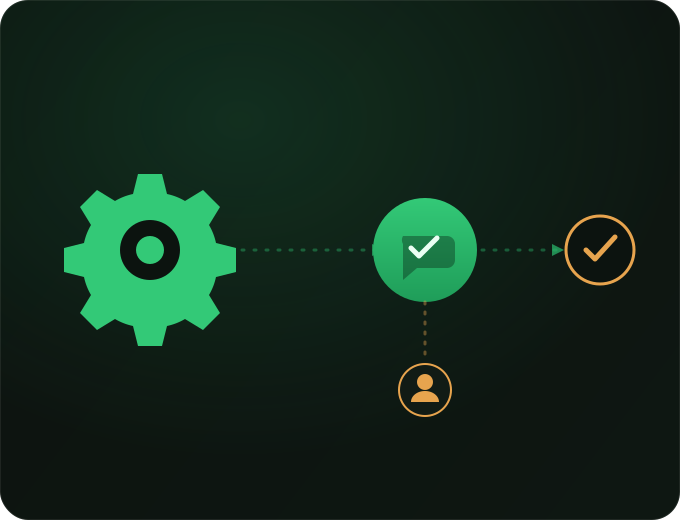
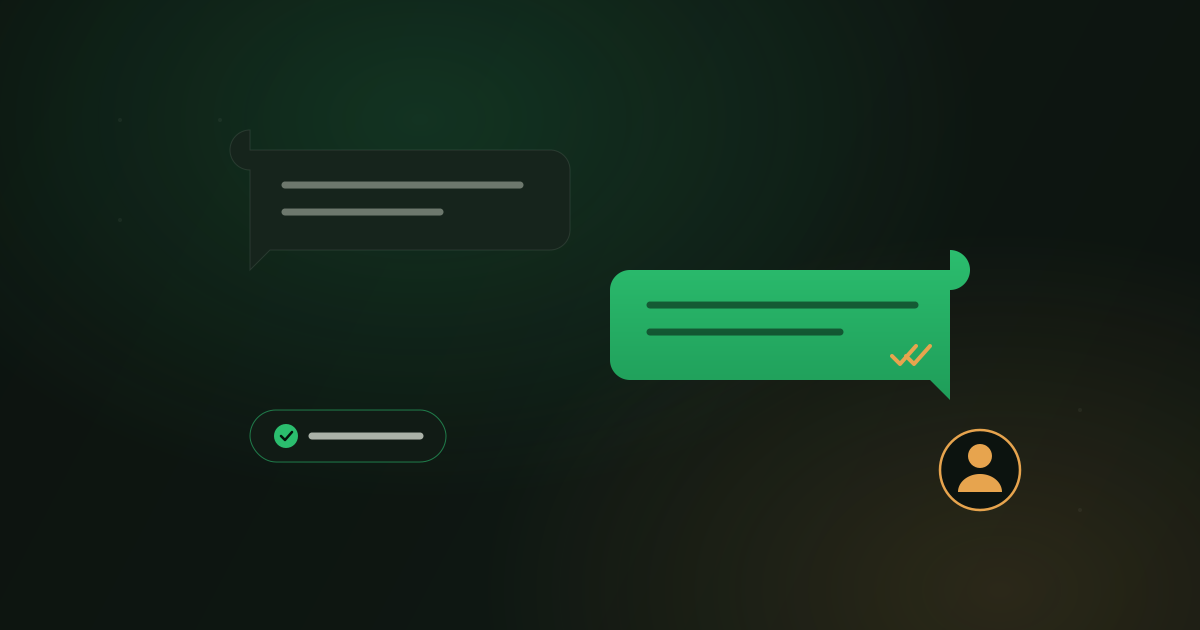
An assistant living inside the business's existing WhatsApp number. It handled the repetitive questions directly and pulled a person in the moment a conversation went beyond them.
| Capability | Handled by | Notes |
|---|---|---|
| Store hours, location | AI | Static facts - safe, instant |
| Price of an item | AI | Read live from the product system |
| "Is X in stock?" | AI | Only when stock data was trustworthy |
| Returns, complaints | Human | Escalated immediately with full context |
| Anything uncertain | Human | Assistant hands off rather than guessing |
The part nobody sees#
The AI was the easy 20%. The 80% was making sure "is X in stock" had a true answer to give. An assistant confidently quoting stock it does not have is worse than no assistant - it turns a private guess into a public promise.
An AI that is confidently wrong in front of your customer costs you more than the staff time you were trying to save.
So most of the work was unglamorous: connecting to the stock system, deciding what "in stock" even meant at the counter, and - crucially - teaching the assistant to say "let me check with a colleague" instead of inventing a number.
What we measured#
Two numbers that matter, and one we ignored:
- Deflection - share of conversations fully resolved without a person: roughly [CLIENT FIGURE]%.
- Clean escalation - share of hand-offs that reached a human with full context and no repeated questions: the number we cared about most.
- "Messages sent" - a vanity metric we deliberately ignored; volume is not value.
What we would tell you before you start#
Start with the questions your staff are tired of answering, not the impressive ones. Wire the assistant to real data before you widen what it will answer. And build the human hand-off first - it is the safety net that lets you be bold everywhere else.
If you want the framework this sits inside, read the NGAZI ladder. If you want to talk about your own counter, the contacts are below.