Before AI can answer anything about your shop, something has to be writing it down
The most common reason an AI tool disappoints a business owner is not the AI. It is that the business was never recording the thing they wanted answered.
6 min read

Karani Geoffrey is the founder and director of UPEO.AI, where the work is helping businesses benefit from AI - building AI systems and advising on where AI genuinely fits and where it does not. He also founded Upeosoft Limited, a separate enterprise-software and ERP company whose systems have been implemented across every continent - years of hard-won delivery experience, in demanding real-world conditions, that directly shapes how he builds with AI today. He writes from the workshop floor: the systems here are ones he and his team build and run, not commentary from the sidelines.
The most common reason an AI tool disappoints a business owner is not the AI. It is that the business was never recording the thing they wanted answered.
AI features have a cost per use, which most pricing models ignore until it hurts. They also have a failure mode software does not: a small prompt edit silently changing an answer. Metering and regression tests are the unglamorous answers to both.
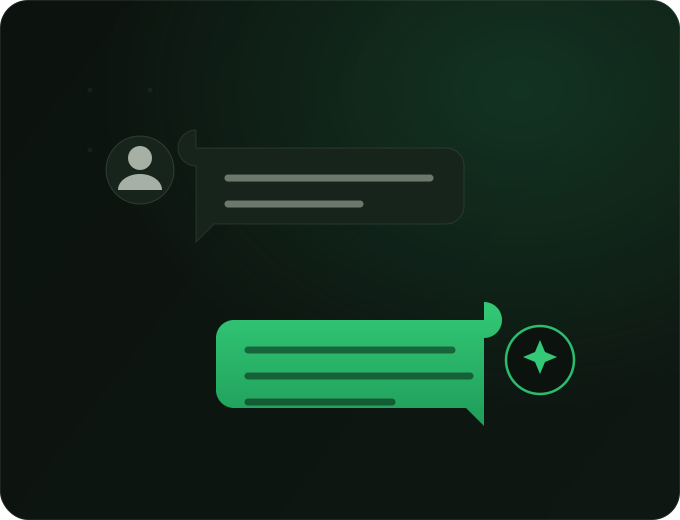
We could have shipped Rai as a beautiful dashboard nobody logs into. Instead it answers on WhatsApp, in English, Swahili or Sheng, because adoption is not won by features - it is won by removing the reasons not to ask.
UpeoXpense turns a WhatsApp photo of a receipt into a validated, posted ERPNext expense. AI reads the receipt; plain, auditable code makes every decision. Here is how it works, the accounting model behind it, the full tech stack, and how to adapt it to your own business - it is MIT-licensed and open source.
A client came ready to pay for an AI project. We told them to keep their money and do a cheaper thing first. Here is why that was the right call - and what it tells you about who to trust.
The moment an AI can change your records without asking, you have stopped supervising it and started hoping. We built Rai so that every write is drafted, shown, approved, logged and reversible - and here is why that line matters more than any clever feature.
Most money wasted on AI is spent by businesses that were not ready to spend it. Six honest checks - about your data, your goal, and your foundation - that tell you whether to buy now, or take a cheaper step first.
How a retail business moved its most repetitive customer questions onto an AI assistant inside WhatsApp - the design, the guardrails, and the honest trade-offs.
Every business owner asks the same question about AI: where does my data go? For Rai the honest answer is nowhere. The reasoning happens on our servers, the data stays on yours, and only computed results cross between them.
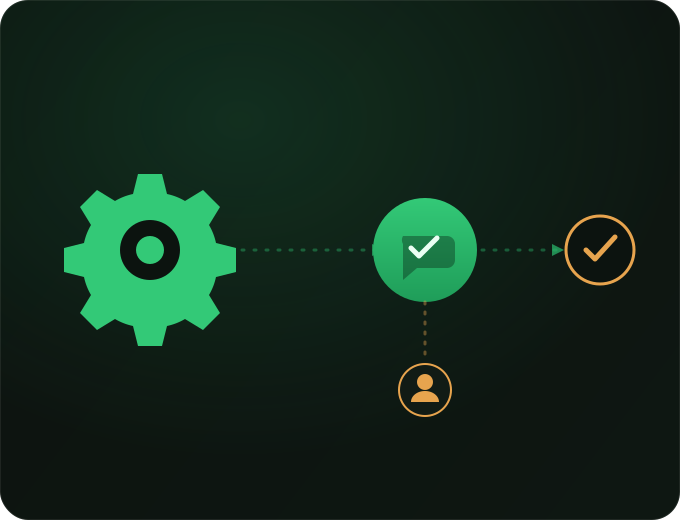
The first three stages happen in a chat window. Stage 3 is different - the AI acts inside your process: invoices landing in the ERP untouched, a WhatsApp agent answering from live stock. Here is what that actually looks like, and the guardrails that make it safe.
A quick demonstration: a badly-lit, angled photo of a carbon-copy delivery note, turned into clean typed data in seconds. Stage 2 works on real paper, not just tidy files - with one thing you must always check.
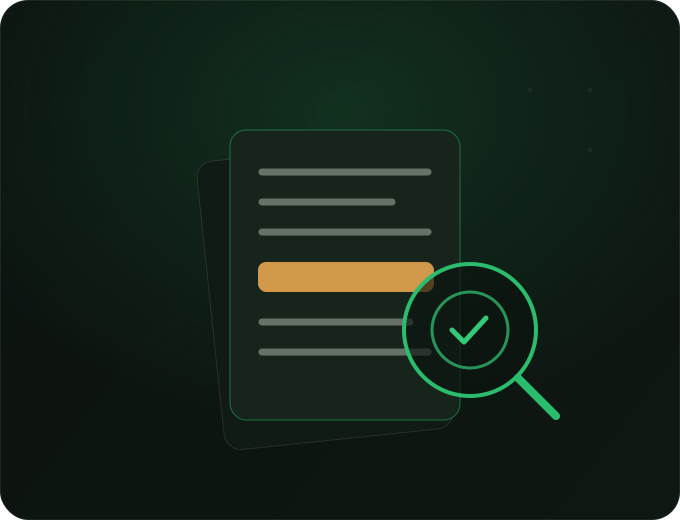
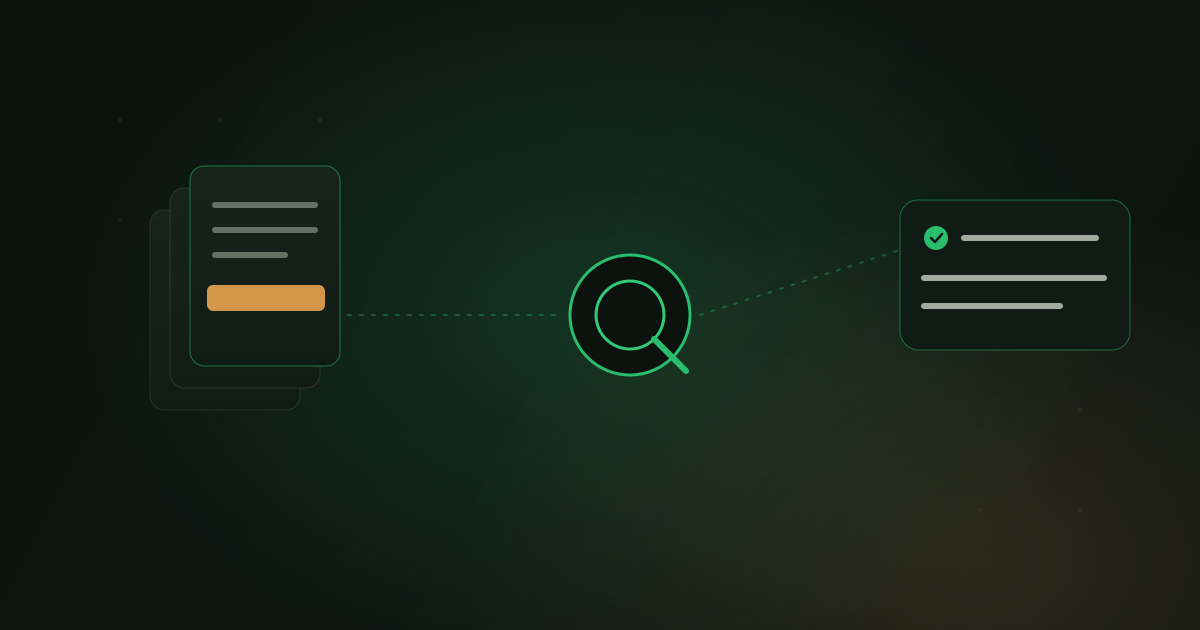
Comparing supplier quotes by eye is slow and easy to get wrong - different formats, hidden extras, different units. Upload them and get one clear table in two minutes. A simple, repeatable stage 2 win.
Hand an AI your own M-PESA statement and ask the questions you actually care about - who owes me, where is the money going, what changed this month. Here is how, what it answers well, and the wrong answer you must watch for.
A wrong number delivered confidently is worse than no number at all. The reason AI tools get business figures wrong is not that the model is stupid - it is that your database does not mean what its table names say. This is the fix.
Retrieval-augmented generation, explained for people who ship. The architecture, a minimal implementation, and the failure modes that bite in production.
Chasing a late-paying customer is a message most owners dread and delay. Here is the single prompt that writes it - firm, professional, and ready to send in under a minute.
Four or five writing jobs every shop owner does weekly - supplier emails, customer replies, official letters - done in two minutes each with an AI assistant. What it costs, and how to brief it so the result is actually usable.
Most shop owners already have the data they need to run a tighter business. It is just locked inside a system that only answers the questions someone built a report for. Rai is an AI analyst that answers the questions you actually ask - in plain language, from your own numbers.
A walk through writing a whole product catalogue with an AI assistant - the messy input, the prompt that worked, the output, and the ones we had to fix. This is stage 1: AI as a fast, capable assistant you brief and check.
You don't need a strategy, a budget, or a technical team to begin. You need one boring task and thirty minutes. Here's the honest first step.
If AI advice online feels like it is written for someone else, that is because it usually is. Here is the mismatch in one minute - and the fix.
The most honest AI advice we can give some businesses is: do not buy AI yet. If your sales live in a paper book, there is a cheaper, more valuable move to make first - and it is the one that makes everything else possible.
There are five stages of using AI in a business, from paper records to full operational intelligence. Nearly all the advice you read is written for stage four. Here is the whole ladder, and how to find the rung you are actually on.
We build the systems we write about - for retail, clinics, workshops and property businesses across Africa. Tell us what you run, and we will tell you honestly where AI would help and where it would not.