Every buyer knows this small pain. You ask three suppliers for a quote and get back three different formats - one PDF, one WhatsApp photo, one email. One shows prices with VAT, one without. One quotes per carton, another per unit. Comparing them fairly means squinting across three documents and doing sums in your head.
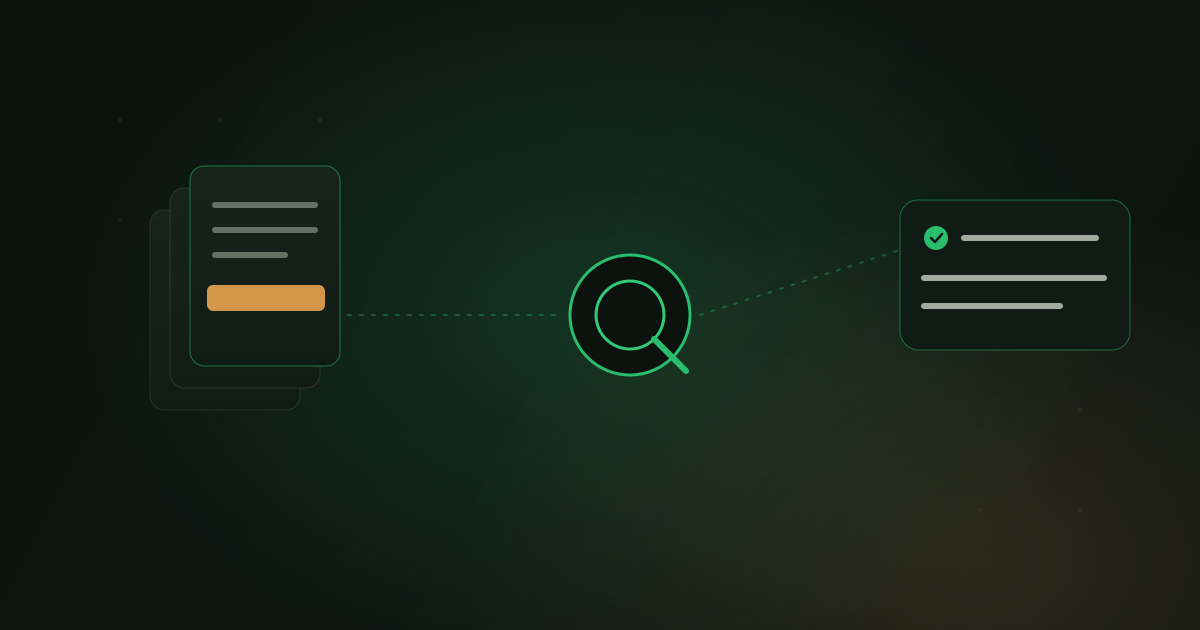
At stage 2, you hand all three to the AI and get one table. Here is the move.
The move#
Give the AI all three quotes - paste the text, or upload the files - and ask for exactly the comparison you need:
Here are three supplier quotes for the same order. Put them into one table
with a row per item and a column per supplier, showing unit price.

Important:
- Convert everything to the same unit (per single unit) so they compare fairly.
- Show prices WITH VAT and note where a quote excluded it.
- Add rows for delivery cost and payment terms.
- At the bottom, tell me the cheapest total and flag anything that looks like
  it is not comparing like for like.
Two minutes, and three messy documents become one table you can actually decide from.
Where it earns its keep#
The value is not just speed - it is fairness. The mistakes in supplier comparison almost always hide in the mismatches: one price includes VAT and another does not, one includes delivery and another charges it separately, one quotes a bigger pack size. Asking the AI to normalise units and surface those differences catches the traps that cost you money when you compare by eye.
Why it is repeatable#
The best part is that this is not a one-off. Save the prompt. Every time you gather quotes - stock, transport, a repair, a print job - the same instruction turns the pile into a decision in two minutes. Small, reliable, and it compounds across every purchase you make.
This sits at stage 2 of the ladder: the AI answering from your own documents. For the full picture, see the five stages of AI adoption.