Take Kiprono, who manages three blocks in Eldoret for himself and two relatives. Every month he sends rent reminders to about sixty tenants. For years they went by SMS from his own phone, typed one by one, on the evening of the third. Last year his nephew suggested WhatsApp. "Everyone is on it, and it is free." Kiprono tried it. Most tenants replied faster. Four tenants never saw the message at all, because their phones do not run WhatsApp or the number they gave him was not on it.
So which is better? Both, for different things. Here is how to decide.
Reach: SMS gets to every phone#
SMS reaches any working phone, including the basic phones many people still carry as a second line or as their only phone. It arrives without data, without an app, and it sits in the inbox until read.
WhatsApp needs a smartphone, data and the app installed on the number you hold. Many of your tenants will have all three. Some will not. Some will have WhatsApp on a different number from the one on the lease.
The practical rule: know which channel each tenant actually reads. Ask at move-in: "Which number should we use for rent reminders, and is it on WhatsApp?" Record the answer on the tenant's record. For existing tenants, ask once by SMS.
Cost: free is not quite free#
WhatsApp messages from your personal phone cost you data. Sent from a business system through the WhatsApp Business Platform, messages can be charged by Meta under rules that have changed more than once, and must use pre-approved templates if the tenant has not messaged you in the last day. SMS sent in bulk through a provider costs per message. Prices for both change, so compare current rates with your providers rather than trusting a figure from a blog post.
For most landlords, the real cost is not the per-message price. It is your time. Sixty messages typed by hand each month is an evening. Either channel, sent from a system that fills in each tenant's name, unit and balance, takes a minute. If you are moving to WhatsApp from a system, the rules on templates and the 24-hour window matter; see WhatsApp Business API: templates, sessions and limits.
Tone: what each channel is good at#
SMS feels official. It is short and plain, and tenants tend to read it as a notice. That suits a formal reminder and, later, a firmer message about arrears.
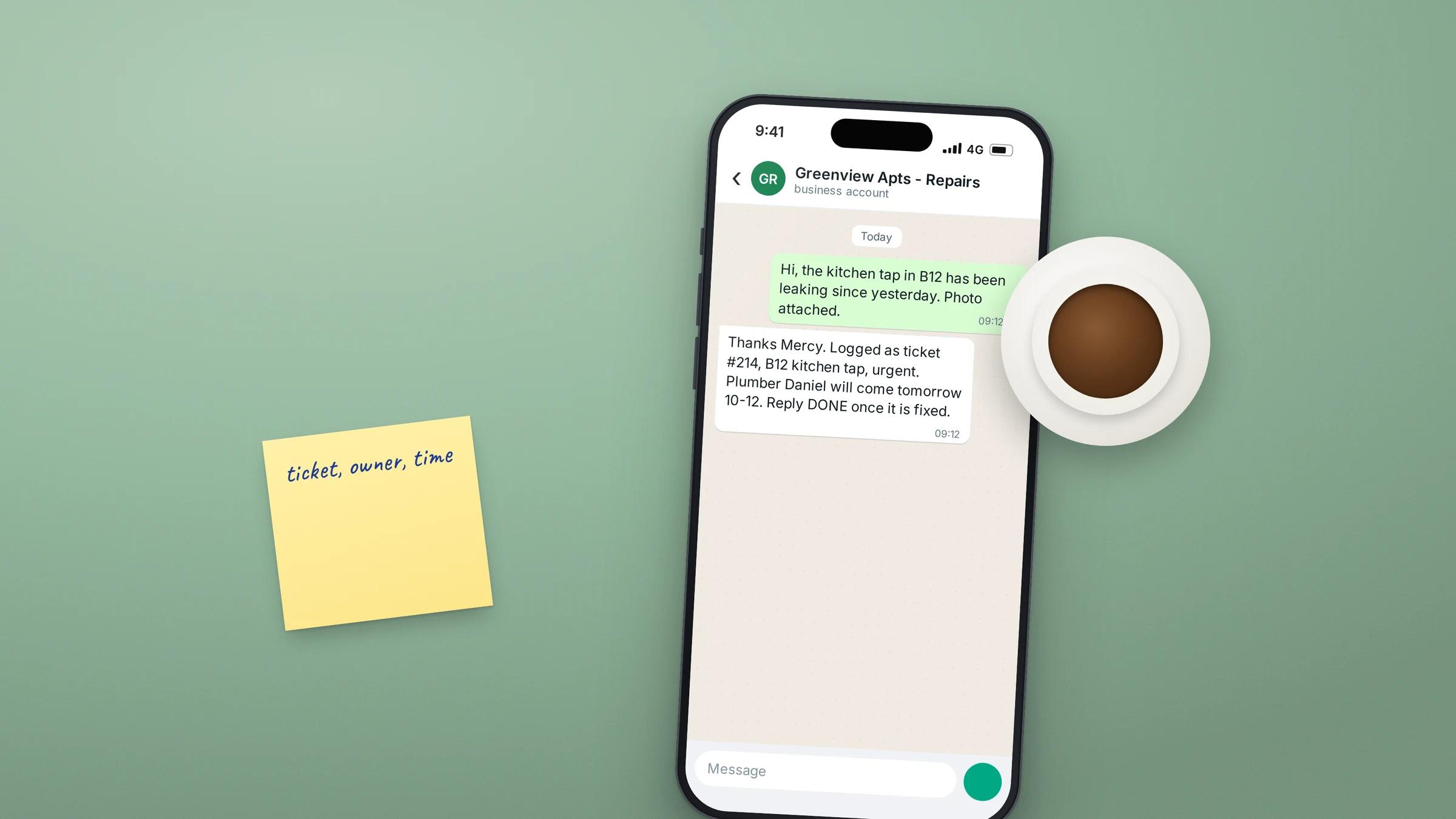
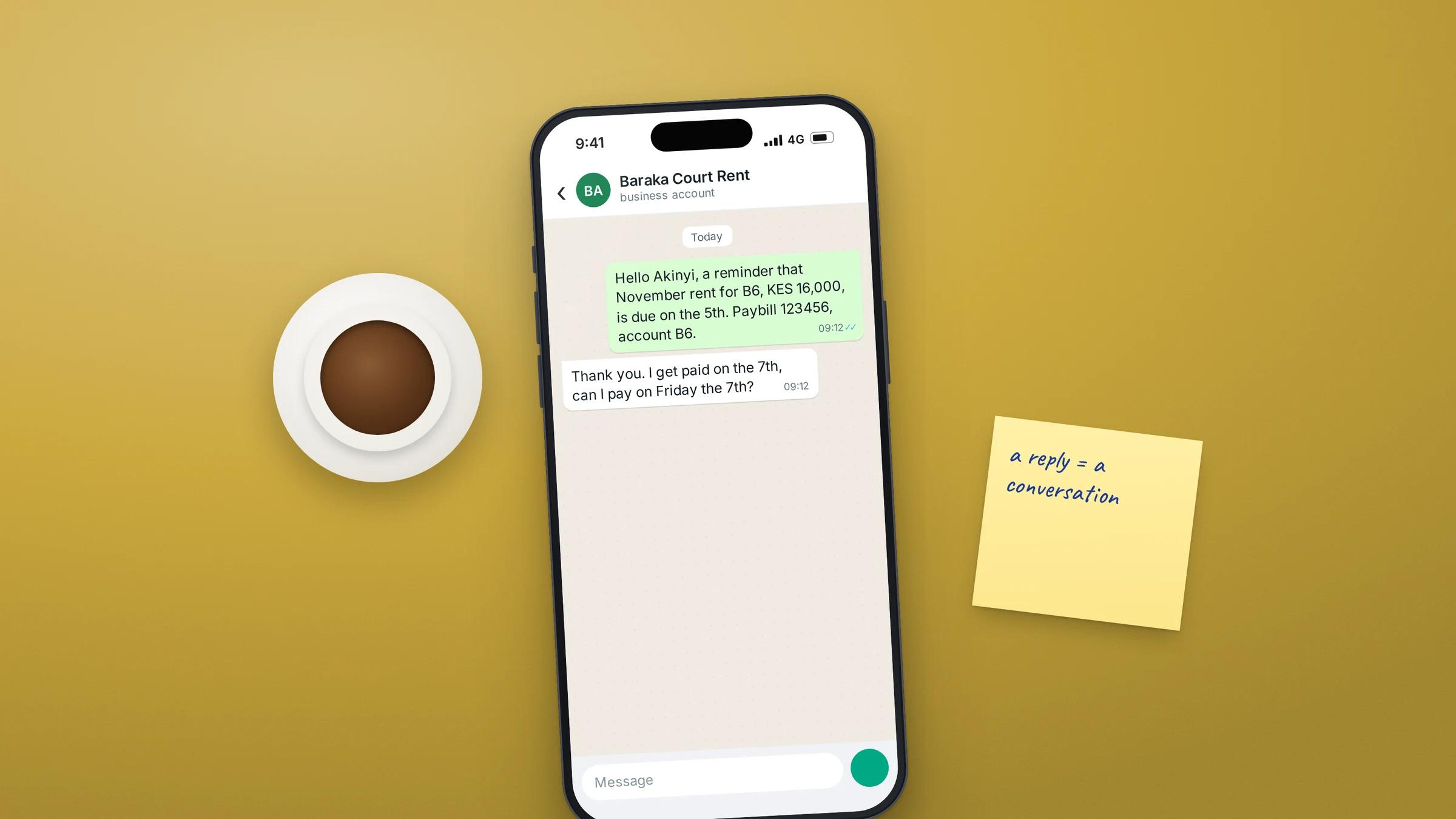
WhatsApp feels like a conversation. Tenants reply: "I will pay on Friday", "I paid yesterday, check again", "the tap in the kitchen is leaking". That is useful. It also means someone has to read and answer those replies, or the tenant feels ignored.
A sensible split for many landlords:
| Message | Channel | Why |
|---|---|---|
| Friendly reminder before due date | WhatsApp, SMS for tenants without it | Invites a reply, catches problems early |
| Receipt when payment arrives | WhatsApp or SMS, whichever the tenant reads | Confirms, prevents "I paid" disputes |
| Overdue notice | SMS, plus WhatsApp copy | Plain, formal, arrives on every phone |
| Formal arrears letter | Paper or email, as your lease and adviser require | Some notices have rules; check them |
That last row matters. A WhatsApp message is not necessarily a formal notice for legal purposes. Check with your lawyer or agent what form your notices must take.
What a good reminder says#
Whichever channel, the content is the same:
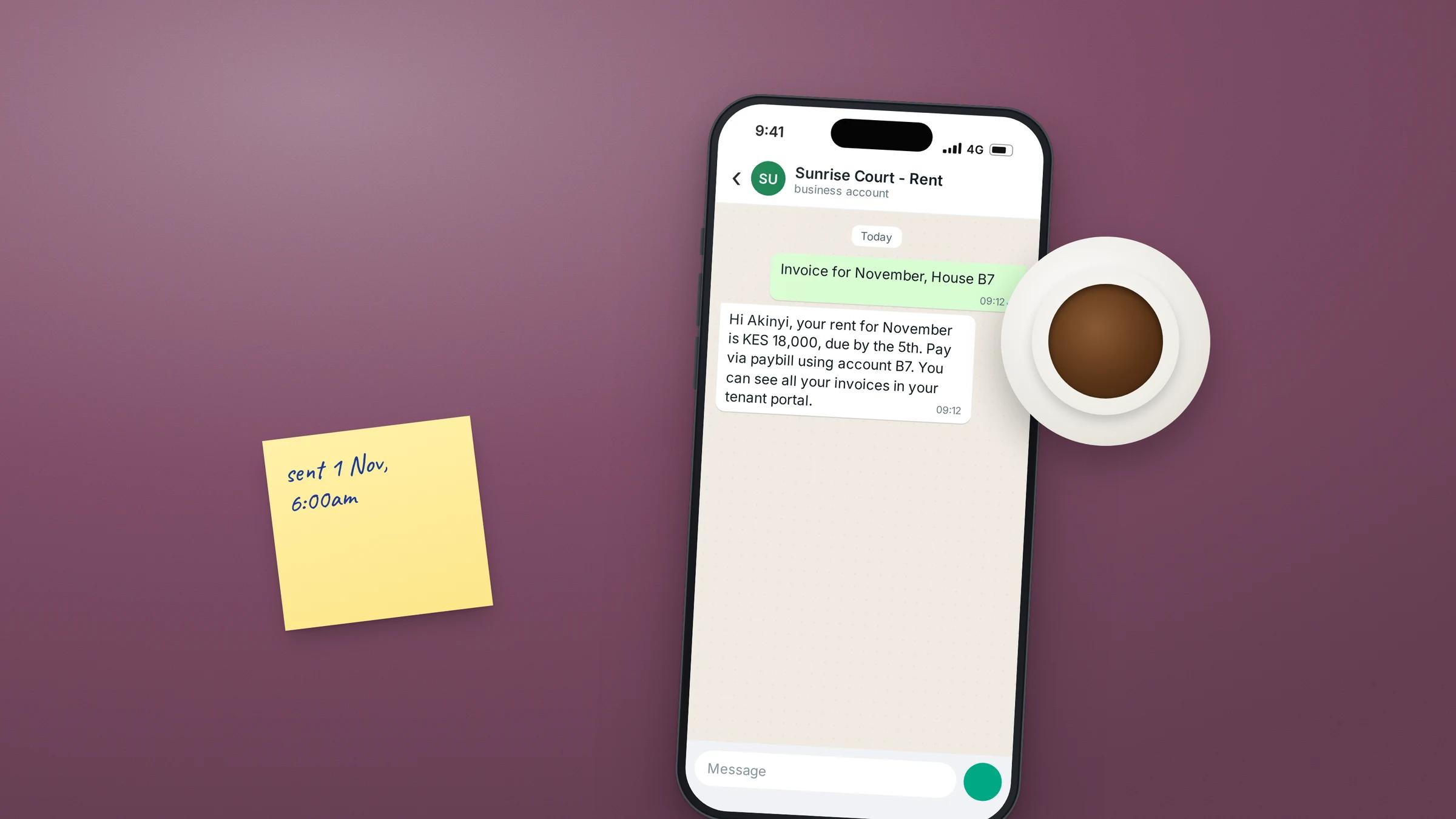
- The tenant's name and unit.
- The amount and the month it is for.
- The due date.
- Exactly how to pay: paybill number and the account reference to use.
- Who to contact with a question.
Keep it short and neutral. No threats, no capital letters, no "final warning" on the first reminder. The account reference is the most valuable line: tenants who use the right reference are matched to their unit automatically, and you avoid chasing "unknown" payments at month end.
Where a system helps#
This is stage 3 on the NGAZI ladder: the steps are known and the system does the sending. A tenant management system such as ISHI keeps units, leases, rent and tenant communication together, so each reminder can carry the correct balance and the right channel per tenant. An assistant can also read replies like "I will pay on Friday", note the promise on the tenant's record, and put anything else, like a leaking tap, in front of a person. It should never agree to a payment plan or waive a penalty by itself.
What to do this week#
Go through your tenant list and mark, for each, the number and channel they actually read. Where you do not know, send one SMS asking. Then write your three messages, reminder, receipt and overdue notice, with all five parts, and use the same wording next month for everyone.