Ask a property manager what the 1st of the month looks like and you will hear the same story. A spreadsheet of tenants, a phone, and an afternoon of typing: "Hello, your rent for November is KES 18,000, please pay to paybill..." Copy, change the name, change the amount, send. Again for the next house. Then on the 10th, the same again for everyone who has not paid, and this time the messages are harder to write.
That is the problem in the first episode of Solved in Nairobi, our video series where each episode takes one real business problem and shows the software that solves it, on screen. Episode 1 is "Rent invoices that send themselves", and it uses ISHI, our real estate and tenant management system.
What the episode shows#
The setup is done once. Each tenant, their unit and their rent amount go into ISHI. From then on:
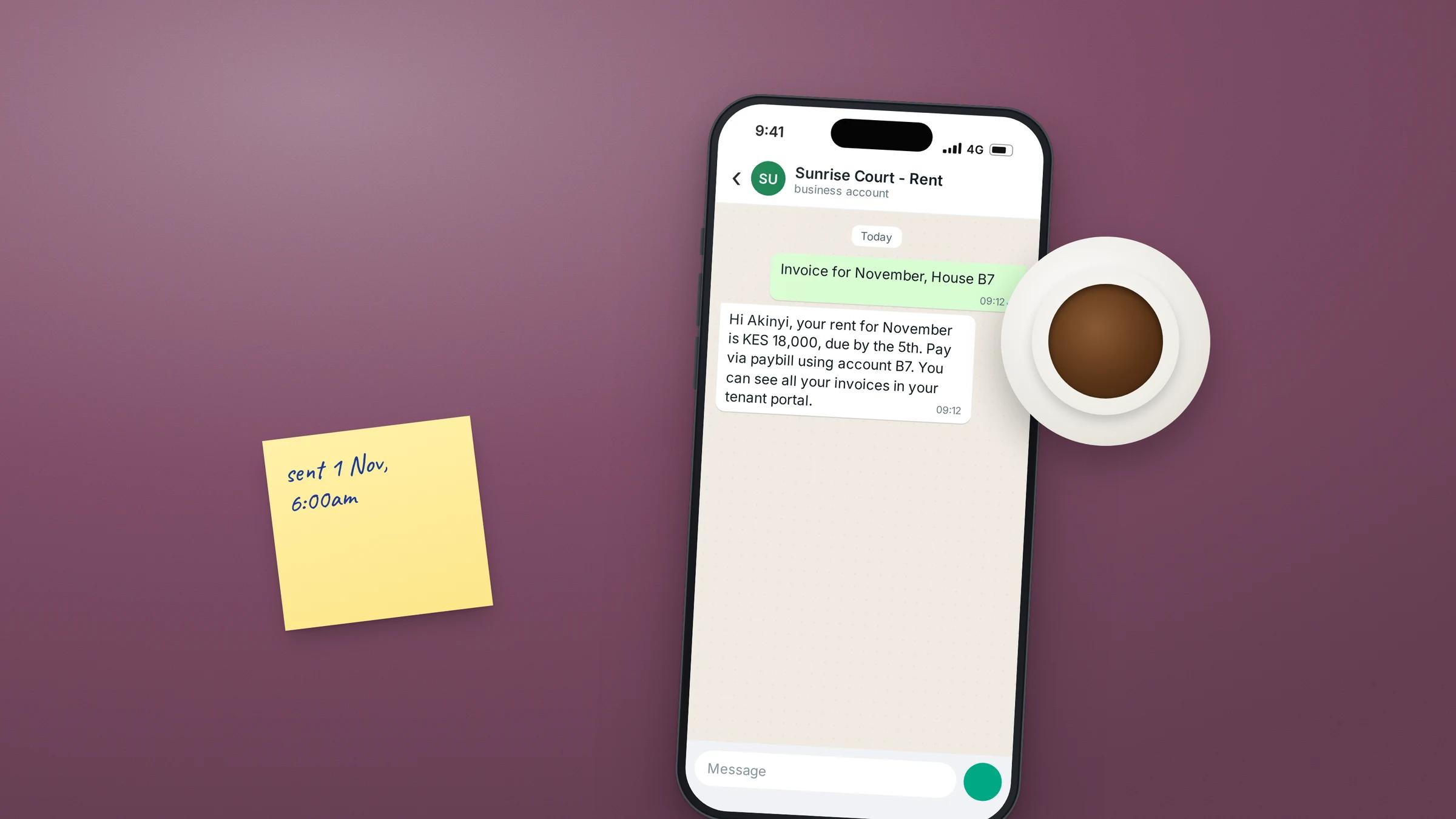
- On the 1st, ISHI creates every tenant's invoice and sends it to their phone, with the amount and how to pay.
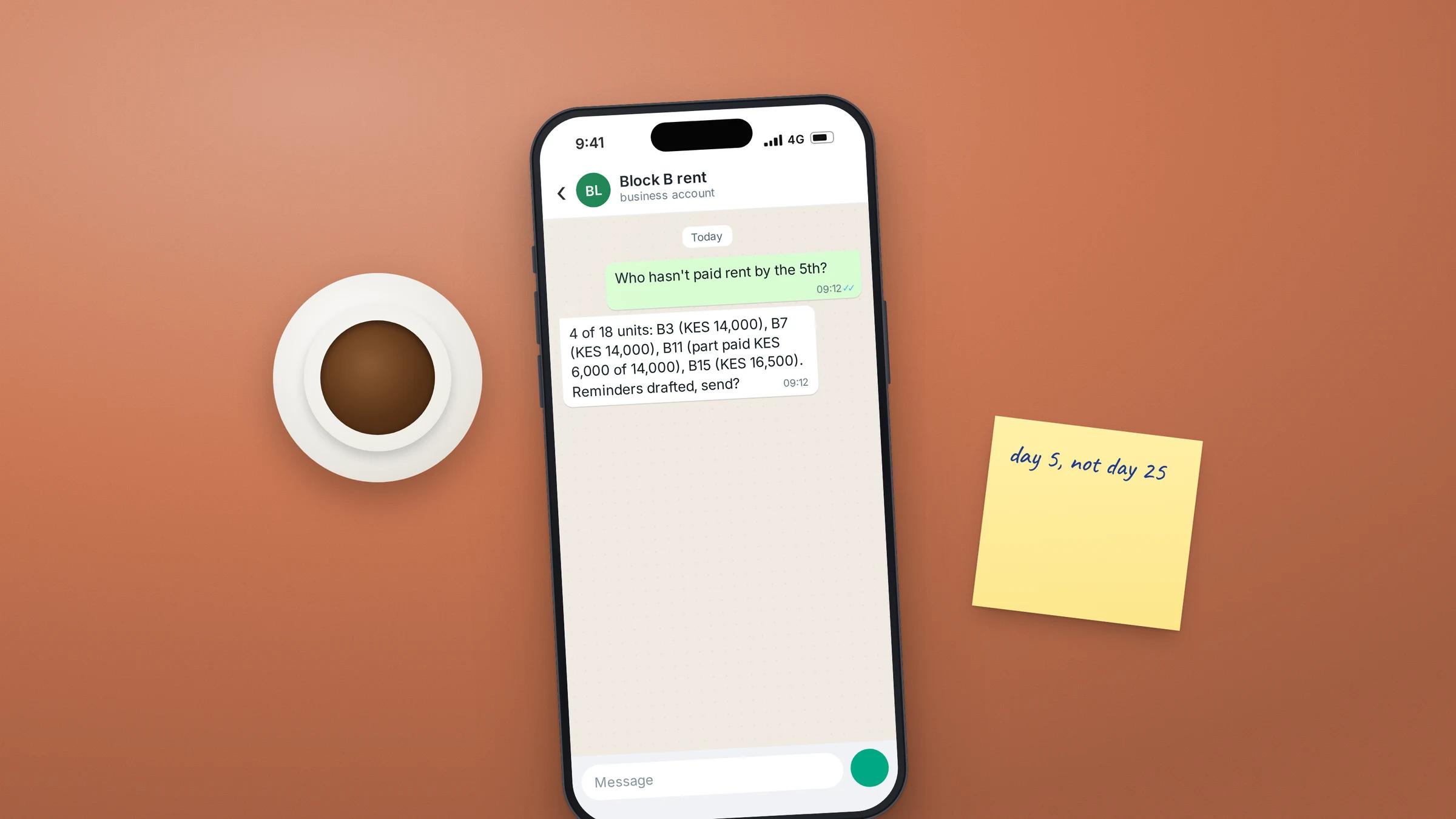
- When rent is late, the reminder goes out on its own. Nobody in the office has to decide to send it.
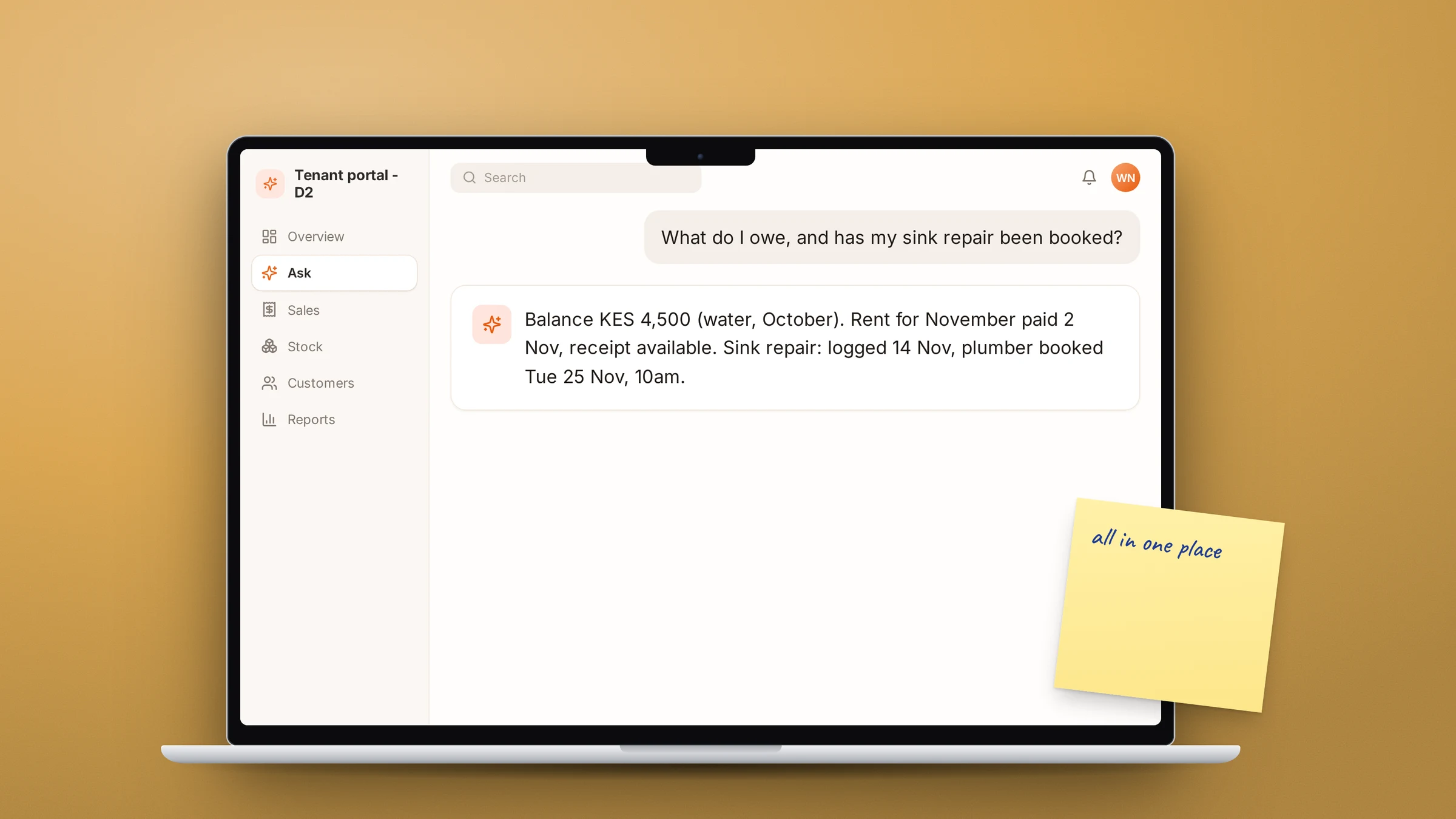
- Each tenant has a portal where they can see every invoice they have been sent.
That is the whole episode, and that is deliberate. It is a single chore, done properly, so you can see exactly where the hours used to go and where they stop going.
The design decision: why reminders are automatic#
Every Solved in Nairobi episode explains one decision behind the software. For this one, it is making late-rent reminders automatic rather than something a manager chooses to send.
The reasoning comes from watching how managers actually behave. They rarely skip chasing late rent because they do not care. They skip it because it is awkward and they are busy. Messaging a tenant you know is struggling, or one you will see at the gate tomorrow, is uncomfortable, so it gets put off until the 15th, then the 20th.
When the system sends the reminder, nobody has to have that conversation, and the reminder goes on the same day for every tenant. Rent comes in earlier, and the manager's energy is saved for the cases that genuinely need a phone call.
The reminder nobody wants to send is exactly the one that should not depend on anyone.
What to take from it, with or without ISHI#
Even if you never use our software, there are three lessons in the episode that apply to any landlord or agent.
1. Set up the tenant once, properly. Invoices can only send themselves if the tenant list is right: correct phone number, correct unit, correct rent, and an account reference they will use when they pay. Most of the pain on the 1st comes from a list that is half in a spreadsheet and half in someone's memory. Fix the list and everything downstream gets easier.
2. Make the first reminder impersonal. The first nudge after the due date should be routine, polite and the same for everyone. "Your rent of KES 18,000 for November is now overdue. Please pay via paybill, account B7." No judgement, no story, sent on a fixed day. If you send reminders by hand today, write that message once and send it to everyone on the same day each month. Our comparison of SMS and WhatsApp for rent reminders covers which channel to use.
3. Keep people for the conversations that need them. Automatic reminders are not a replacement for talking to tenants. They clear the routine so that the manager can call the three tenants who are two months behind, or the one who has always paid on time and suddenly has not. Those calls work better when the manager is not exhausted from typing two hundred messages.
What it does not solve on its own#
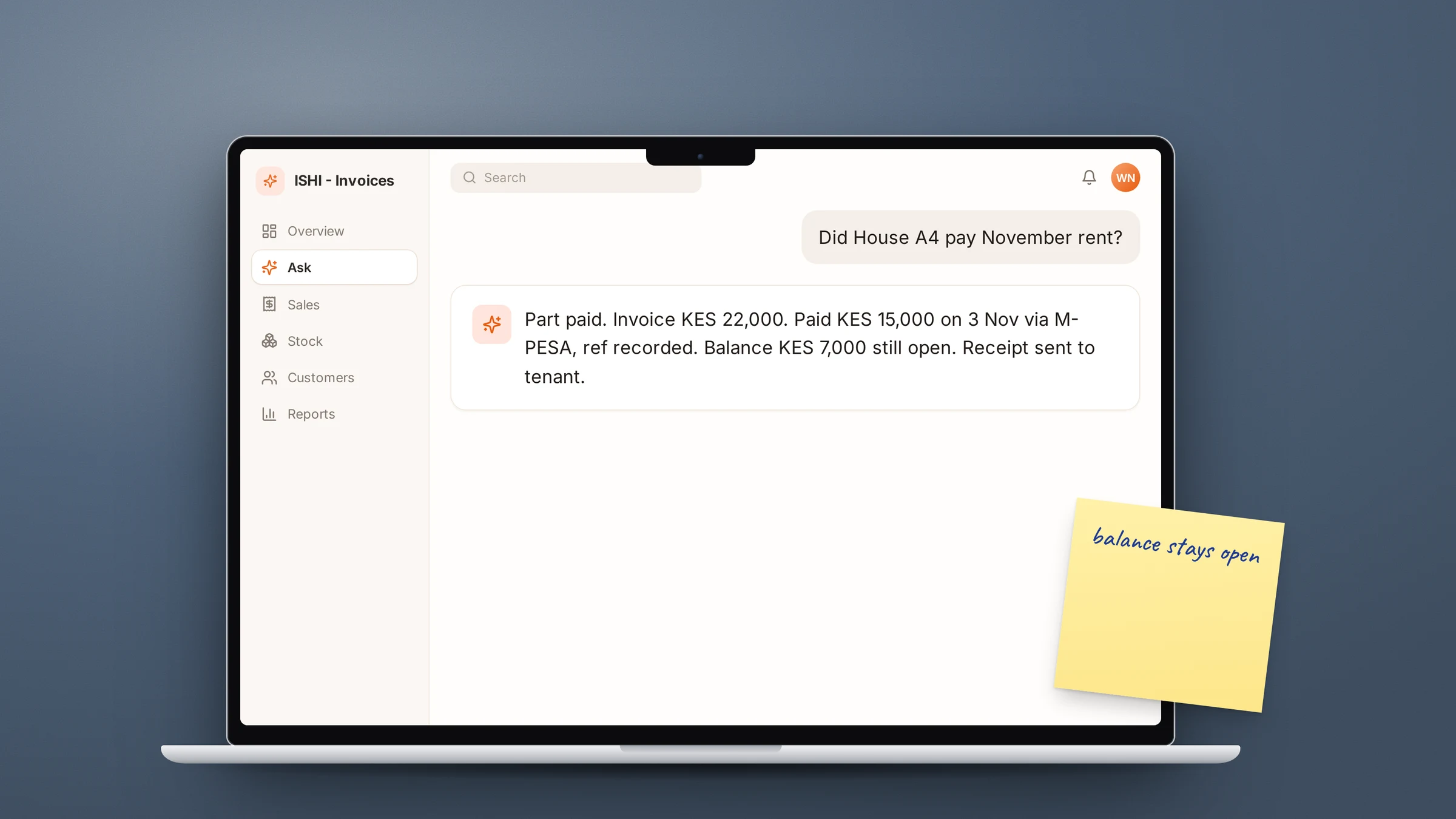
Automatic invoices do not fix a wrong rent amount; they send it faster. They do not collect money from a tenant who cannot pay. And they do not match the payments that come back, which is the next problem in the series: when a tenant pays on M-PESA and sends a screenshot, someone still has to work out which house it was for. That is episode 2.
What to do this week#
Watch the episode on the Solved in Nairobi page. Then open your tenant list and check, for every unit, four things: the tenant's current phone number, the correct rent, the due date, and the account reference they should use when paying. Wherever one is missing or wrong, fix it before the 1st. That list is the foundation for any invoice that sends itself, whether you use ISHI, another system or a carefully kept spreadsheet.