Picture a tenant in block B of a Ruaka apartment building who sends a photo of a dripping kitchen tap to the caretaker on a Tuesday. The caretaker replies "sawa, nitaangalia". On Thursday he is off. On Saturday the tenant sends the photo again, this time to the agent, with less patience. By then water has been running into the cabinet for four days and the board at the bottom has swollen.
Nobody ignored her. The request simply lived in one person's chat, with no number, no owner and no deadline. This is a workflow problem, and it is a good place for Stage 3 on the NGAZI ladder: the system running the routine, with people making the calls.
Keep WhatsApp, add a record#
Tenants will report repairs on WhatsApp. Asking them to fill in a web form instead mostly produces fewer reports, not better ones, and the leak still happens. So keep the channel and change what happens behind it.
The rule: every request becomes a ticket before anyone replies "sawa". A ticket is a small record with:
- A number the tenant can quote.
- The unit, and the tenant.
- What is wrong, with the photo.
- A category: plumbing, electrical, doors and locks, common areas, other.
- Priority: urgent (water, power, security) or routine.
- Who owns it, and by when.
- Status: logged, assigned, done, confirmed.
A property system like ISHI, which keeps units, tenants and tenant communication together, is the natural home for these tickets. A shared spreadsheet works for one building if one person is strict about it.
Step 1: Log#
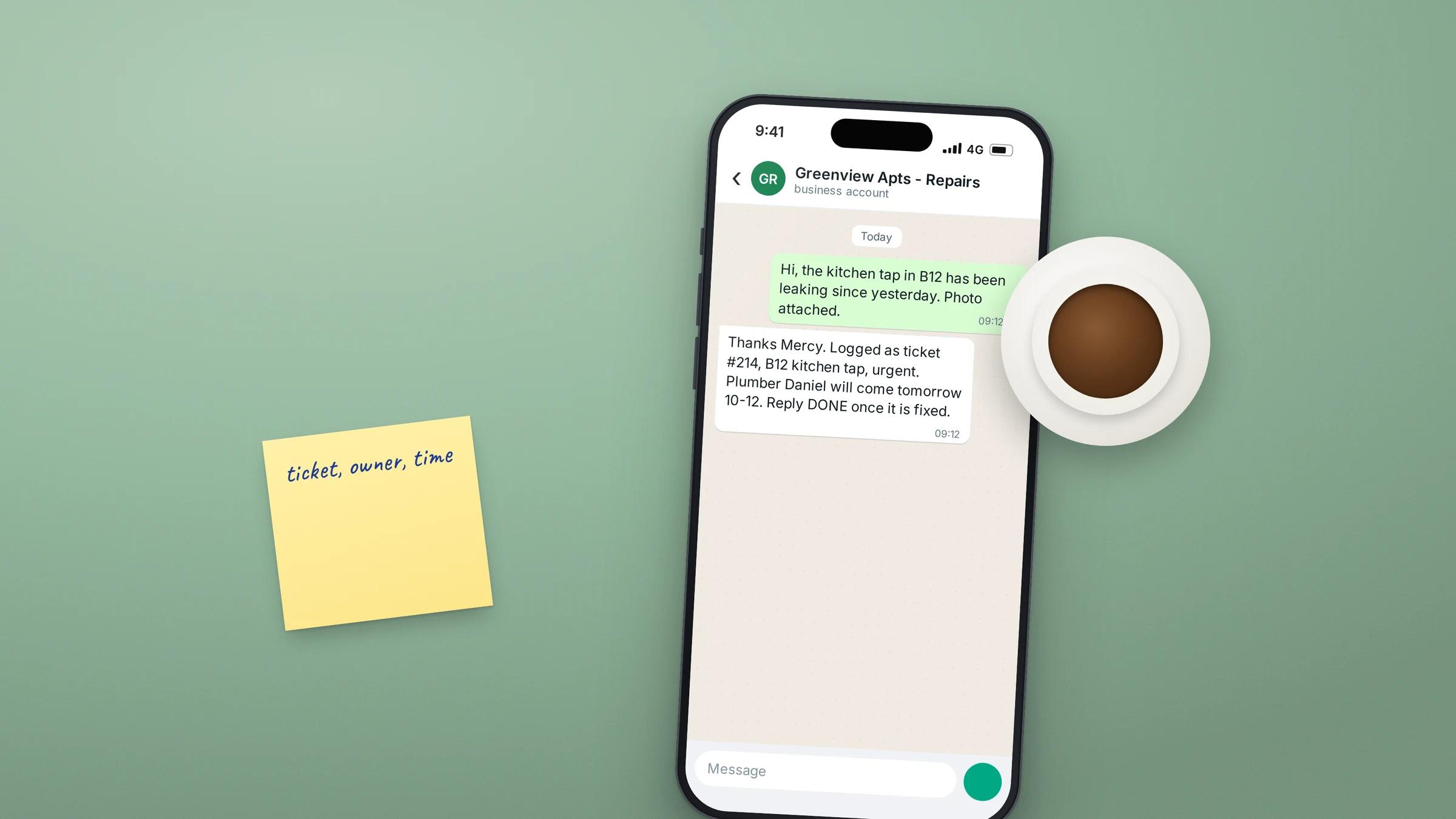
When a message comes in, the first reply should give the tenant a ticket number and say what happens next. An assistant reading the message can draft the ticket for the caretaker or agent to confirm: it can see "kitchen tap" and "leaking" in the text, match the sender's number to unit B12, suggest plumbing and urgent, and attach the photo. The person checks it in a few seconds and saves.
That draft-then-confirm step matters. The assistant will sometimes put a ticket under the wrong unit, especially when a tenant writes on behalf of a neighbour. A person catching that at logging is far cheaper than a plumber knocking on the wrong door.
Step 2: Assign#
Every ticket needs one named owner and a time. "The caretaker will check" is not an owner. "Daniel, plumber, tomorrow 10 to 12" is.
Keep a short list of who handles what for each building: plumber, electrician, the person with the master keys. When a ticket is logged, the system suggests the right person from that list, and the agent confirms. The fundi gets a message with the unit, the photo and the tenant's number. The tenant gets the name and time.
Set reminders by priority. An urgent ticket not marked done in four hours goes to the agent. A routine ticket not done in three days does the same. Nobody has to remember to chase.
Step 3: Close, with proof#
A ticket is not closed when the fundi says so. It is closed when the tenant confirms, and the record holds:
- An after photo.
- What was done, in one line.
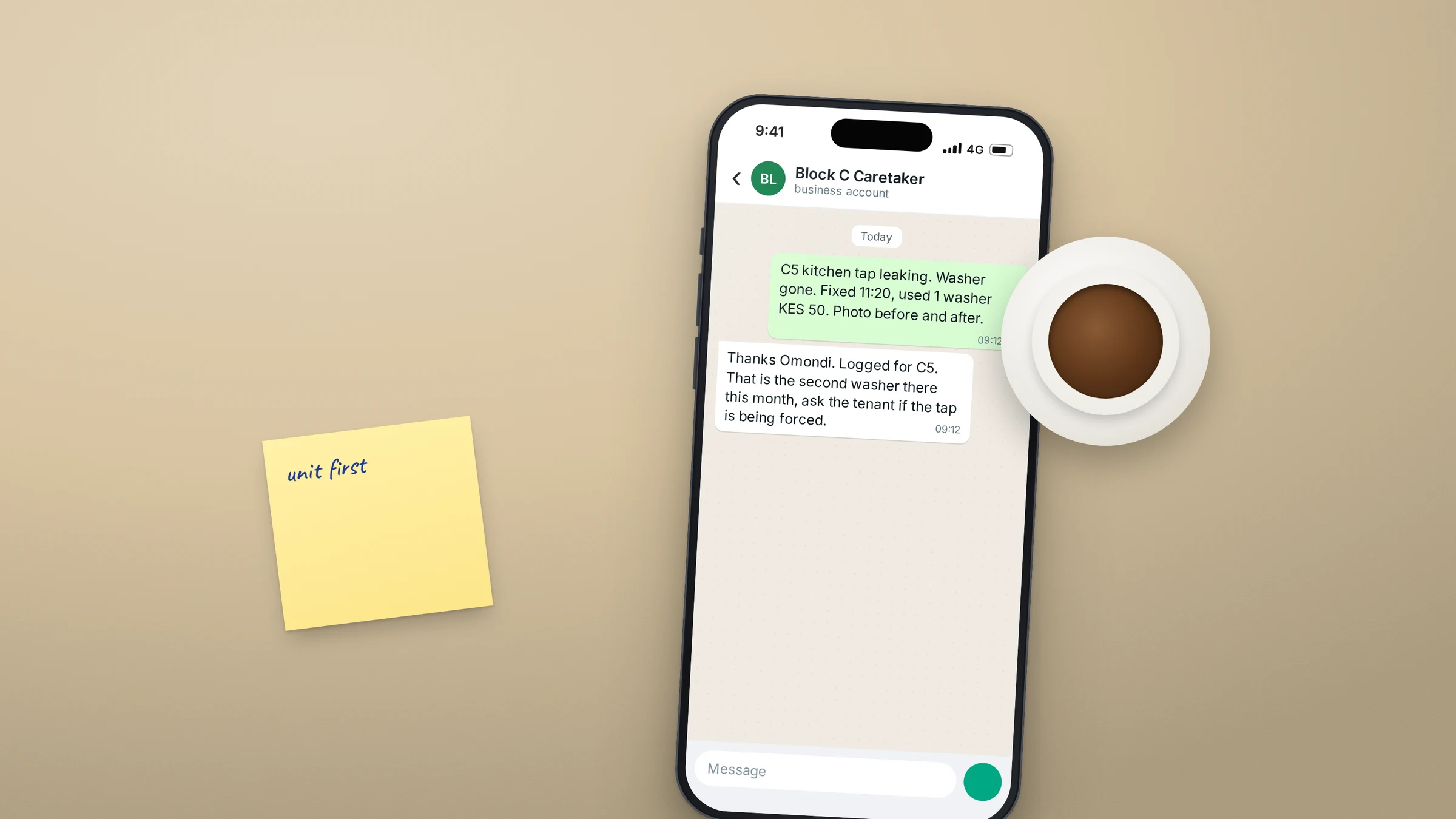
- What it cost, and who pays: landlord, tenant, or deposit.
- The date.
The tenant replies "DONE" or something similar, and the ticket closes. If there is no reply in two days, it closes automatically with a note, so the list does not fill with jobs nobody will ever confirm.
The cost line is the one most agents skip, and it is the one landlords care about most. Repairs recorded against each unit become part of the monthly statement, and over a year they show which units, and which old taps and geysers, keep costing money.
What it shows you after six months#
A few months of tickets give you things memory cannot:
- Response times. How long from report to fix, by category and by fundi.
- Repeat units. The flat that has had five plumbing tickets this year needs a proper repair, not another washer.
- Planned maintenance. If geysers in block A started failing at the same age, the ones in block B are next.
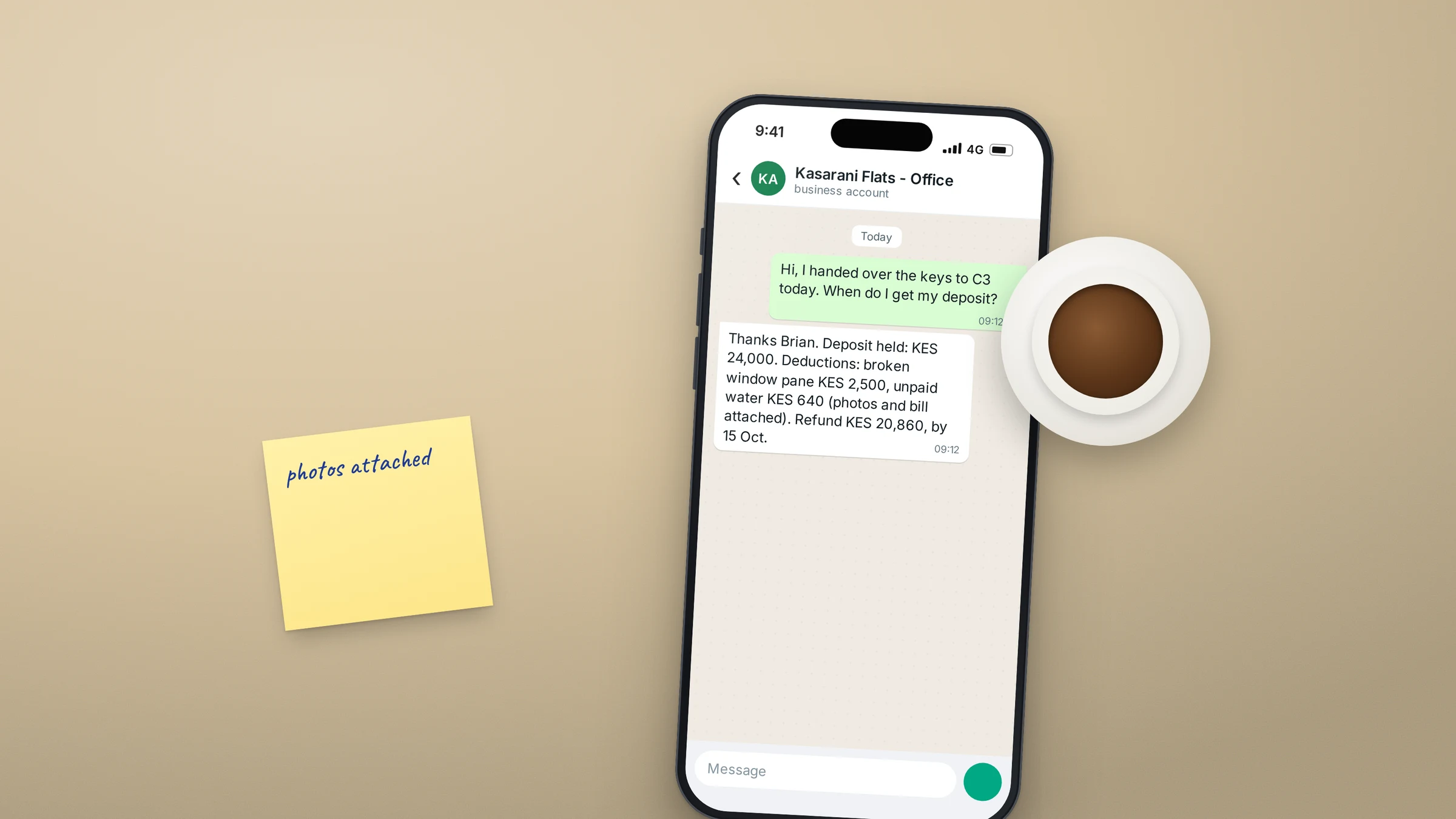
It also helps with the hard conversations. When a tenant's deposit is on the table at move-out, a dated history of repairs and their causes is the evidence both sides can look at. If leases are also in the system, lease renewals can draw on the same history when you decide whether to renew.
What to do this week#
Open your WhatsApp and the caretaker's. List every repair request from the last month with the unit, the date it came in and the date it was fixed, if it was. Give each a number. For anything still open, name an owner and a day. That list is your first ticket log, and the open items on it are this week's work.