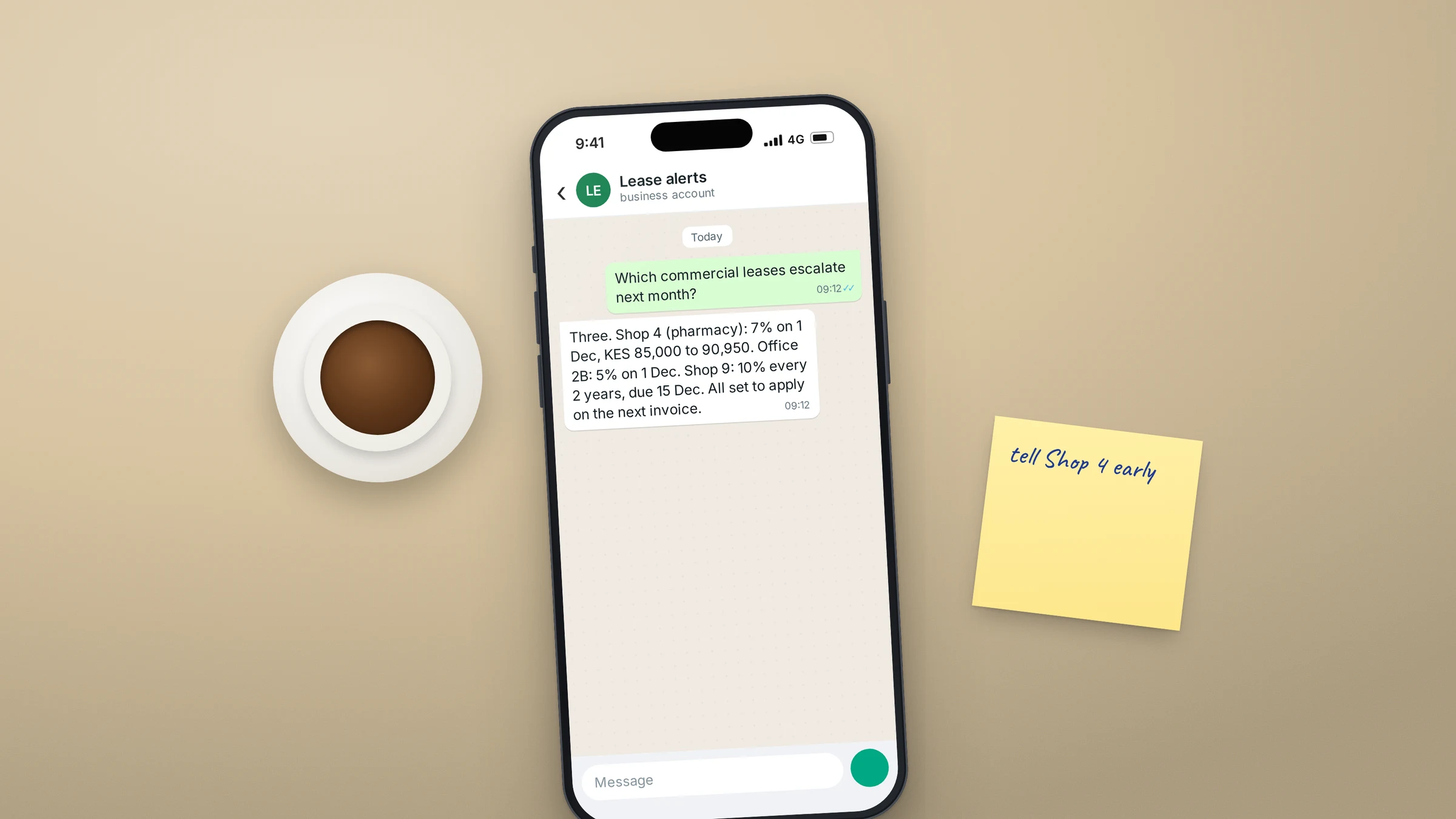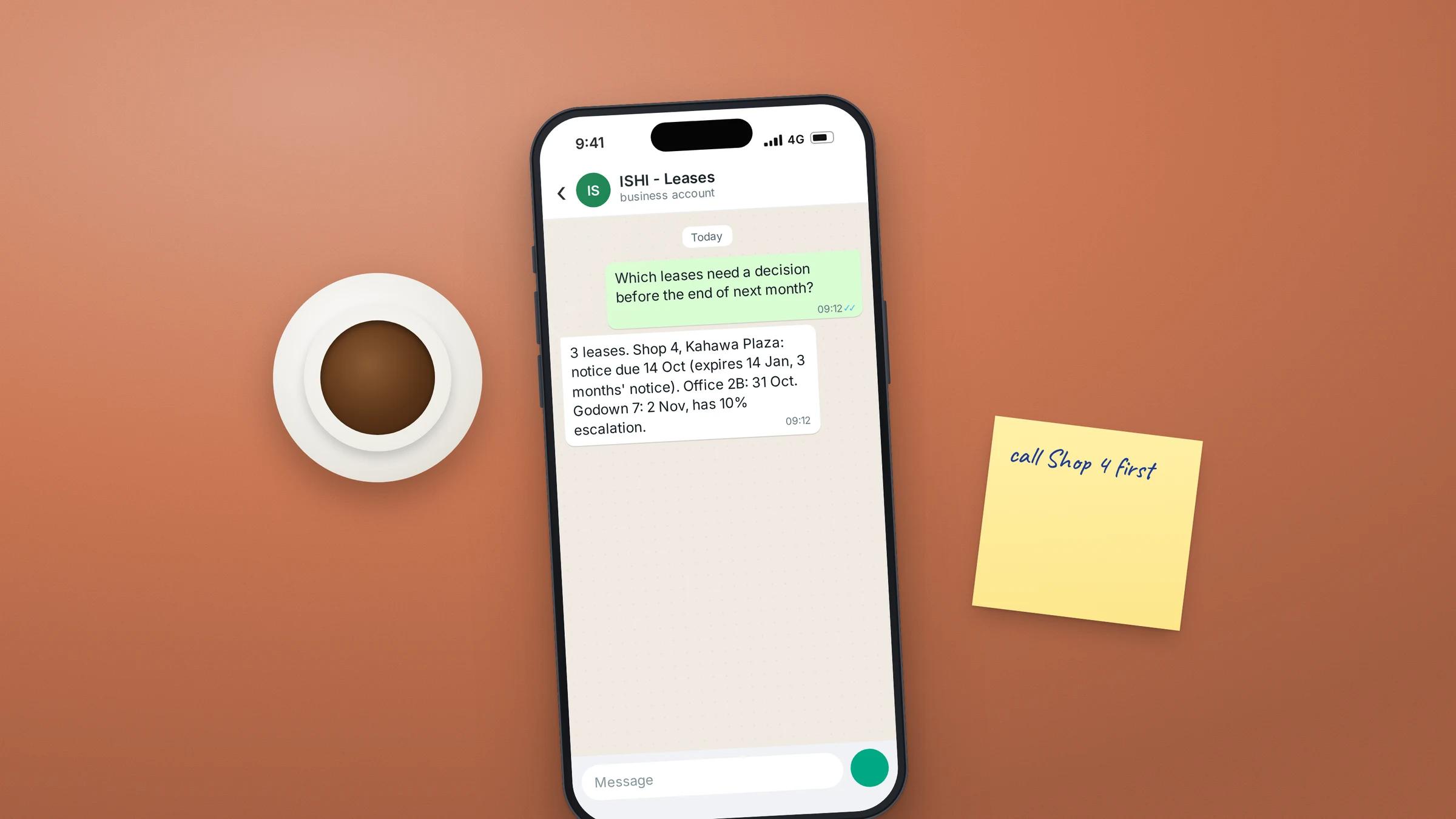
Think of an agent in Thika, Muthoni, who manages forty units for six landlords. In March a pharmacy tenant on the ground floor tells her, politely, that they are moving out when the lease ends in June. The landlord had wanted to raise the rent at renewal and keep them. Nobody had spoken to the tenant about renewal at all, because everyone was watching the June date. The lease asked for three months' notice either way, and the window to negotiate had quietly passed while nobody was looking.
That is how most renewals go wrong. Not with a dispute, but with a date nobody wrote down.
The four dates in every lease#
Every lease carries more dates than the one on the front page. For a renewal routine, four of them matter:
- Start date. Everything else is counted from here.
- Expiry date. The one everybody remembers.
- Notice date. Expiry minus the notice period in the lease. This is the real deadline, for the landlord and the tenant.
- Escalation dates. When the rent steps up under the lease, often once a year.
The notice period comes from the lease itself, and leases differ. Commercial and residential leases are often written differently, and the law may add its own requirements. Read each lease, and when a clause is unclear or a tenancy is contested, ask a lawyer; a system can remind you of a date but cannot tell you what a clause means.
Put the terms in the system once#
This is the step that turns a lease from a scanned PDF into something that can remind you. For each lease, record:
- Unit, tenant, landlord.
- Start date, term in months, and therefore expiry.
- Notice period in days or months, and who it applies to.
- Rent, escalation percentage or amount, and when it applies.
- Whether there is an option to renew, and on what terms.
A property system like ISHI keeps units, leases, rent and tenant communication together, which is where these fields belong. A spreadsheet works for twenty units if one person owns it. Past that, a shared sheet tends to grow three versions of the truth.
Capturing the terms is a one-off job. For a portfolio of forty leases, set aside an afternoon. An AI assistant can help read the PDFs and suggest the dates, but every date it suggests must be checked against the lease before it goes in. That check is the part you cannot skip.
Reminders that fire on the right day#
Once the dates exist, the reminders write themselves. The schedule we suggest:
| When | Who is reminded | What happens |
|---|---|---|
| Notice date minus 60 days | Agent | Ask the landlord: renew, change terms, or end? |
| Notice date minus 30 days | Agent and landlord | Send the tenant the renewal offer |
| Notice date minus 7 days | Agent | Chase if there is no reply |
| Escalation date minus 30 days | Agent | Write to the tenant with the new rent |
The first reminder is the important one. Sixty days before the notice date gives the landlord time to think about the rent, the agent time to look at comparable units, and the tenant a conversation instead of a letter.
Send reminders where people already are. For most agents that means WhatsApp or SMS, a short message with the unit, the date and what has to be decided. A dashboard nobody opens is not a reminder.
Let the system draft, and you send#
This is where AI starts to earn a place. With the lease terms recorded, an assistant can draft the renewal offer letter from them: tenant name, unit, current rent, new rent after escalation, the date a reply is needed. The agent reads it, corrects the tone, and sends it. The letter is drafted from the record, so the figures match the lease, and the decision stays with a person. That draft-then-approve pattern is the same one we described in designing approval steps for AI that writes to your records.
Once the offer is sent, log it against the lease with the date. When the tenant replies, log that too. Next year, the history of every renewal is there in one place.
What to do this week#
List every lease you manage with its expiry date and its notice period, read from the lease, not from memory. Work out the notice date for each. Sort by notice date. Anything in the next ninety days gets a call to the landlord this week. If you also handle new tenants, tenant onboarding that lives in one system is where these terms should be captured in the first place.