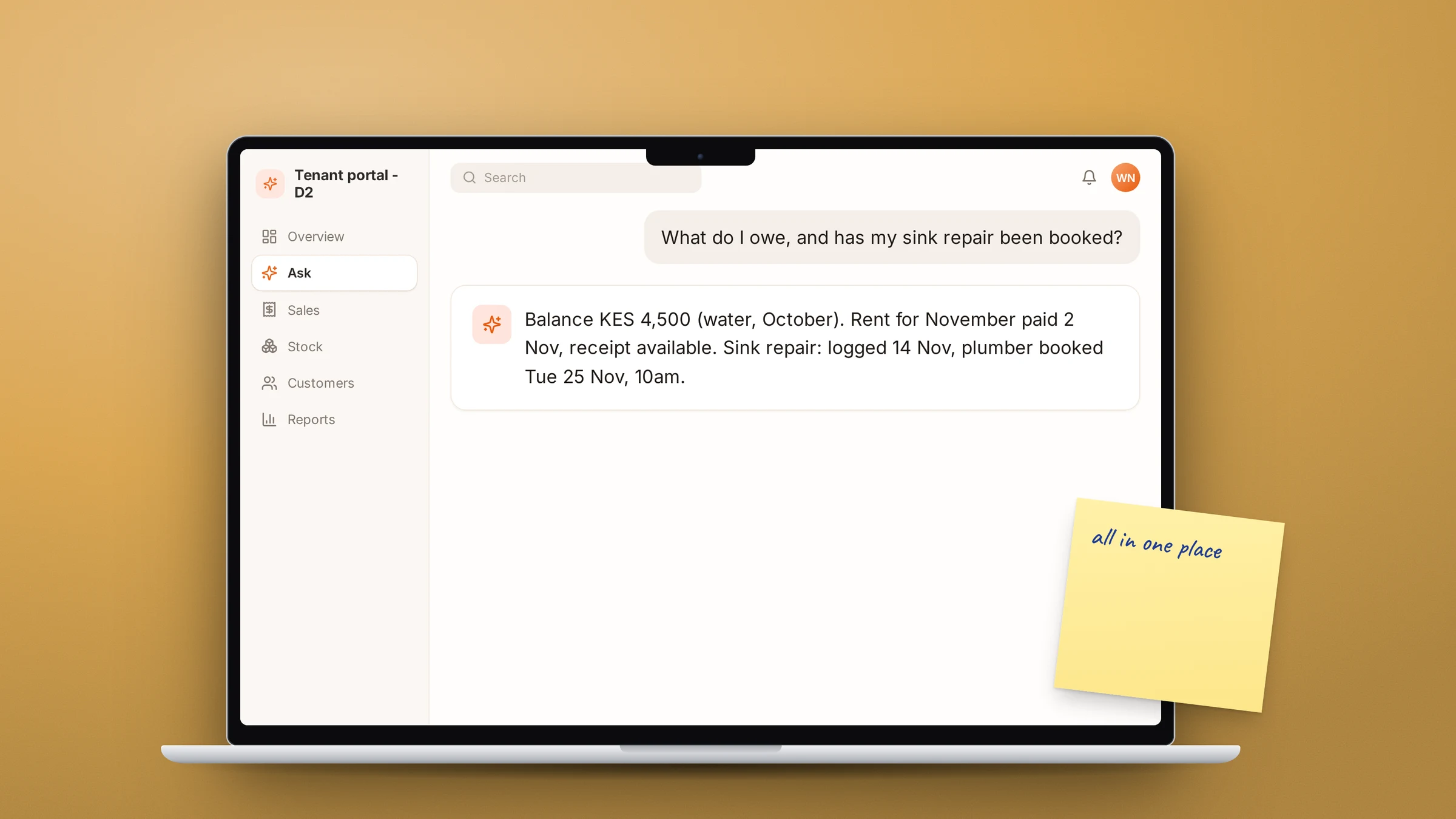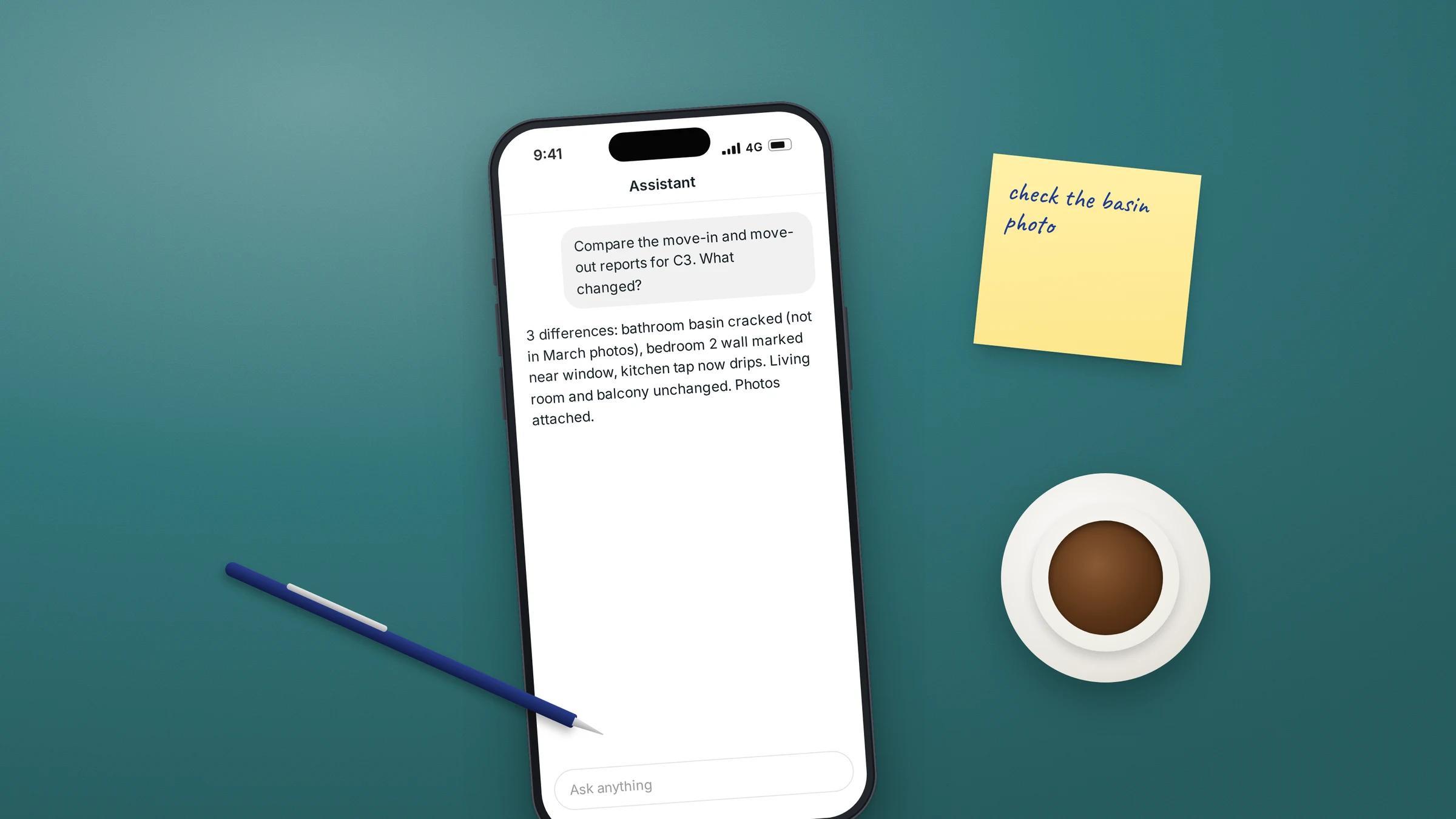
Take an example block of flats in Shanzu, Mombasa. A tenant who has lived in Unit 3B for three years gives notice. At the move-out inspection the agent points out a cracked bathroom tile and a stained wall and proposes deducting KES 9,000 from the deposit. The tenant says both were there when she moved in. The agent who handled her move-in left the company two years ago. The condition report, if there was one, is somewhere in a box file. The lease is in an email account nobody can open.
The tenant may be right or wrong. It does not matter, because nobody can show either.
Deposit disputes like this are rarely lost at move-out. They are lost on move-in day.
What to collect on move-in day#
Think of onboarding as building the file you will need when the tenancy ends. Five things:
1. Identity and contacts. The tenant's name as on their ID, a copy of the ID, phone number, email, and an emergency contact. For a company tenant, the company's details and who signs for it.
2. The signed lease. The real, signed copy, scanned the day it is signed. And the key terms typed into the record, so they can be found without opening a PDF: start date, rent, due date, deposit amount, notice period, and any agreed rent review.
3. The deposit. Amount, date paid, how it was paid (with the M-PESA or bank reference), the receipt number, and where it is held. Write down the conditions for its return as the lease states them.
4. A condition report with photos. Walk the unit with the tenant. Room by room, note the condition of walls, floors, fittings, windows, doors and appliances. Photograph everything, including anything already damaged. Both of you sign and date the report.
5. Meter readings and keys. Water and electricity readings, with a photo of each meter. The number and type of keys and cards handed over.
That is a morning's work. Done once, it saves weeks of argument later.
Why one system, not a box file#
Most agencies collect some of this already. The problem is where it ends up. The lease in one person's email. The deposit in the M-PESA statement. The photos on the caretaker's phone. The condition report in a box file. Each piece exists; none of them can be found together, three years later, by someone who was not there.
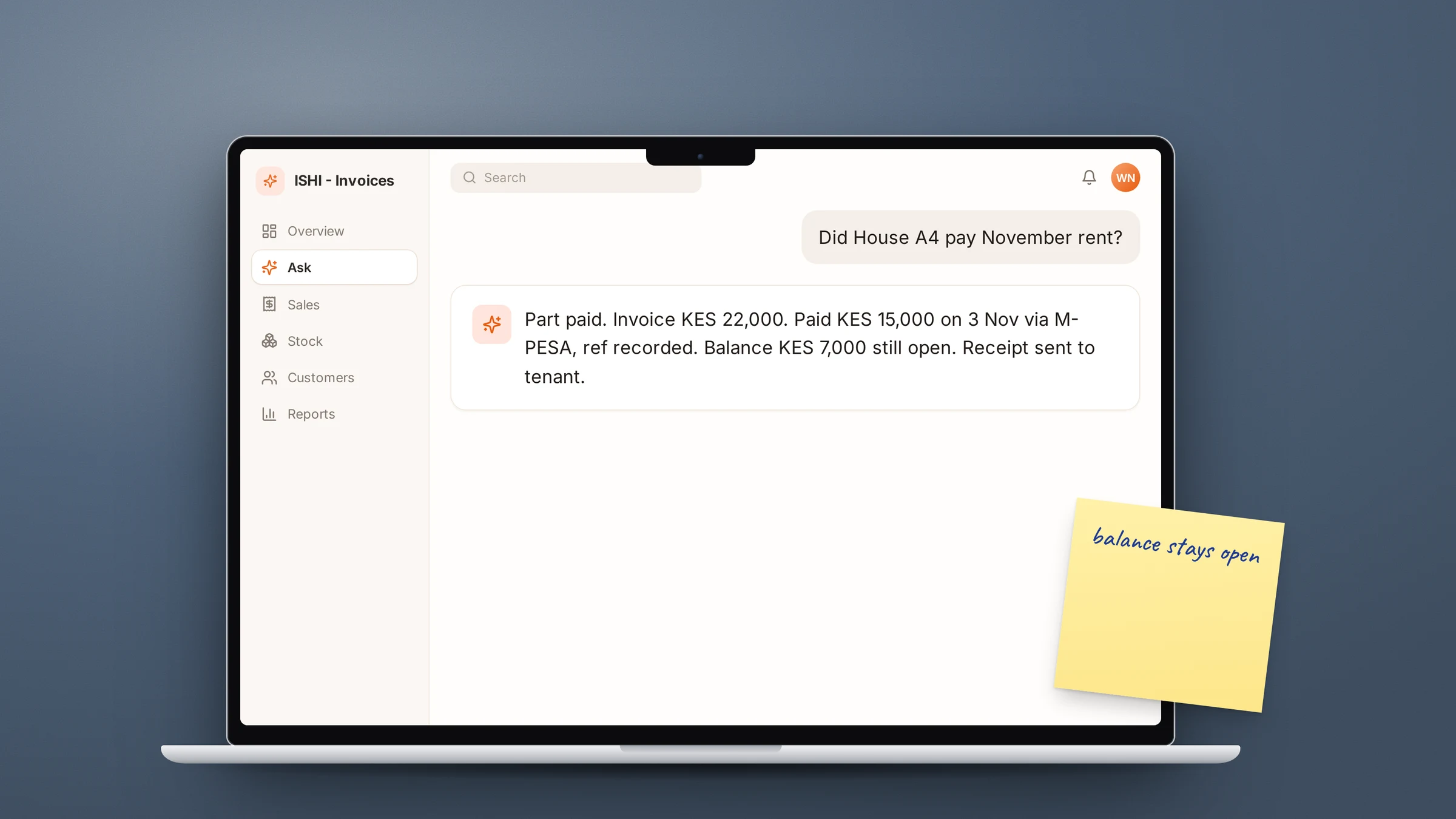
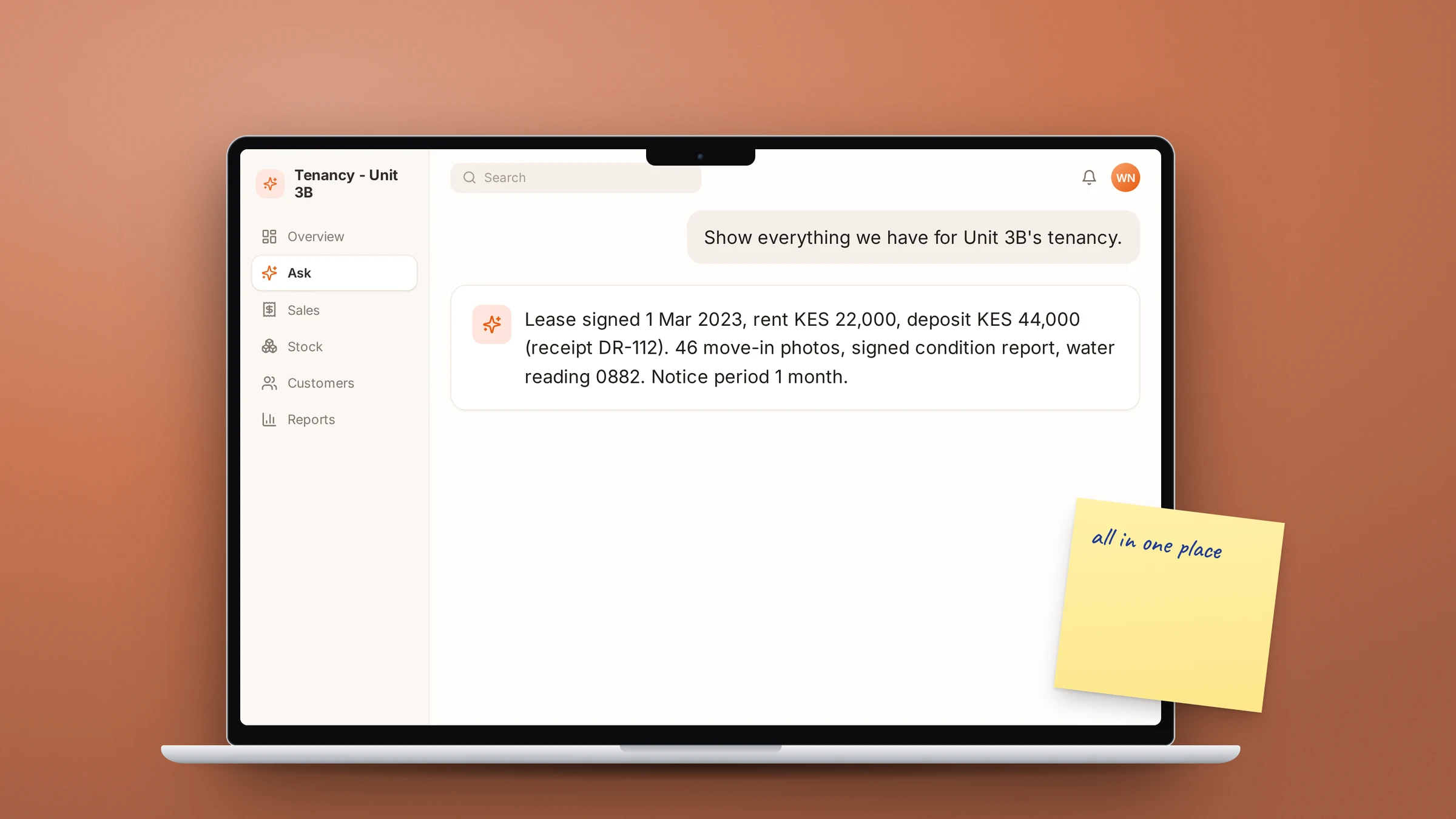
One record per tenancy changes that. In a system like ISHI, built for units, leases, rent and tenant communication, the tenancy record holds the lease, the deposit, the photos, the readings and the contacts in one place. Whoever handles the move-out, even someone who joined last month, opens one record and sees what was agreed and what the unit looked like.
The same record pays off long before move-out. The first water bill needs the opening reading; we covered how to make those bills clear in water bills tenants trust. The arrears routine needs the rent, due date and phone number; see a monthly routine for rent arrears.
Handle personal documents carefully#
ID copies, phone numbers and payment details are personal data. Under Kenya's Data Protection Act 2019, a business that collects them has duties about how they are kept and used. In practice:
- Collect what you need for the tenancy, not everything you could ask for.
- Limit who can open ID copies. The caretaker does not need them.
- Do not share tenant documents on WhatsApp groups.
- Decide how long you keep records after a tenancy ends.
This is general guidance, not legal advice. Check the ODPC's guidance or a professional for what applies to your business. Deposit rules and lease terms may also be governed by the law and the lease itself, so take advice where it matters.
Why this sits at Stage 0#
This is the first rung of the NGAZI ladder: getting the business written down where a computer can read it. There is no AI in it. But every useful thing AI could do later for a property business, from answering a tenant's "when does my lease end?" to preparing a move-out statement, needs this record to exist first. An assistant cannot find a condition report that was never scanned.
What to do this week#
Write a one-page move-in checklist with the five sections above, and use it for your next new tenant. Then pick your three oldest current tenancies and check what you could find today if they gave notice tomorrow: the signed lease, the deposit receipt, the condition report, the photos. Wherever there is a gap, close it now, while the tenant is still there to agree what the unit looks like.