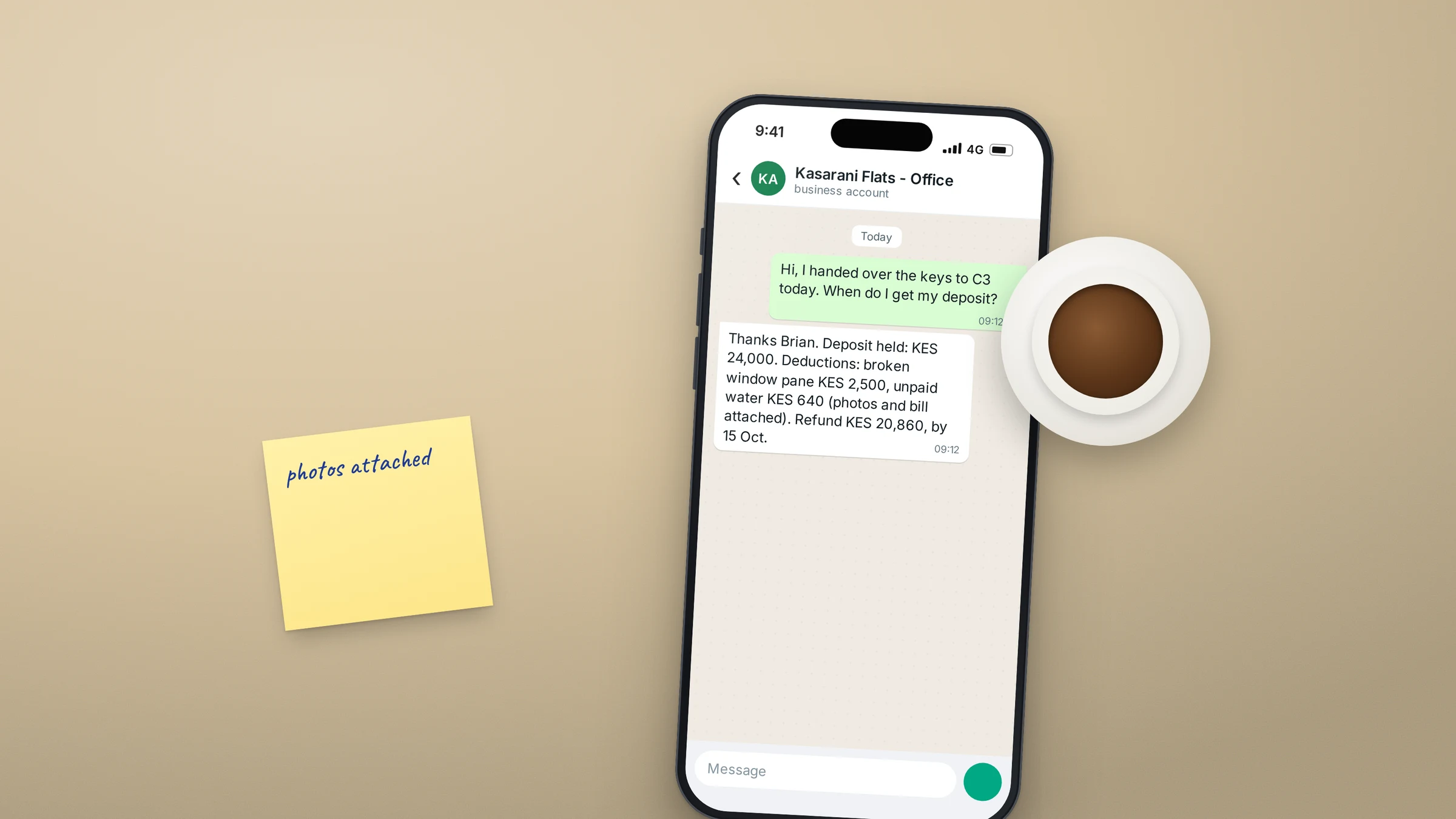
Take Wafula, who manages forty units in Kitengela for three landlords. A tenant moving out of a two-bedroom says the crack in the bathroom basin was there when she arrived. Wafula is sure it was not. There is a move-in form in the file, signed by both of them, and it says "bathroom: good". That is all it says. The tenant wants her full deposit of KES 25,000 back. The landlord wants the basin paid for. Wafula is in the middle with nothing to show either of them.
"Bathroom: good" is the problem. It records an opinion, not a condition. Photos taken properly at move-in record the condition, and they turn a disagreement into a comparison.
What a move-in inspection should capture#
Do the inspection with the tenant present, on the day they take the keys. Walk the unit in the same order every time, room by room, and for each room capture:
- One wide photo from the doorway, so anyone can see the whole room.
- Close-ups of anything worth noting: chipped tiles, marks on walls, stains, a loose socket, a cracked window pane. If in doubt, photograph it.
- The things that get disputed most: basins and toilets, taps, sockets and switches, doors and locks, kitchen worktops, wall paint near windows, and floors near the entrance.
- Meter readings, photographed with the meter number visible.
- Keys handed over, laid out and photographed.
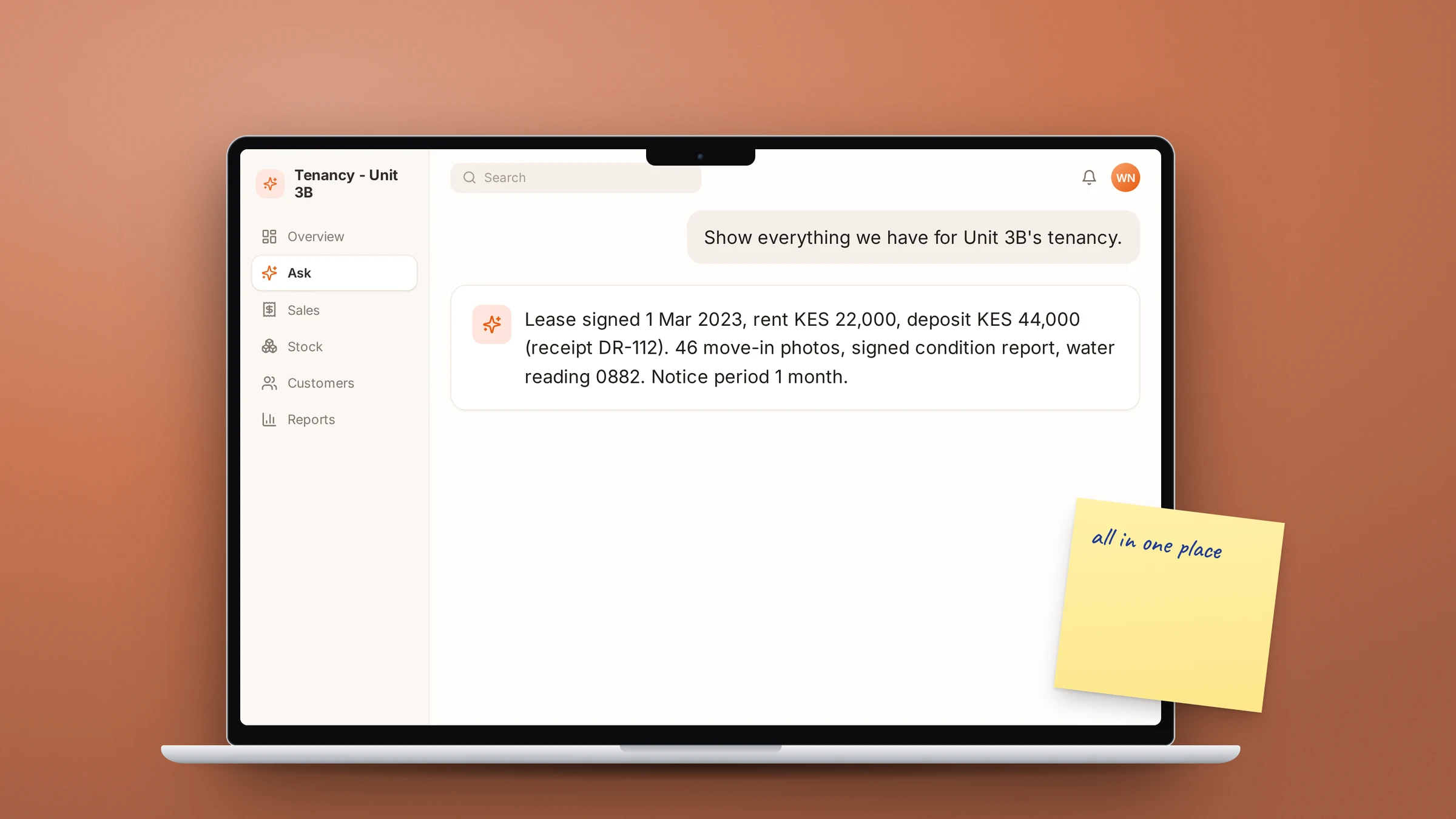
Keep the photos dated and organised by unit, date and room. A folder on someone's phone called "C3" with 60 unlabelled photos is better than nothing, but only just. A record in your property system, or at least a shared folder with "C3 / 2026-03-01 / bathroom", is evidence you can actually find in a year.
Send the tenant a copy, or a link, the same day, and ask them to reply within a few days with anything they think was missed. Their reply, or their silence, is part of the record.
The move-out inspection mirrors it#
At move-out, walk the same route in the same order and take the same photos from the same spots. The value is in the pairs: bathroom at move-in beside bathroom at move-out. Fair wear and tear, such as faded paint after two years, is expected; damage, such as a cracked basin or a hole in a door, is different. Where the line falls is often set out in the lease and in general practice, so check your lease wording and take advice for anything contested rather than deciding alone.
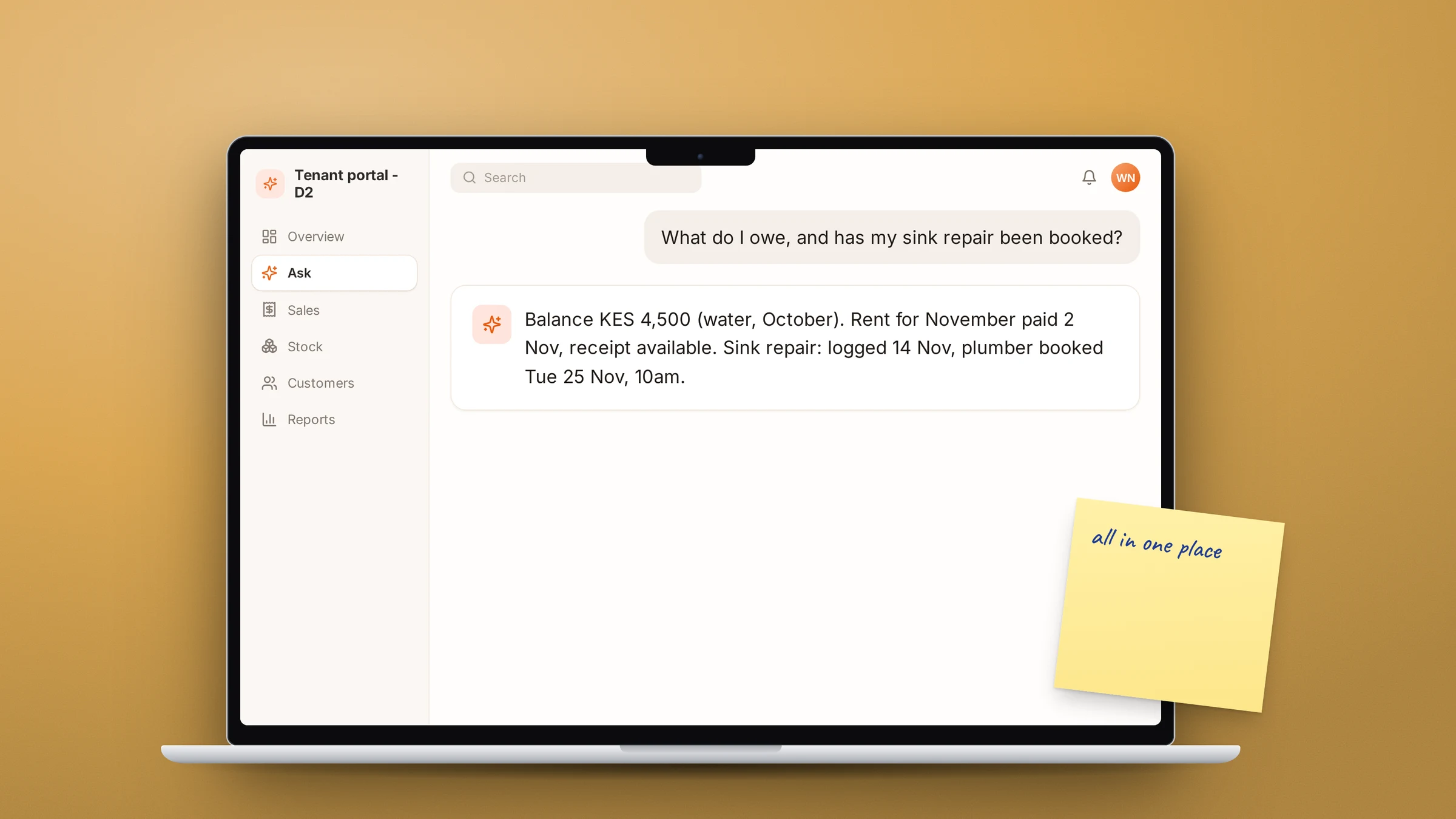
Record the deductions you propose against specific photos, with the cost of each repair. Our guide to deposits and refunds without disputes covers the rest of the process.
Where AI helps: drafting the report, not judging it#
This is Stage 2 on the NGAZI ladder: AI working on your own documents, here the inspection photos and notes.
Two jobs are a good fit:
- Turning the walk-through into a tidy report. The inspector speaks or types rough notes room by room ("bathroom, basin fine, tap drips a bit, mirror chipped bottom right"). An assistant turns them into a structured report under room headings, ready to share with the tenant.
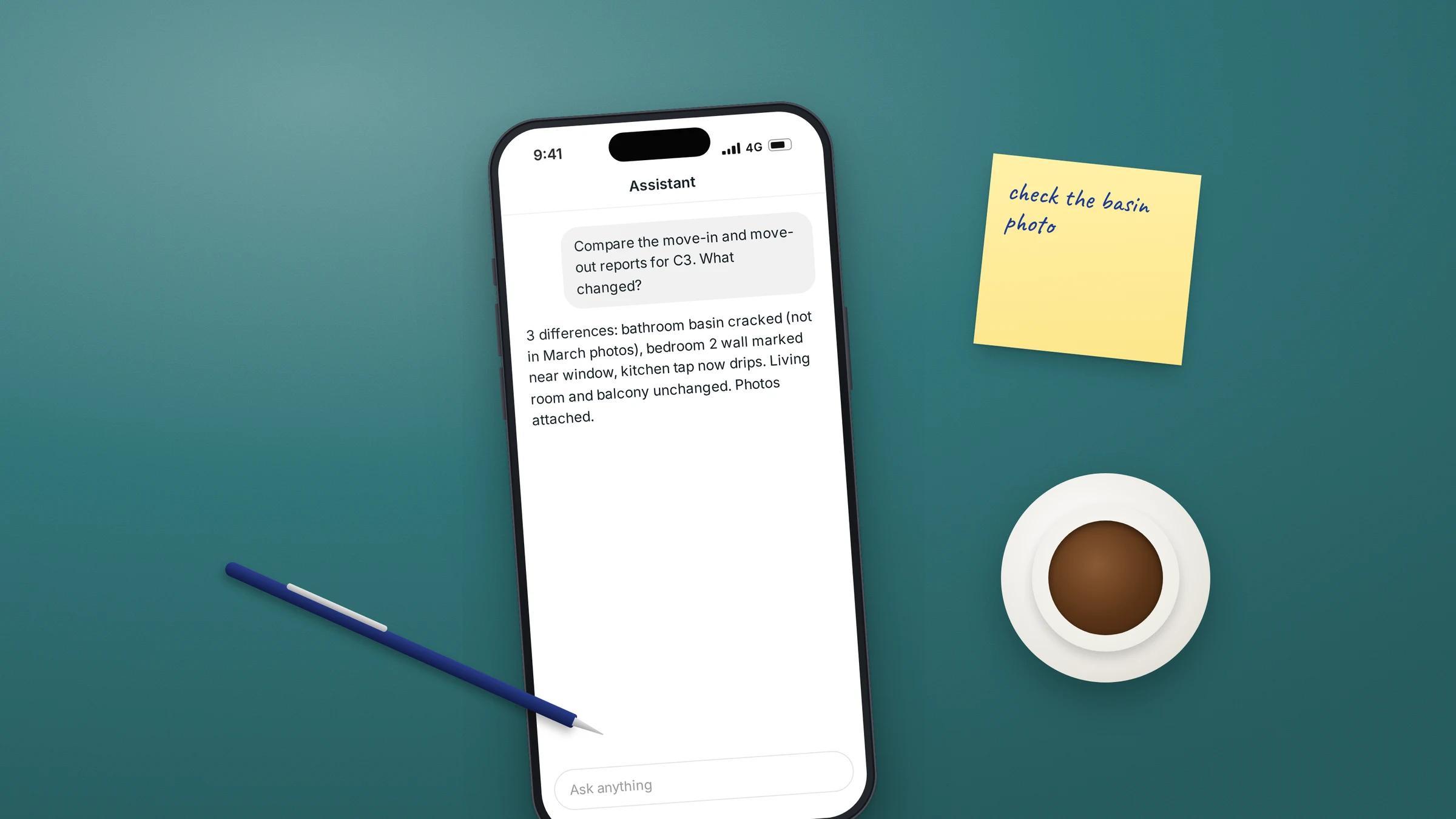
- Drafting a comparison. Given the move-in report and the move-out report, the assistant lists the differences room by room, with the photos for each. That gives the manager a starting list instead of a blank page.
What it should not do is decide. An AI describing a photo can miss a hairline crack or call a shadow a stain. Every difference it lists must be checked by a person against the photos, and the deduction decision stays with the manager and the landlord. The AI saves the writing; the person owns the conclusion.
The photo is the evidence. The AI only helps you find and describe it faster.
Keep tenants' trust while you do it#
Inspections are also about the relationship. A few habits help:
- Tell tenants at signing that photos will be taken at both ends and that they will get copies.
- Photograph rooms, not belongings. At move-out the unit should be empty; at routine inspections, avoid personal items in shots.
- Store the photos securely and only for as long as you need them, in line with your obligations under Kenya's Data Protection Act. Check official guidance if unsure.
- Share the comparison with the tenant before deducting anything, and give them a chance to respond.
A tenant who has seen the move-in photo of the uncracked basin rarely argues. A tenant who is shown nothing always does.
What to do this week#
Pick the next unit with a tenant moving in and run a full photo inspection: wide shot and close-ups for every room, meter readings, keys, short notes per photo, all filed under the unit and date. Send the tenant their copy the same day. Then do the same for any current tenant whose move-in record says only "good"; a mid-tenancy inspection, with their agreement, is better than none.