Take Brian, a tenant who has lived in a one-bedroom flat in Kasarani for three years. He hands back the keys and asks for his KES 24,000 deposit. The landlord, Mrs Wairimu, walks through the flat and says the walls need repainting and a cupboard door is broken, and she will refund KES 12,000. Brian says the cupboard door was broken when he moved in. Mrs Wairimu says it was not. There are no photos and no move-in checklist, and the deposit receipt is a line in a counter book that also has a different amount crossed out.
Both of them may be honest. Neither can prove anything. So the conversation becomes an argument, and the argument often goes on long after the keys are returned.
Deposits are a records problem before they are anything else. That makes them a Stage 0 job on the NGAZI ladder: writing things down properly, on the day they happen.
A note before the practical part: what a landlord may deduct, how long a refund may take, and how deposits must be held can be shaped by the lease and by the law. This article is about record-keeping. For the rules that apply to your property, check your lease and take advice from a lawyer or a professional property manager.
Record the deposit like the money it is#
A deposit is not income. It is the tenant's money that you are holding. Treat it that way from the first shilling:
- Issue a receipt with the tenant's name, the unit, the amount, the date, how it was paid (M-PESA code or bank reference) and the words "rent deposit". Give the tenant a copy.
- Record it separately from rent. In a ledger, a spreadsheet or a property system, deposits go in their own line or account so they never get counted as rent collected.
- Write the terms in the lease: the amount, what it covers, and how it is refunded. If there is a separate utility deposit, record it separately too.
When a deposit is paid in instalments, record each instalment with its own date and reference. "Deposit KES 24,000" with no history is exactly what produces the crossed-out figure in the book.
Inspect at move-in, with dated photos#
This is the step that prevents most disputes, and the one most often skipped because everyone is busy on moving day.
Walk the unit with the tenant, room by room, before they move anything in. For each room note the condition of the walls, floor, doors, windows, fittings, taps, sockets and anything supplied like a cooker or curtains. Take photos on a phone; most phones record the date in the photo details. Note the meter readings for water and electricity.
Both of you sign the checklist, and both of you keep a copy, with the photos shared to the tenant on WhatsApp so they are on their phone too.
Keep the record alive during the tenancy#
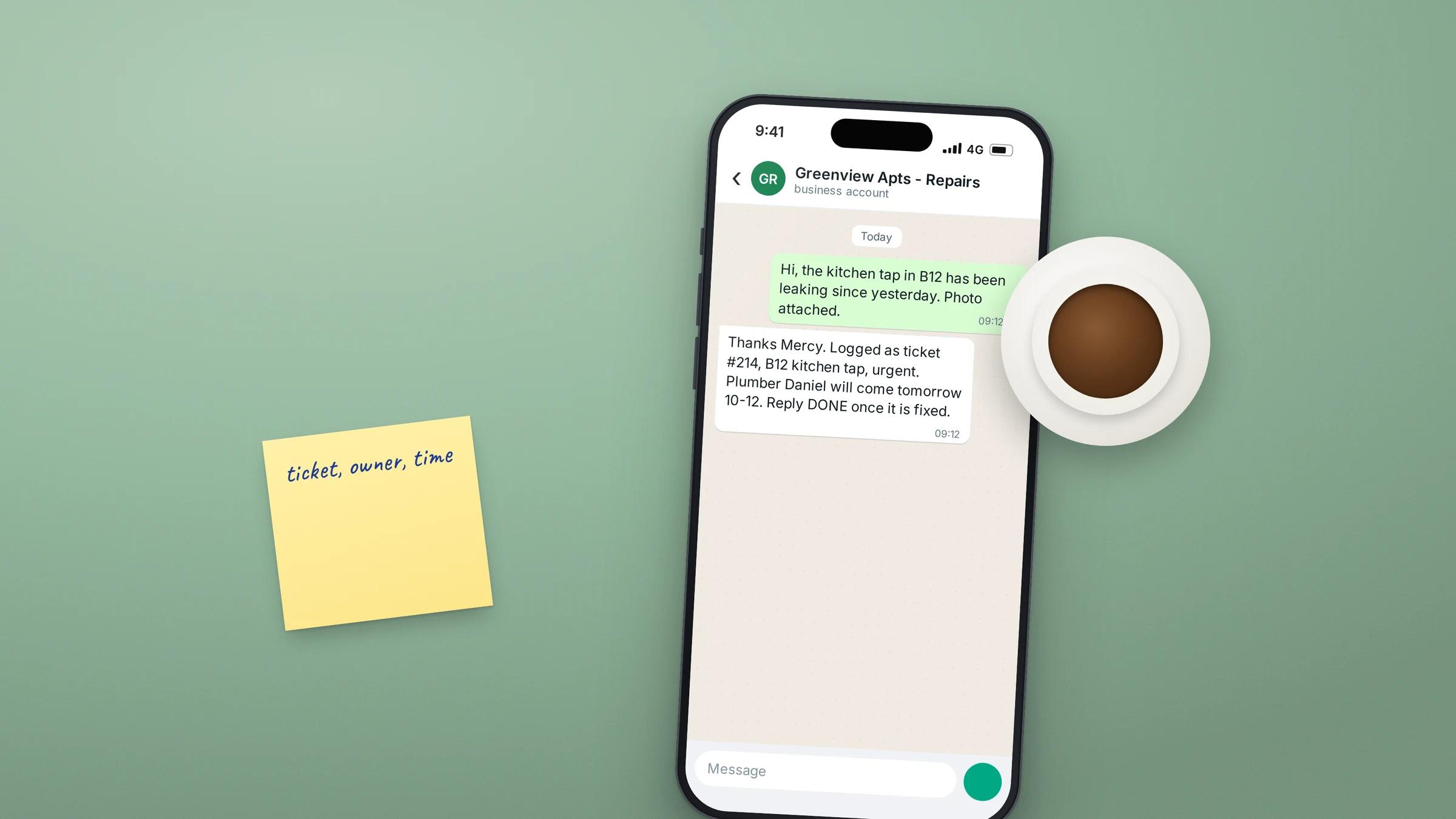
Repairs during the tenancy change what "original condition" means. If the cupboard door was fixed in year two, that should be on file with the date and who paid. The maintenance routine for WhatsApp requests keeps exactly that kind of history, unit by unit.
Inspect at move-out the same way#
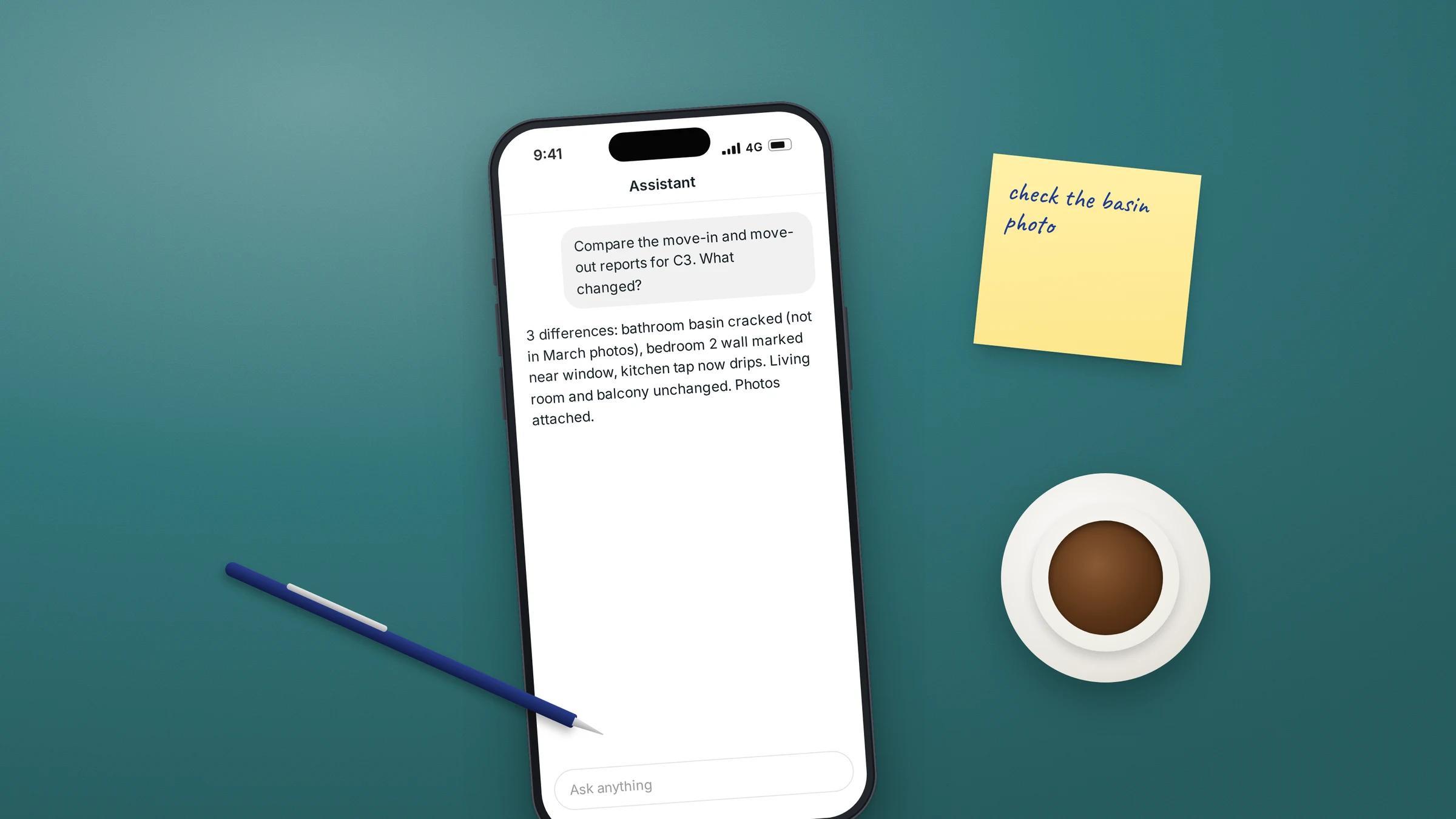
At move-out, use the same checklist and take photos from the same angles. Walk it with the tenant if at all possible. Now the comparison is concrete: here is the window on day one, here it is today.
Normal wear from people living in a home for three years, faded paint and worn floors, is generally treated differently from damage. Where exactly that line falls is one of the things to check against your lease and proper advice.
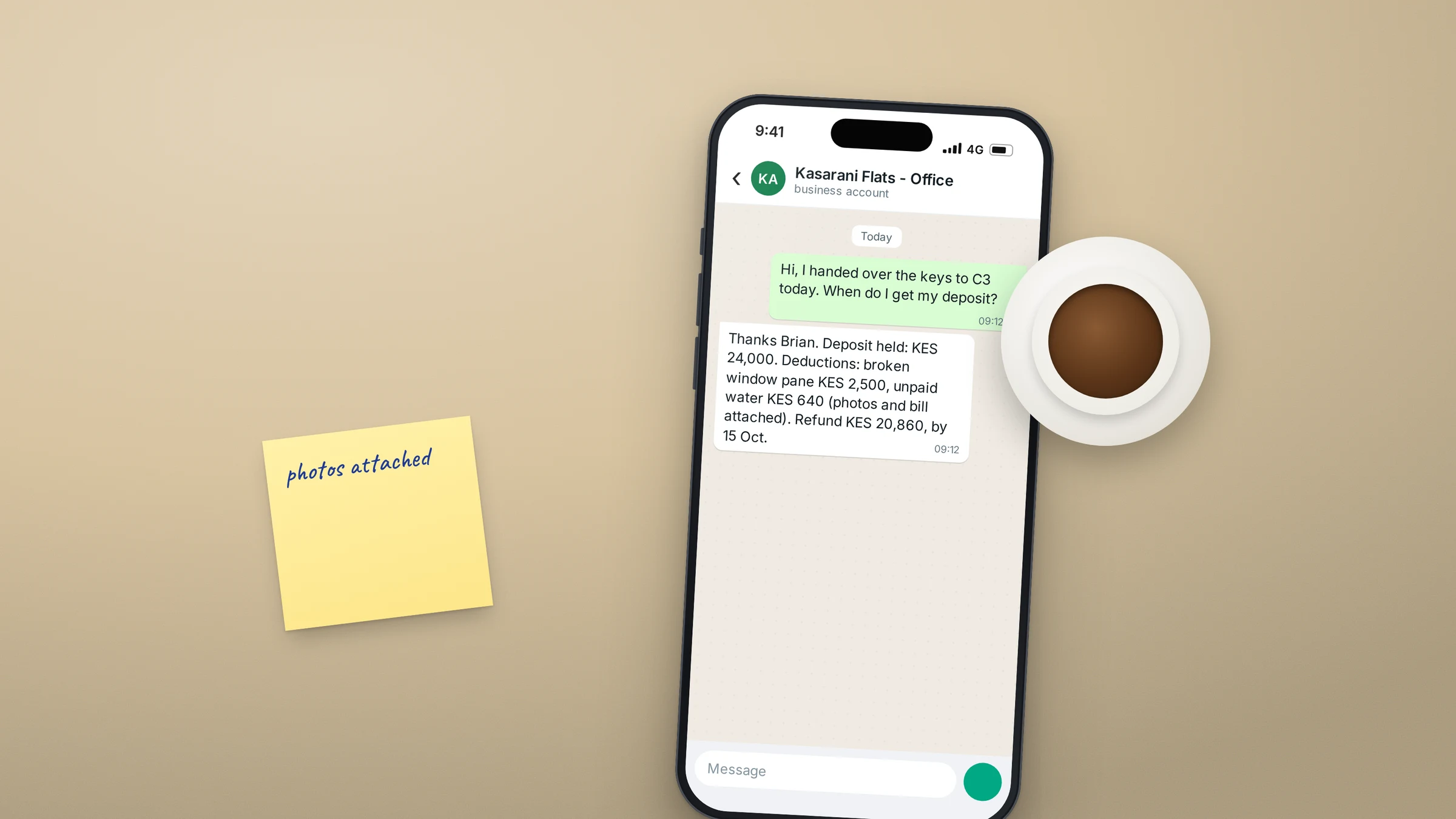
Itemise every deduction, in writing#
Send the tenant a written statement, on WhatsApp or by email, listing:
- The deposit held, with the original receipt reference.
- Each deduction: what it is, the amount, and the evidence (photo pair, quote, or bill).
- The refund amount and the date it will be paid, and how.
A refund with two clear lines and photos attached is rarely disputed. A single figure with "deductions for damages" usually is.
What to do this week#
Make a list of every tenant you hold a deposit for: unit, amount, date paid, and whether you can find the receipt and a move-in record. Wherever the receipt or the record is missing, that is a dispute waiting to happen. For current tenants with no move-in record, arrange a short walk-through now, with photos both of you keep, and note that it was taken mid-tenancy. It is not as good as day one, but it is far better than nothing.