This is an illustrative example, not a real shop or a client's results. Take a furniture shop in Kahawa Sukari, which I will call Mbao Furniture, run by Wambui with two sales staff and a delivery driver. Most of her customers first contact her on WhatsApp, usually after seeing a sofa on her status. Saturdays are her busiest day in the showroom and in the chat. Suppose she has an assistant connected to her stock and price records, which answers on the shop's WhatsApp number within clear limits and hands over to a person when it should. Here is one Saturday, hour by hour.
Early morning: price and stock while the shop is shut#
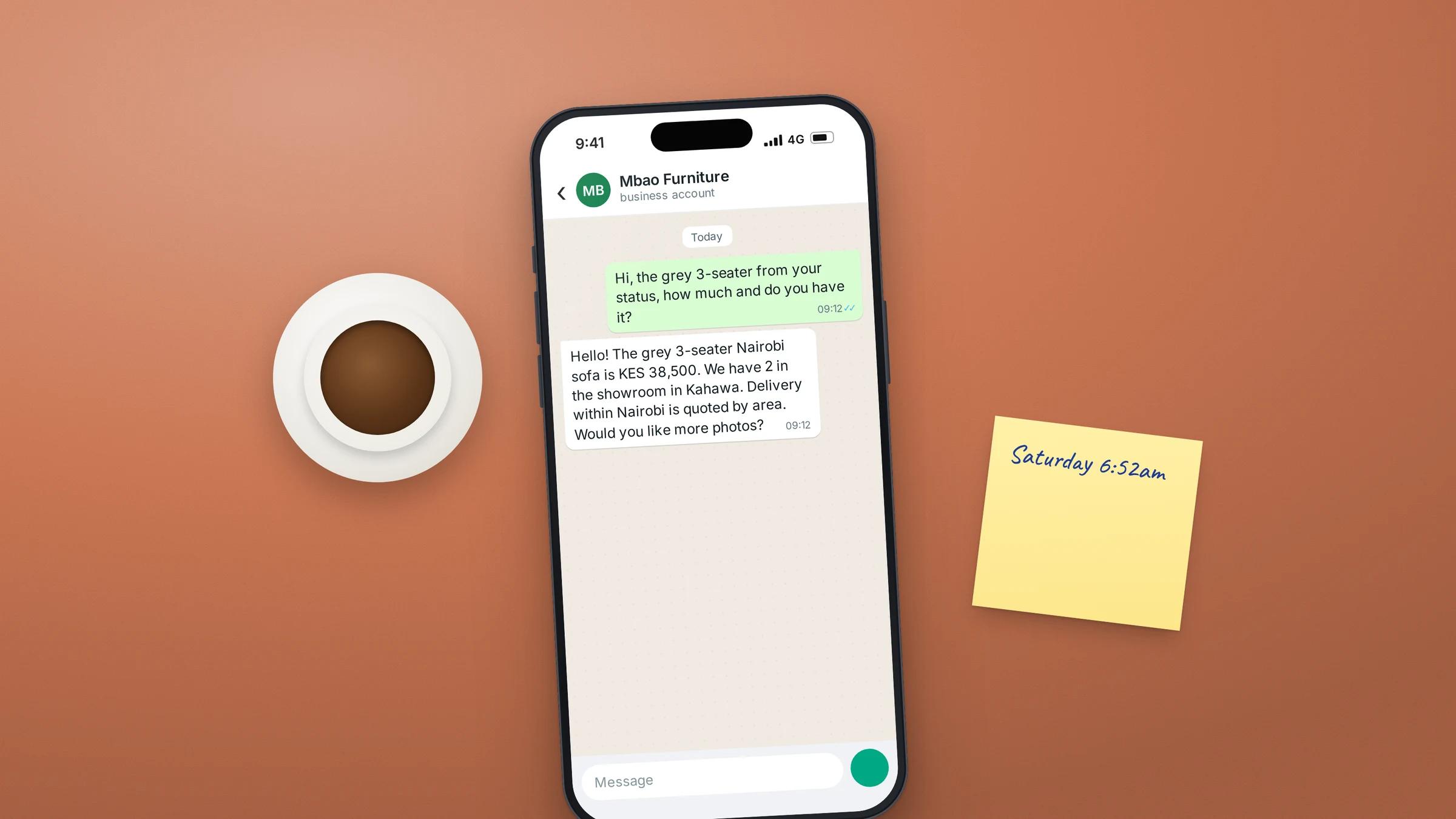
6:52am. A customer asks about "the grey 3-seater from your status". The assistant matches the status photo to the item in the records, replies with the price, KES 38,500, says there are two in the showroom, and offers more photos. It does not quote delivery, because delivery prices depend on area and Wambui sets them.
7:30am. Another customer asks whether the dining set comes in walnut. The records show walnut is out of stock, with a supplier delivery expected. The assistant says so plainly and asks whether the customer would like a message when it arrives. She says yes. That consent is recorded with the date, so the shop can send a notice later without guessing.
By the time the shop opens at 9am, nine questions have been answered with real prices and stock counts. Three customers have said they will come in. Nobody waited until 9am to hear a price, which is when many buyers start messaging the next shop.
Mid-morning: the first handover#
9:40am. A customer asks: "If I buy the sofa and the coffee table, what is your best price?" This is a negotiation, and negotiation is Wambui's job. The assistant replies: "Let me pass you to Wambui, who can discuss a price for both. She is in the showroom and will reply shortly." It posts a short summary to the staff phone: customer, the two items, their listed prices, and the question.
Handing over well is most of the skill. The customer is told what is happening, who will reply, and roughly when. Wambui gets the context so she does not have to scroll back. If you want the principles behind where to draw this line, read when AI should not touch your customer messages.
11:15am. A customer sends a photo of a wardrobe from another shop and asks whether Mbao can make one like it. Custom work is not in the records. The assistant does not guess a price or a time. It hands over.
Afternoon: the complaint#
1:20pm. A message comes in: the bed delivered on Thursday has a cracked leg. The customer is upset.
This is the most important handover of the day. The assistant does not apologise on the shop's behalf with promises, does not offer a refund, and does not argue. It replies: "I am sorry to hear that. I am passing this to Wambui now so she can sort it out with you. Could you send a photo of the leg while you wait?" It marks the conversation urgent on the staff phone.
Wambui calls the customer within twenty minutes and arranges a replacement leg. The assistant's job was to be fast, polite and out of the way.
The assistant answers what the records can answer. Everything that needs judgement, money or an apology goes to a person, with the context attached.
Late afternoon and evening: delivery and follow-up#
3:45pm. A customer who bought on Wednesday asks when her order will arrive. The delivery schedule is in the system, so the assistant gives the scheduled date and the driver's usual time window. If the schedule had no date for her order, it would say so and hand over, not invent one.
8:10pm. Two more price questions and one "are you open tomorrow?" The assistant answers all three. The shop is closed on Sunday, and it says so, with Monday's hours.
What the day adds up to#
Counting the illustrative Saturday: about forty messages. Around thirty were price, stock, hours, location or delivery-date questions that the records could answer. About ten went to a person: negotiation, custom work, the complaint, and a few questions the assistant could not match to an item.
This is stage 3 on the NGAZI ladder: AI working inside the workflow, using the same records the staff use. It only works because the stock and prices in the system are right. A shop whose stock counts are weeks out of date would be answering confidently and wrongly all day, which is worse than not answering. A WhatsApp catalogue that stays in step with your stock covers that groundwork.
What to do this week#
Go through last Saturday's WhatsApp messages and sort them into two piles: questions your records could answer (price, stock, hours, delivery date) and questions that needed a person. Count each pile. Then check the first pile against your records: would the answer have been correct? That tells you how ready you are, and what to fix first.