This is an illustrative example, not a client story. Njoroge Hardware is invented, and so are the figures, but every step is the kind of thing that happens when a real hardware shop moves from a sales book to a retail system. I wrote it because owners often ask what the first month actually feels like, and the honest answer is: busy, a bit messy, and much less about technology than they expect.
Njoroge runs a mid-sized hardware shop in Kerugoya with two counter staff and a storeman. Sales go in a book, stock is counted by eye, and suppliers are paid from memory and a pile of delivery notes. He is at Stage 0 on the NGAZI ladder: the business is not yet written down anywhere a computer can read. The goal of the first month on UpeoRetail is not AI. It is getting the day recorded.
Week 1: the item list and opening stock#
Before a single sale can be recorded, the system needs to know what the shop sells. This is the longest job of the month.
Njoroge and his storeman go shelf by shelf. For each item: a clear name, the unit it is counted in, any other units it is sold in, the selling price, and what he pays for it. Hardware is hard here because of units: cement by the bag, nails by the kilo and the box, pipes by the piece and the length. We covered how to set those up in selling by the bag, the piece and the metre.
They end up with about 230 items. They count each one on the Sunday evening, when the shop is closed, and that count becomes the opening stock.
What goes wrong: buying prices. For about forty items Njoroge is not sure what he last paid. They enter his best figure and mark those items to check against the next delivery note. That is fine. A known gap beats an invented number.
Week 2: sales at the counter#
Counter staff start recording every sale in the system. The first two days are slow. A customer wanting "the usual" does not know the item name; a fundi buying fifteen things at once tests everybody's patience.
Two habits are set this week and matter more than anything else:
- Every sale is recorded before the goods leave, including small ones.
- Every M-PESA sale carries the transaction code from the payment, typed into the sale.
By Thursday the counter is back to normal speed. The book is kept in parallel for the week as a safety net, and on Saturday they compare: the system has three sales the book missed, and the book has none the system missed. The book is retired.
Week 3: deliveries and suppliers#
The buying side comes in. Every delivery is entered as a purchase against the supplier, with quantities and prices from the delivery note or invoice. The forty "check later" buying prices get corrected as their deliveries arrive.
This is where the storeman becomes important. Deliveries arrive while the counter is busy, so he enters them, checking quantities against what was actually unloaded rather than what the note says. Two deliveries in the week are short; for the first time, the shortage is on record against the supplier rather than in someone's memory.
Week 4: the first count that does not match#
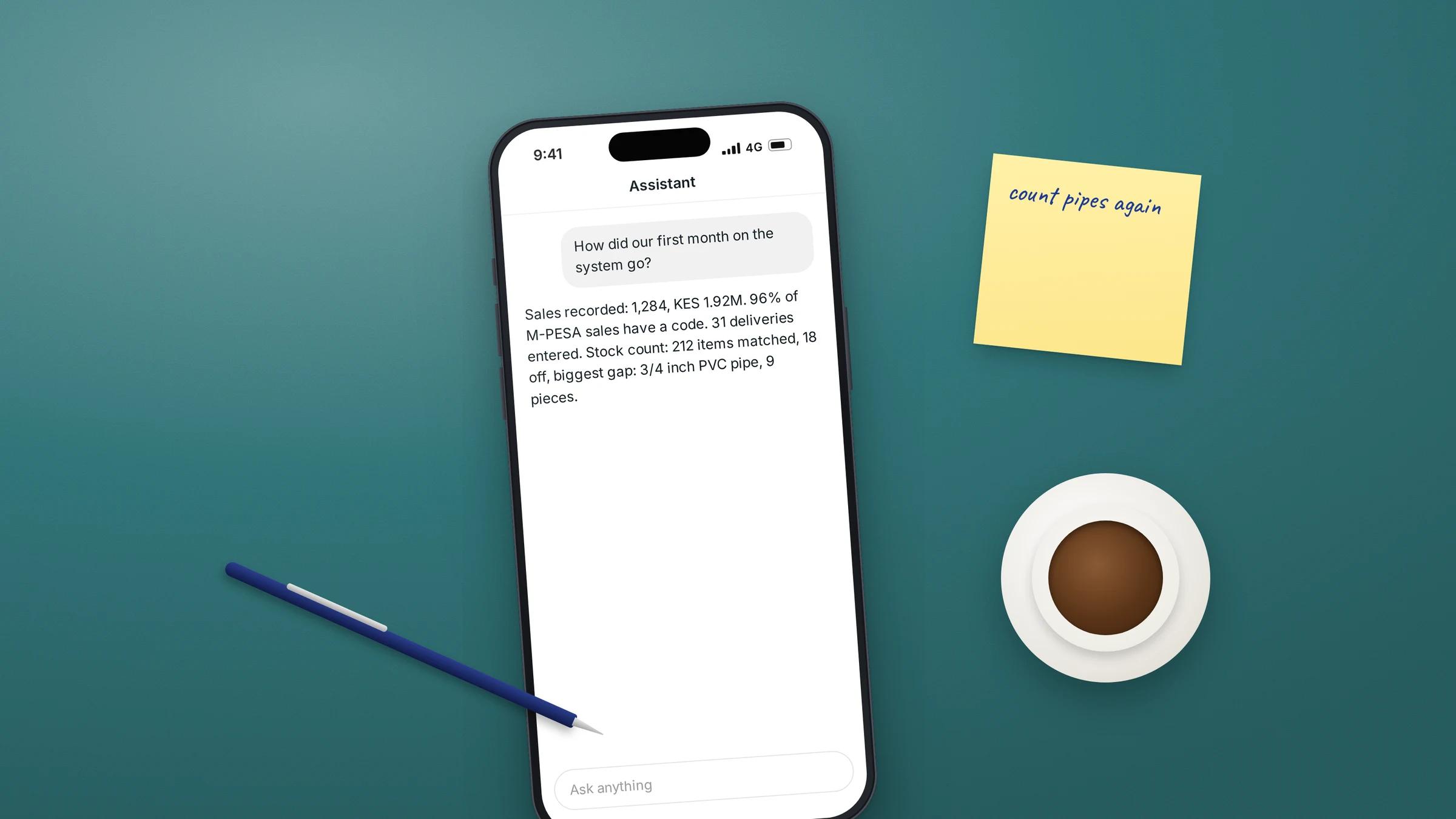
At the end of the month, they count again. Most items match the system. Eighteen do not.
This is the moment owners worry about, and it is the moment the month pays off. Each mismatch is a question with an answer:
- PVC pipes are 9 pieces short. It turns out some were sold by the length and recorded as whole pieces, so the unit conversion needs fixing.
- Two items have more stock than expected: deliveries entered twice.
- A few small items are simply missing, and now Njoroge knows which ones and by how much.
None of that was visible with a book. The shrinkage article looks at what records like these reveal over time.
What comes after the first month#
With a month of sales, purchases and a reconciled count, the shop has what any later step needs: real records. Questions like which items make the most money, or what to reorder before the rainy season, now have data behind them. That is when an analyst like Rai, which lives inside UpeoRetail, has something to work with. Without the month of recording, it would have nothing.
What to do this week#
If you are planning a move like this, do the week 1 job now, on paper or a spreadsheet: list every item you sell with its unit, selling price and buying price. Mark every buying price you are not sure of. That list is most of the setup work, and the marked prices tell you which delivery notes to keep.