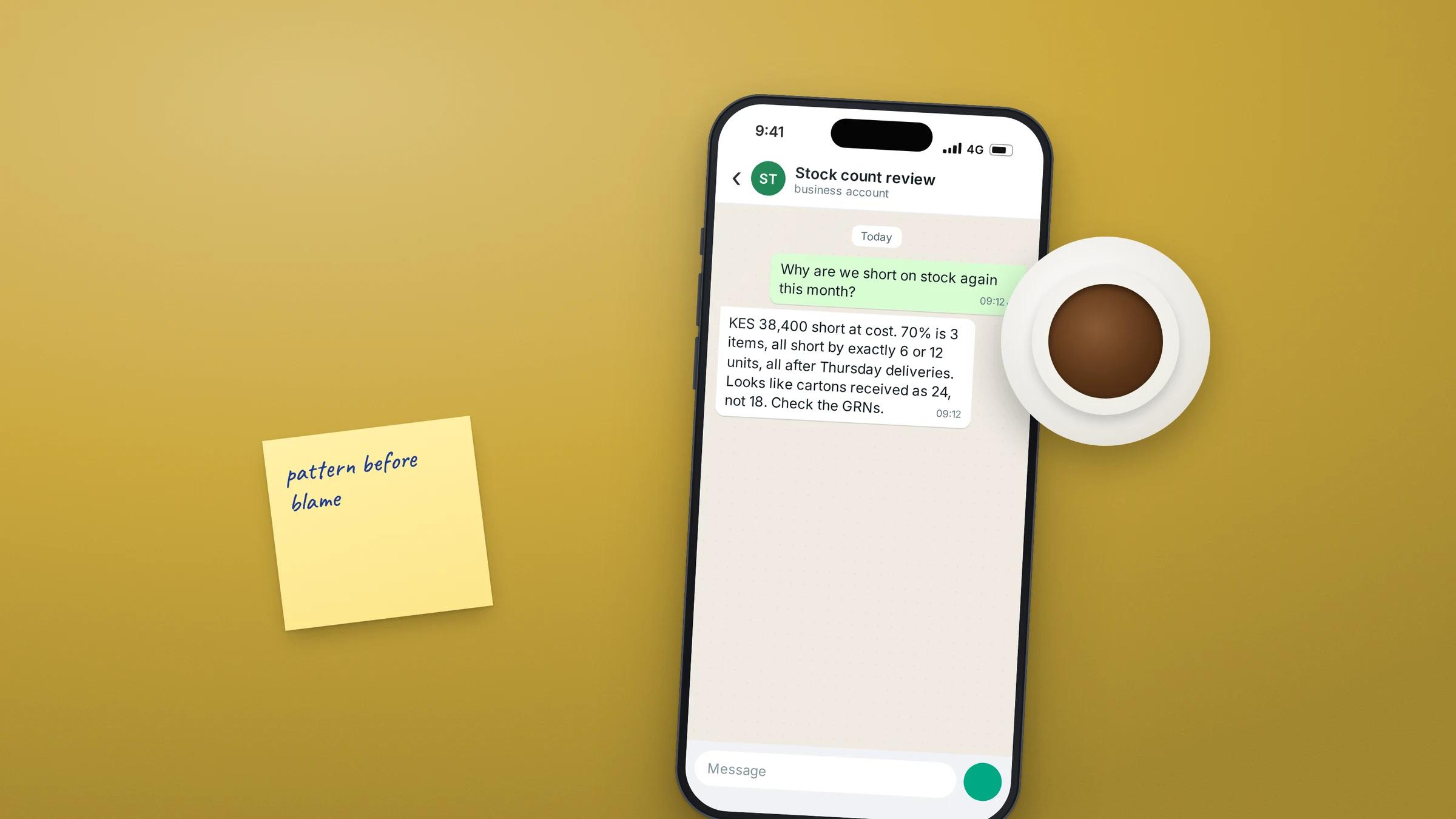
Take Kipchumba, an example owner of a wines and spirits shop in Nanyuki. His monthly count is short again: KES 38,400 at cost. He has a suspicion about one of the evening staff and has started watching him. The atmosphere in the shop is getting worse. What he has not done is look at which items are short, by how much, and when.
When he does, the picture changes. Most of the gap is in three items, each short by exactly 6 or 12 units, and the shortfalls appear after Thursday deliveries. Thieves do not usually take stock in neat multiples of six on delivery days.
The usual causes, and what they look like#
Every gap between what the system says and what is on the shelf has a cause. The causes leave different fingerprints:
| Cause | What it tends to look like |
|---|---|
| Receiving errors | Gaps appear after deliveries, often in pack-size multiples |
| Unit mix-ups | An item sold or received as a carton but recorded as a single, or the reverse |
| Unrecorded breakage or expiry | Fragile or dated items, gaps after busy days or hot weeks |
| Sales not rung up | Fast, cheap items; gaps on particular shifts or busy hours |
| Theft | Small, high-value items; gaps not tied to deliveries, often concentrated on certain shifts or areas |
Notice that only one row is theft. In many shops it is not the biggest one. A supplier who invoices 24 bottles and delivers 18, a receiver who counts cartons without opening them, a broken bottle swept up and never written off: these are ordinary, and they look identical to theft in a monthly total.
Count small and often#
One big count at month end tells you how much is missing, but not when or where. Small counts tell you both. The method is called cycle counting:
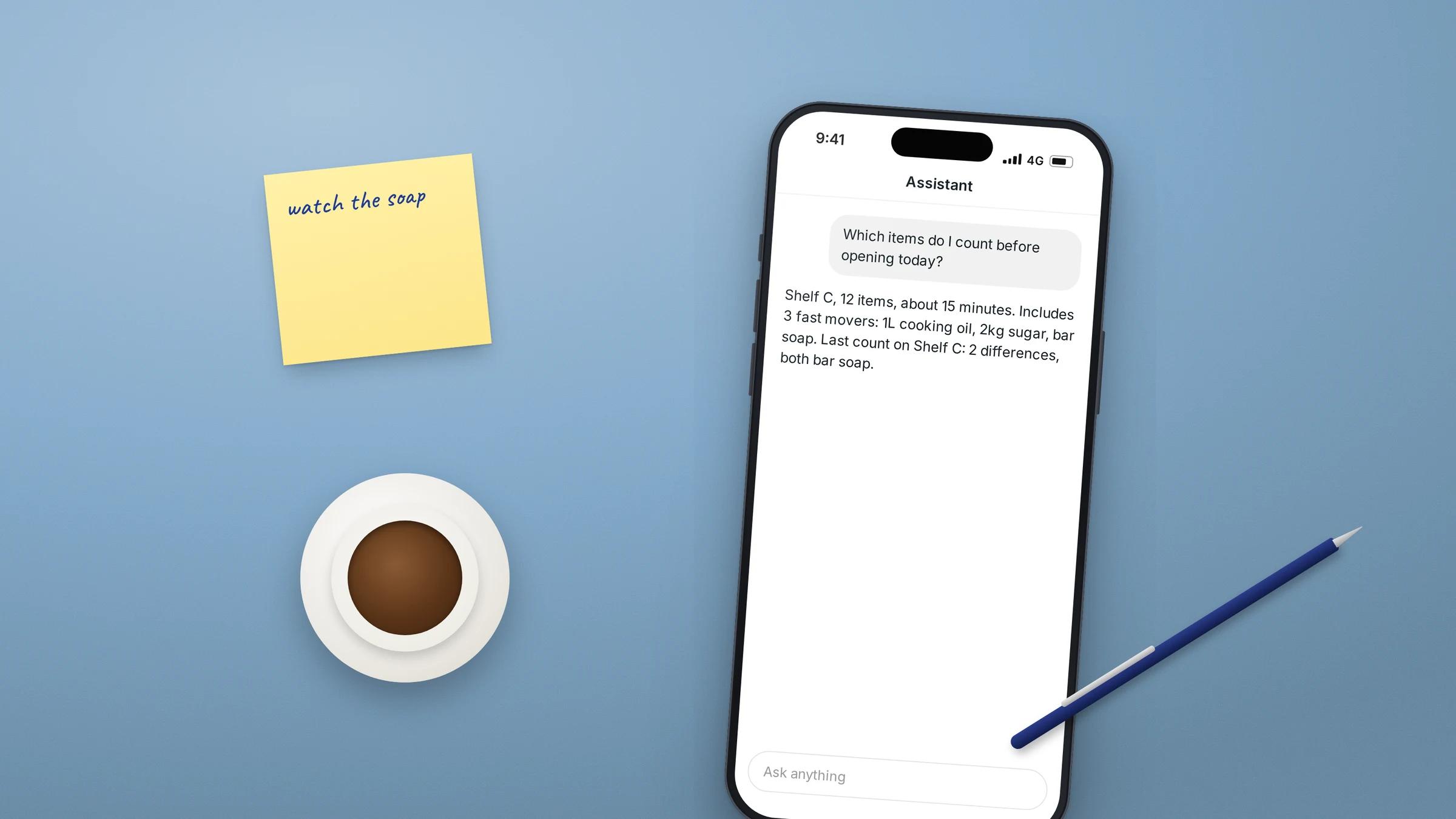
- Pick 15 to 20 items each week, including your high-value lines every week.
- Count them at the same time of day, before opening is easiest.
- Record the count, the system figure and the difference.
Over a month, you build a record of gaps by item and by week. That is what lets a pattern show up.
Also count every delivery at the door, against the delivery note, opening at least one carton of each line. Then match the delivery note to the supplier's invoice before paying it.
Let an assistant find the pattern#
This is a Stage 2 job on the NGAZI ladder: an assistant working on your own records. Export your cycle counts, your deliveries and your sales for the period, and ask:
From these files, list the items with count shortfalls. Group the shortfalls by item, by week and by whether they came after a delivery. Show any shortfalls that are exact multiples of the pack size. Total the value at cost.
Check the top rows against your count sheets. If the assistant groups the gaps correctly, the cause usually suggests itself. In Kipchumba's example, the next step is to pull the Thursday delivery notes and invoices for those three items, not to confront a staff member.
As with the dead stock list, this only works if sales and deliveries are actually being recorded. A shop that writes some sales in a book will see "shrinkage" that is really just missing records.
Not accusations#
Records point to a place in the process: receiving, the till, the store room, a shift. They do not point to a person. If the pattern does point to a particular shift or area, the next step is a closer look at that process, perhaps a second person at receiving or a spot count at shift change, not an accusation.
Accusing staff on the basis of a spreadsheet is unfair, often wrong, and costly when it is wrong: good staff leave, and the real cause keeps running. If you do suspect theft, take advice before acting, and treat it as a matter for proper process.
What to do this week#
Choose 15 items, including your five most valuable. Count them before opening on Monday and again on Friday, and write down the system figure each time. Count every delivery at the door this week, against its note.
At the end of the week, look at the differences. Are they on delivery days? In pack-size multiples? On fragile items? The answer to those three questions will usually tell you where to look next.