Take Otieno, an example owner who runs a wholesale shop in Kisumu selling cooking oil, flour and sugar to small shops and kiosks. On Monday his oil supplier sent a two-line message: the price of a 20-litre jerrican goes up by KES 350 from the first of the month. Otieno buys about 50 a month. He has a call with the sales rep on Thursday, and he knows from experience how these calls go: the rep is friendly, fast and prepared, and Otieno remembers his best argument on the way home.
This is a good job for an AI assistant. Not to negotiate for him, and not to decide, but to help him prepare the way a sharp friend would: by playing the other side, by laying out the options, and by making him get his numbers ready before Thursday.
Step 1: get your own numbers on one page#
Before any role-play, write down what you actually know. An assistant cannot invent your history, and you should not let it try. For Otieno that page looks like this:
- What he has bought from this supplier over the last six months, in jerricans and shillings.
- What he sells a jerrican for and what he pays, so he knows his margin in shillings per unit.
- How many times deliveries were late or short, with dates.
- His payment record: does he pay on time?
- What one other supplier quoted last month for the same item.
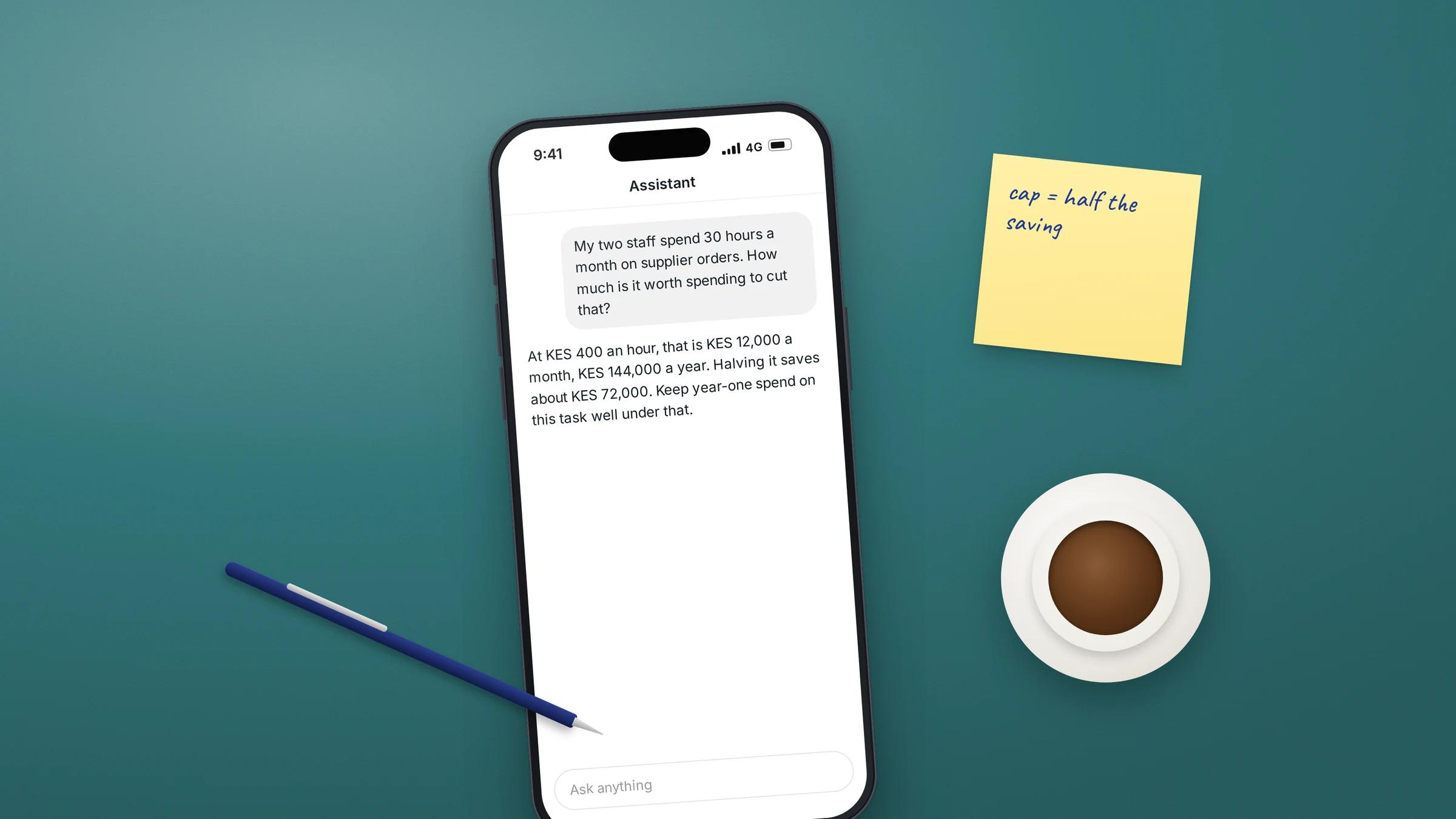
Then paste the facts (not your customers' names or your bank details) into the assistant and ask: "Using only these figures, what does a KES 350 increase do to my monthly cost and my margin per jerrican? Show the working." Check the arithmetic yourself. It takes a minute and it matters.
If the numbers are in an exercise book, this step is the real work. It is also the step that wins negotiations, with or without AI.
Step 2: role-play the supplier#
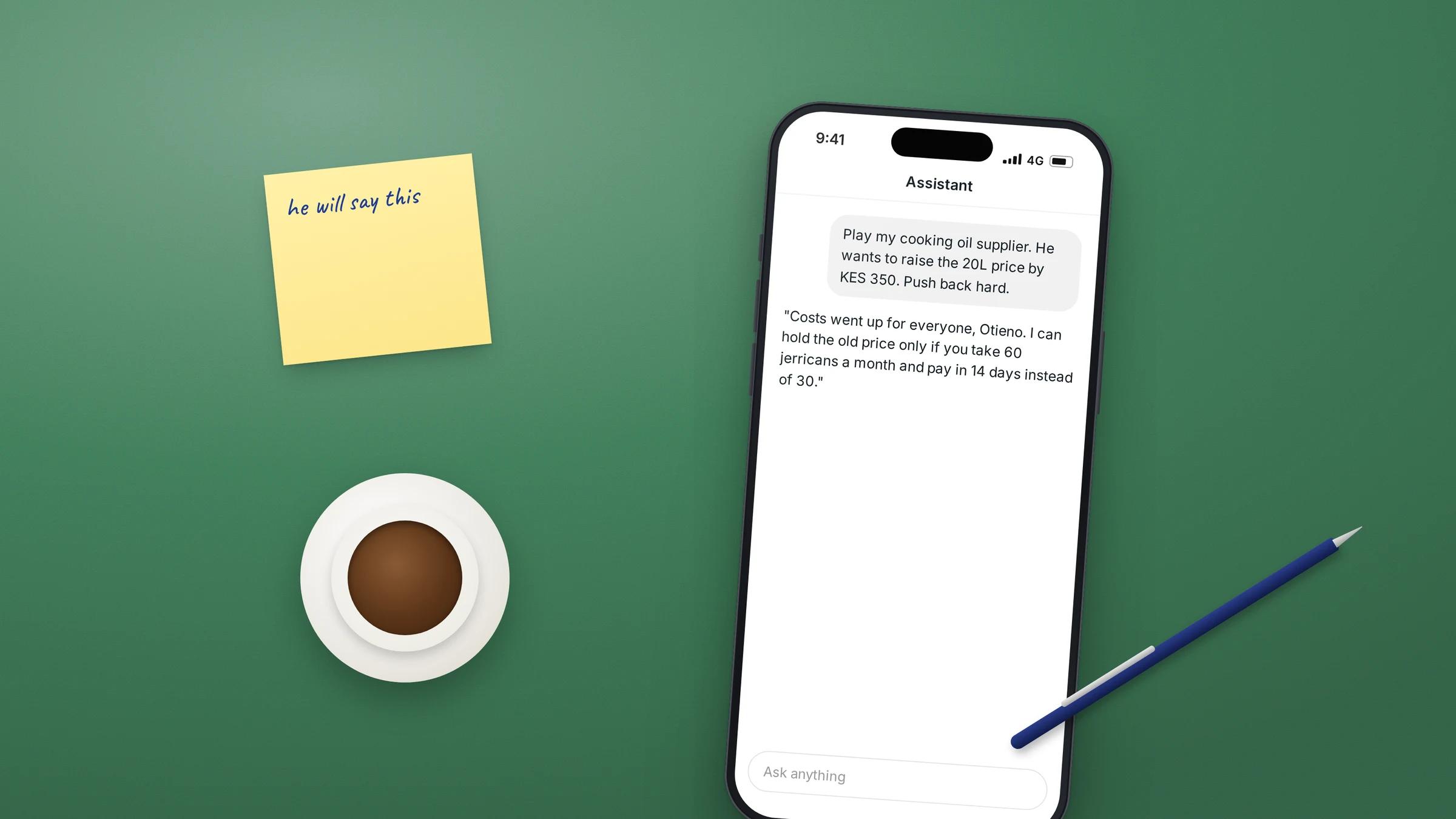
Now give the assistant a part to play. A prompt that works:
You are the sales rep for a cooking oil distributor. You have been told to push through a price increase of KES 350 per 20-litre jerrican. You are polite but firm, and you know my business buys about 50 a month. Respond to what I say as that rep would. Do not give in easily. After five exchanges, step out of the role and tell me which of my arguments were weak.
Then argue with it. Type what you would actually say. You will notice quickly which of your points sound strong when written down and which collapse at the first reply. "Everyone is complaining about prices" collapses. "I have paid within 30 days for 18 months and I want that counted" holds up.
Run it two or three times, asking the assistant to play the rep differently each time: friendly, impatient, offering a deal. The goal is that nothing the real rep says on Thursday is a surprise.
The point of rehearsing is not to find the perfect line. It is to hear the hard question once before it matters.
Step 3: list the options, with what each costs you#
Ask the assistant to lay out the realistic options in a table, using your figures:
| Option | What you ask for | What it costs or risks |
|---|---|---|
| Accept, phase it in | Half the increase now, half in two months | Smaller margin for a while |
| Volume for price | Old price if you commit to 60 a month | More cash tied in stock |
| Faster payment for price | Old price for paying in 14 days | Tighter cash flow |
| Split supply | Move part of the order to the other quote | Weaker relationship, delivery risk |
| Pass it on | Raise your own price | Some customers buy elsewhere |
The assistant is good at producing this list. It is not good at knowing which row is right for you, because that depends on things only you know: how reliable the other supplier really is, how your customers react to price changes, how much cash you have in December. Read every row as a draft.
When you pick an option, also decide your walk-away point before the call. Write it down: "I will accept up to KES 200 if they hold delivery to Tuesdays." A number decided calmly on Wednesday is worth more than one decided under pressure on Thursday.
Step 4: write the follow-up before the call#
Ask the assistant to draft the message you will send after the call, confirming what was agreed, with blanks for the figures. This sounds backwards, but it forces you to decide in advance what a good outcome looks like, and it means the agreement is in writing the same afternoon.
What the assistant will not do#
It will not know your supplier. It will not know that the rep's manager is the one who actually decides, or that this supplier always gives way in the last week of the quarter. It may also produce confident nonsense about "market prices" if you ask it what oil should cost. Ignore that; only your own figures and real quotes count.
And it does not make the call. You do. This is Stage 1 on the NGAZI ladder: AI as a capable person you delegate preparation to, while you keep the relationship and the decision.
What to do this week#
Pick the supplier conversation you have been putting off. Spend twenty minutes on step 1 alone: six months of purchases, your margin, the late deliveries and one other quote. Then do one role-play round. If the price rise has already happened, our piece on pricing after a supplier increase covers what to change on your own shelf.