Picture a building-materials business in Machakos where, every Monday at 8am, the four branch supervisors meet with the owner, Grace, for half an hour. They talk about late deliveries, a customer who is behind on payments, a forklift that needs servicing. Everyone nods. By Thursday, two of the five things discussed have been done, one has been done twice by two different people, and nobody can remember whether the forklift was approved.
Nobody took notes because everyone was in the meeting. That is the normal state of meetings in a small business, and it is one of the easiest things to fix with an AI assistant. Here is a routine that takes about ten minutes of someone's time after each meeting.
Step 1: ask before you record#
Recording a meeting means recording people, so ask first, every time. A simple line at the start works: "I'm recording this so the assistant can write the notes. The recording gets deleted once the notes are checked. Is everyone fine with that?"
If anyone is not, do not record; take short notes by hand instead and use the same steps from there. If customers, suppliers or anyone outside the business are present, their agreement matters just as much. Kenya's Data Protection Act sets out obligations for handling personal information; for anything beyond routine internal meetings, check the ODPC's guidance or ask a professional.
Use your phone's recorder or the meeting app's built-in recording if you meet online.
Step 2: get a transcript#
Many assistants and meeting apps can turn a recording into text. Some will take the audio file directly. Mixed English and Swahili is usually handled reasonably well, but names, places and product names often come out wrong, which is one reason step 4 exists.
Step 3: ask for the summary in a fixed shape#
Use the same prompt every week so the notes always look the same. One that works:
Here is the transcript of our Monday branch meeting. Write:
- Three to five lines on what was discussed.
- Decisions made, one line each.
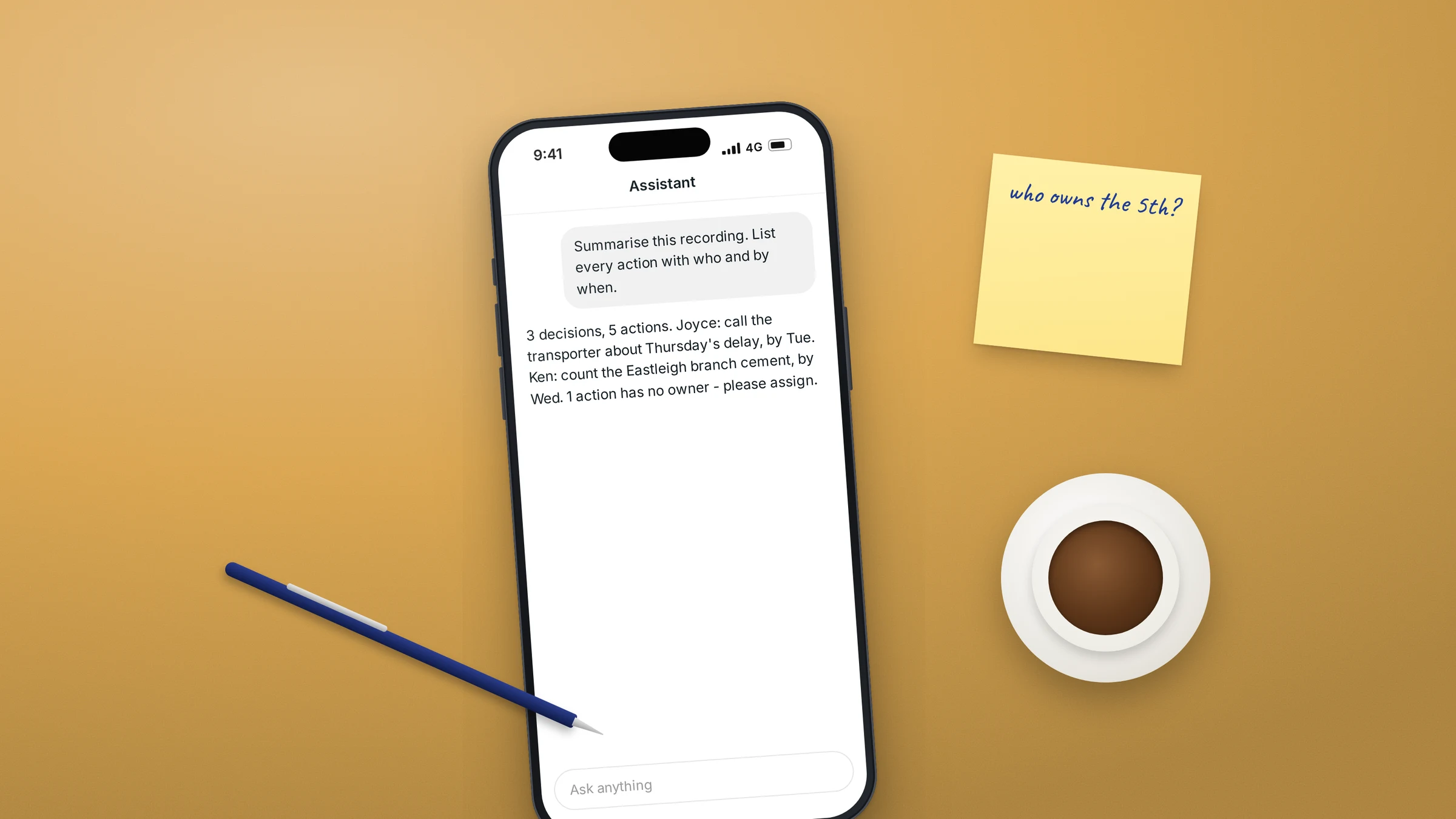
- Actions, as a table: what, who, by when. If no one was named for an action, write "no owner". If no date was given, write "no date".
- Anything that was raised but not settled. Use only what is in the transcript. Do not add actions that were not agreed.
The "no owner" and "no date" rule is the most useful line. Half the value of meeting notes is discovering that an action was discussed but nobody actually took it.
Step 4: the person who ran the meeting checks it#
The draft is a draft. Grace, or whoever ran the meeting, reads it against her own memory before it goes anywhere. She looks for:
- Names and figures: is it "Ken" or "Kevin"? Was the order 200 bags or 120?
- Invented agreement: assistants sometimes turn "we should think about" into "it was decided to". If it was not decided, it does not go in the decisions list.
- Missing owners and dates: she fills them in, or puts them on next week's agenda.
This takes about five minutes. Skipping it is how a wrong figure becomes "but the notes said".
The assistant writes the notes. The person who ran the meeting signs them.
Step 5: send, then follow up from the list#
Send the checked notes to everyone who attended, in the channel they read, usually a WhatsApp group. Then delete the recording, as promised.
Next Monday, the meeting starts with last week's action table: done, not done, stuck. That one habit does more for follow-through than any tool. Over time the notes also become a record you can search: when was the forklift approved, and by whom?
This is Stage 1 on the NGAZI ladder: AI as a capable person you delegate a task to, with you checking the work. It needs no system changes and no budget beyond an assistant you may already use.
What to do this week#
At your next regular meeting, ask everyone's agreement to record, then follow the five steps. Time how long the checking takes. If the notes are useful, use the same prompt every week; if the transcript is poor, try sitting nearer the phone or asking people not to talk over each other, which also tends to make for a better meeting. If you already use your phone's voice notes a lot, turning a voice note into a tidy reply uses the same skill.