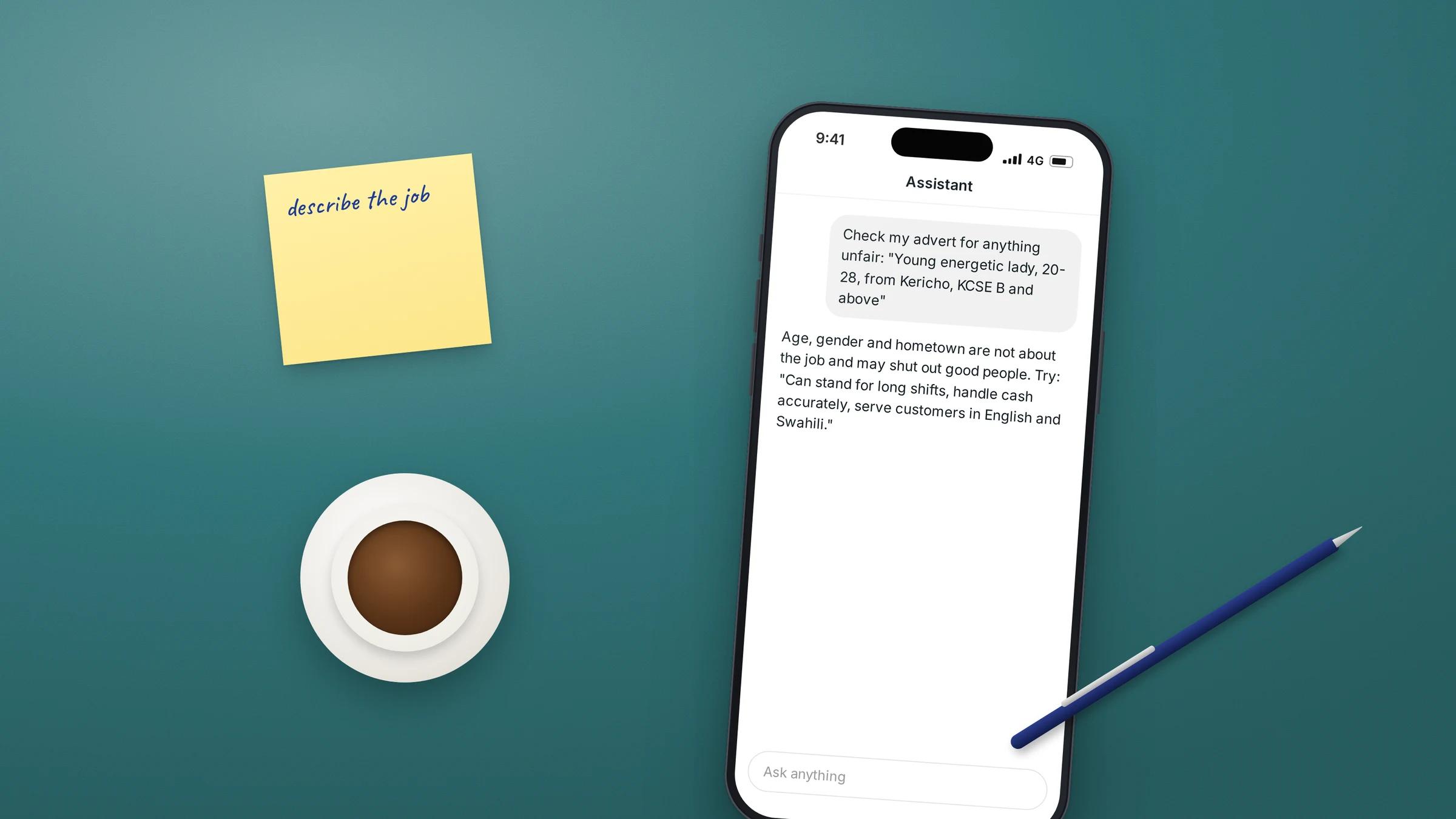
Take Wambui, who runs a cosmetics shop in Kericho and needs a second attendant before December. Her last advert, written in a hurry and posted in two WhatsApp groups, said "young energetic lady, 20-28, from around Kericho". She got 140 replies, most of them a CV and nothing else, and she spent two evenings reading them. The person she hired left after six weeks because the job involved more stock counting than serving, and nobody had said so.
Hiring in a small business is slow and expensive when it goes wrong. An AI assistant can make the paperwork faster: the advert, the screening questions, the interview questions and the polite replies. Used carefully, it can also help make the process fairer. Used carelessly, it can copy the same mistakes faster.
Start from the job, not the person#
The most common weakness in small-business adverts is describing an imagined person instead of the actual work. Before opening any assistant, write down what the job really involves in a typical week: opening the shop, serving customers, handling M-PESA and cash, counting stock on Saturdays, replying to WhatsApp orders. Then the things a person needs to do that work well.
Give that list to the assistant:
Write a job advert for a shop attendant in a cosmetics shop. The job: serving customers in English and Swahili, handling cash and M-PESA, counting stock weekly, replying to customer WhatsApp messages. Hours: 8am to 6pm, Monday to Saturday. Describe the work and what someone needs to do it. Do not mention age, gender, religion, tribe, marital status or where the person comes from. Keep it under 150 words and say clearly how to apply.
Ask it for the advert in English and Swahili if you post in places where both are read.
Check the draft for bias, then check it yourself#
Next, ask the assistant to review the advert, and your old one, for anything that could unfairly exclude good applicants: age ranges, gender words, "must be from", requirements unrelated to the work, or a qualification set higher than the job needs. It is good at spotting these patterns.
Then read it yourself, because assistants can also introduce bias. They learn from a great deal of text, including many unfair adverts. Look especially for:
- words that describe a type of person ("young", "dynamic", "presentable") rather than a skill;
- qualifications that filter people out without telling you whether they can do the job;
- anything about health, family or background that has nothing to do with the work.
Employment law in Kenya has rules on discrimination in hiring. This post is not legal advice; if you are unsure about a requirement, check official guidance or ask a professional before posting.
Use questions to replace CV-reading#
Wambui's 140 CVs told her little. Two short screening questions would have told her more. Ask the assistant to suggest three questions applicants answer in the advert's reply, each tied to the job:
- "A customer pays KES 2,350 with a KES 5,000 note. How much change do you give?"
- "Tell us about a time you dealt with an unhappy customer. What did you do?"
- "This job includes counting stock every Saturday. Is that something you are comfortable with?"
The answers are short, they test the actual work, and they treat every applicant the same.
Structured interviews, the same for everyone#
For the interview itself, ask the assistant for six to eight questions tied to the job, plus what a good answer would include. Then use the same questions, in the same order, for every candidate, and write a short note on each answer right after.
This is the single most useful fairness habit in hiring. When every candidate gets the same questions, you compare answers rather than impressions, and you are less likely to favour someone because they went to your school or reminded you of yourself.
The assistant writes the questions. You ask them, listen to the answers and decide.
Kind replies to everyone#
Applicants who are not shortlisted deserve an answer. Ask the assistant for a short, warm regret message, and send it. It takes ten minutes and the business's reputation in a small town travels.
All of this is Stage 1 on the NGAZI ladder: AI as a capable person you hand writing tasks to, while you keep the judgement. If you are new to briefing an assistant, our guide on writing a prompt like you would brief a new employee helps.
What to do this week#
If you are hiring soon, write down the job's real weekly tasks, ask an assistant for an advert based on them, and ask it to check your last advert for unfair requirements. Add two screening questions about the actual work. Then draft six interview questions and commit to asking every candidate the same ones.