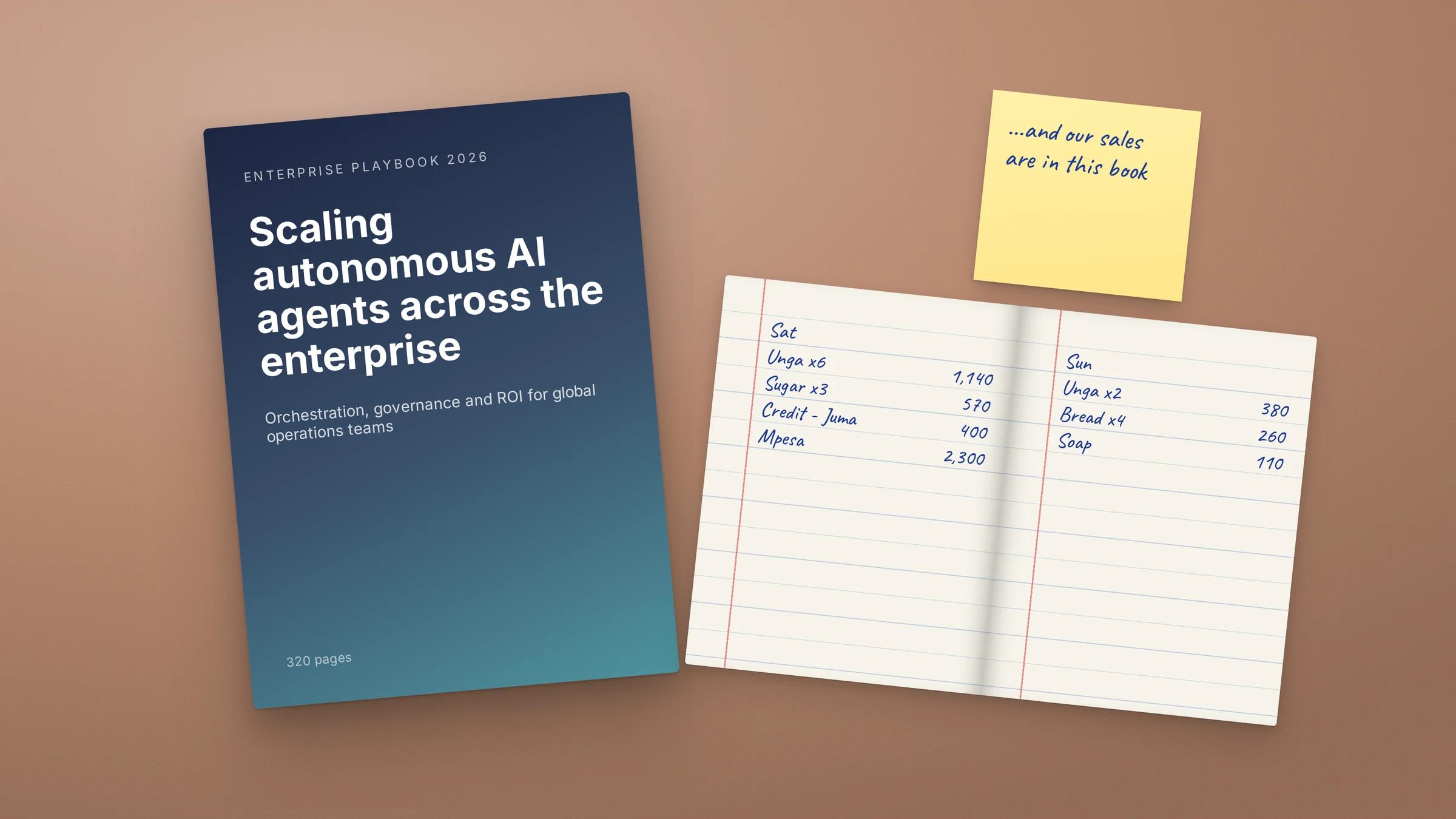
Take Halima, who runs a small grocery in Mlolongo. Her business lives in three places: a sales exercise book, a stock count she does in her head on the walk to the wholesaler, and the contacts on her phone. She has heard that AI can tell her what to reorder and what is not selling. She is right that it can. But it cannot do it from a notebook it has never seen.
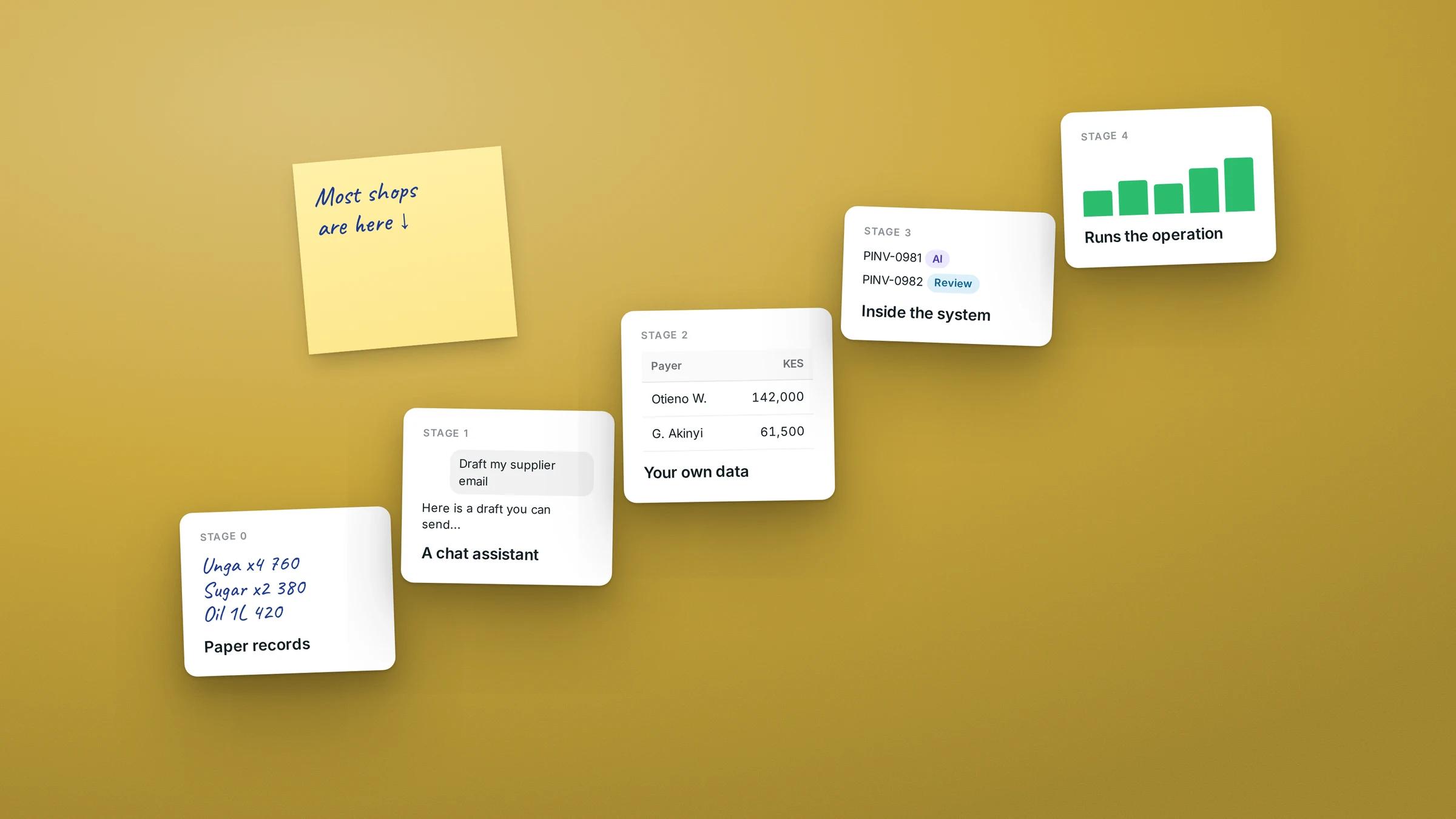
This plan is for owners like Halima, at what the NGAZI ladder calls stage 0: the business is real, the records are not yet digital. Thirty days, one habit at a time. The first three weeks build the records. The fourth week uses them.
Before day one: pick your tool and keep it boring#
You need somewhere to type. A simple spreadsheet on your phone works. So does a basic point of sale if you already have one. Do not buy anything new for this plan. The goal is the habit, and a habit built on a notebook-sized tool transfers easily to a bigger one later.
Set aside fifteen minutes at the same time each day. Closing time is best.
Week 1: record every sale#
Each sale gets one line: date, item, quantity, price, how paid (cash or M-PESA). That is all.
Rules for the week:
- Write at the time of sale, not from memory at night. Memory drops the small items.
- Use the same name for the same item every time. "Sugar 1kg", never "sugar", "sukari" and "sugar small" on different days. This one rule saves hours later.
- Do not judge the numbers yet. You are collecting, not analysing.
At the end of the week, type the lines into your spreadsheet if you wrote them on paper. If you want more help with this step, read get your sales out of the exercise book.
Week 2: add stock in and stock counts#
Keep recording sales. Now add two things.
What comes in. Every delivery or wholesale trip: date, item, quantity, what you paid per unit. Keep the receipt. The price you paid is the number most small shops never write down, and without it nobody, human or AI, can tell you what you actually earn on an item.
One count. On the last day of the week, count your twenty most important items and write the numbers down. Only twenty. A full count of everything is how this plan dies in week two.
Week 3: add your customers#
Keep both habits going. Now add a simple customer list: name, phone, what they usually buy, and whether they buy on credit. Start with the customers who come at least weekly and anyone who owes you money.
If you give credit, add a line every time someone takes goods on credit and every time they pay. This list alone often pays for the whole month's effort, because you will see exactly who owes what without searching your memory.
Week 4: hand an assistant real work#
Now you have three weeks of sales, two weeks of purchase prices, one stock count and a customer list. That is enough for a general chat assistant to be genuinely useful. Copy the data in, and try these, one per day:
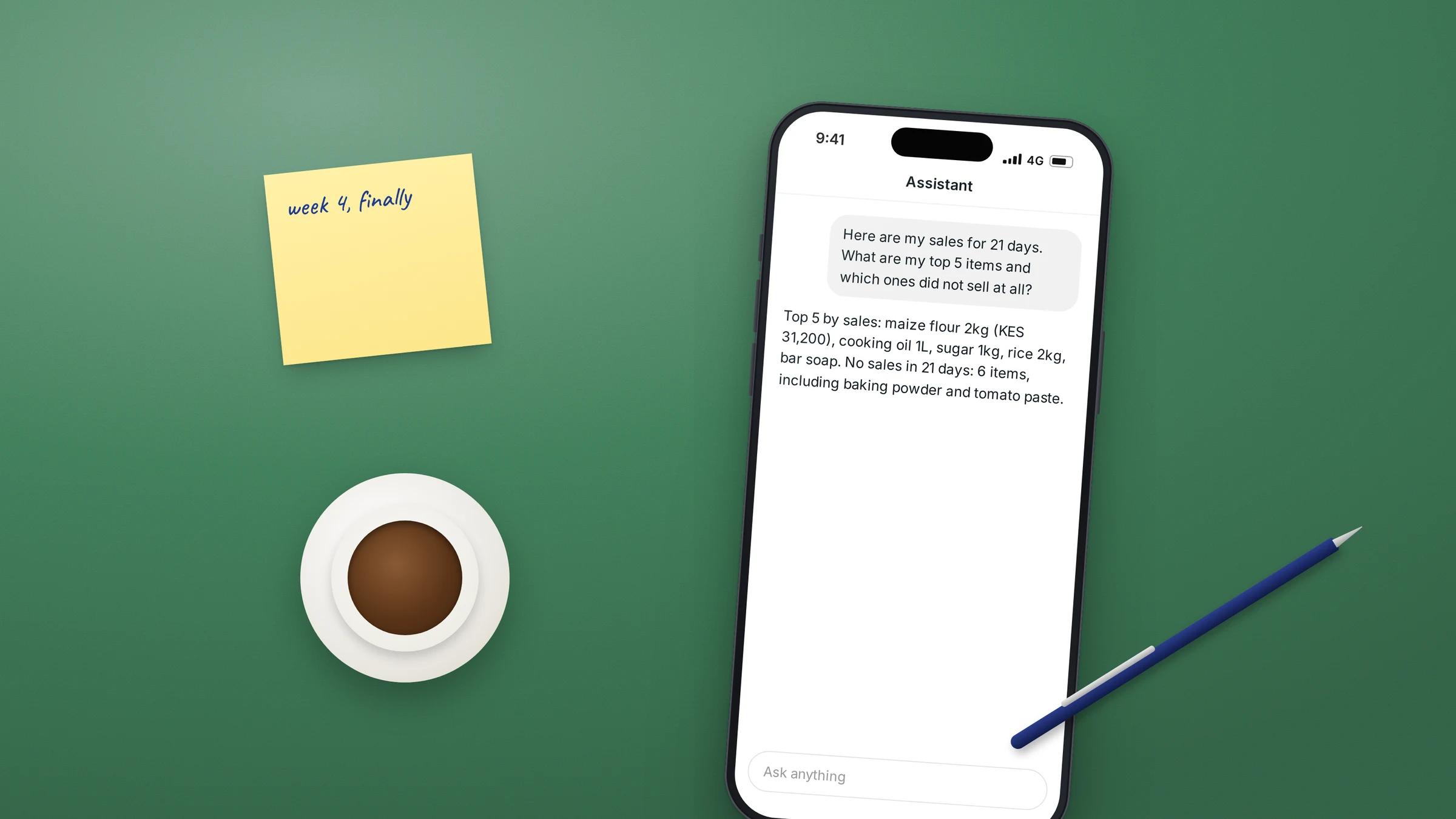
- "Which five items earned me the most money, and which items did not sell at all?" Check two of its figures against your sheet. It is your data, so you can.
- "Using what I paid per unit, what is my margin on each of my top ten items?" You may find a best seller with almost no margin.
- "Draft a polite WhatsApp reminder to customers who owe me more than KES 2,000." Read it and send it yourself, one by one.
- "From this stock count and three weeks of sales, which items will run out before my next wholesale trip on Saturday?"
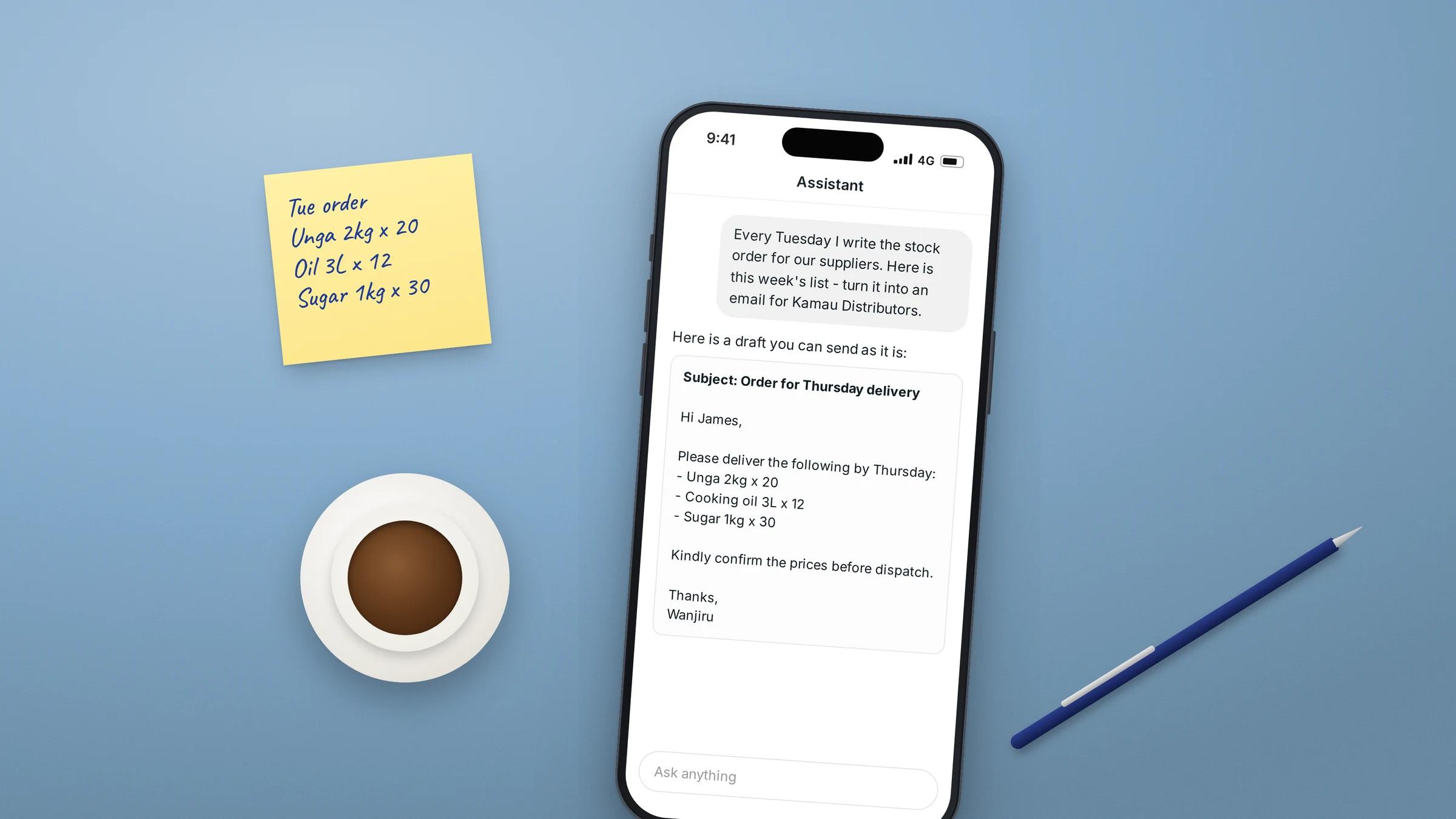
- "Turn this list into a shopping list for my wholesaler, grouped by section."
Remove customer phone numbers before you paste the list in. Names and amounts are enough for the reminder draft.
These are small wins. They are also real ones, and they only became possible because of the first three weeks. That is the honest shape of AI adoption for most businesses: the records come first, and the clever part is quick once they exist. For more first tasks, see five boring tasks to hand AI before anything exciting.
After day 30#
Keep the three habits. In another month you will have enough history to see weekly patterns, and the questions you ask will get sharper. At that point it may be worth moving to a proper system so the recording happens at the till instead of in a spreadsheet. But you will be choosing that system knowing exactly what you need it to record.