Take Esther, an example owner of a small garage in Industrial Area with five mechanics. She wants to "do something with AI", and a salesman has offered her a chatbot that would book customers in, quote repairs and follow up automatically. Is it worth it?
The better first question is: what do you do every day that you hate doing? For most garage owners the list is all small stuff. Writing the morning job list. Replying to "is my car ready?" twenty times. Reading long quotations from spare-parts dealers. Writing the same polite letter to a fleet client about overdue invoices. Keeping notes from calls.
None of that is exciting. All of it is a perfect place to start, because the risk is low and you do it often enough to learn quickly.
1. Replies you write twenty times a day#
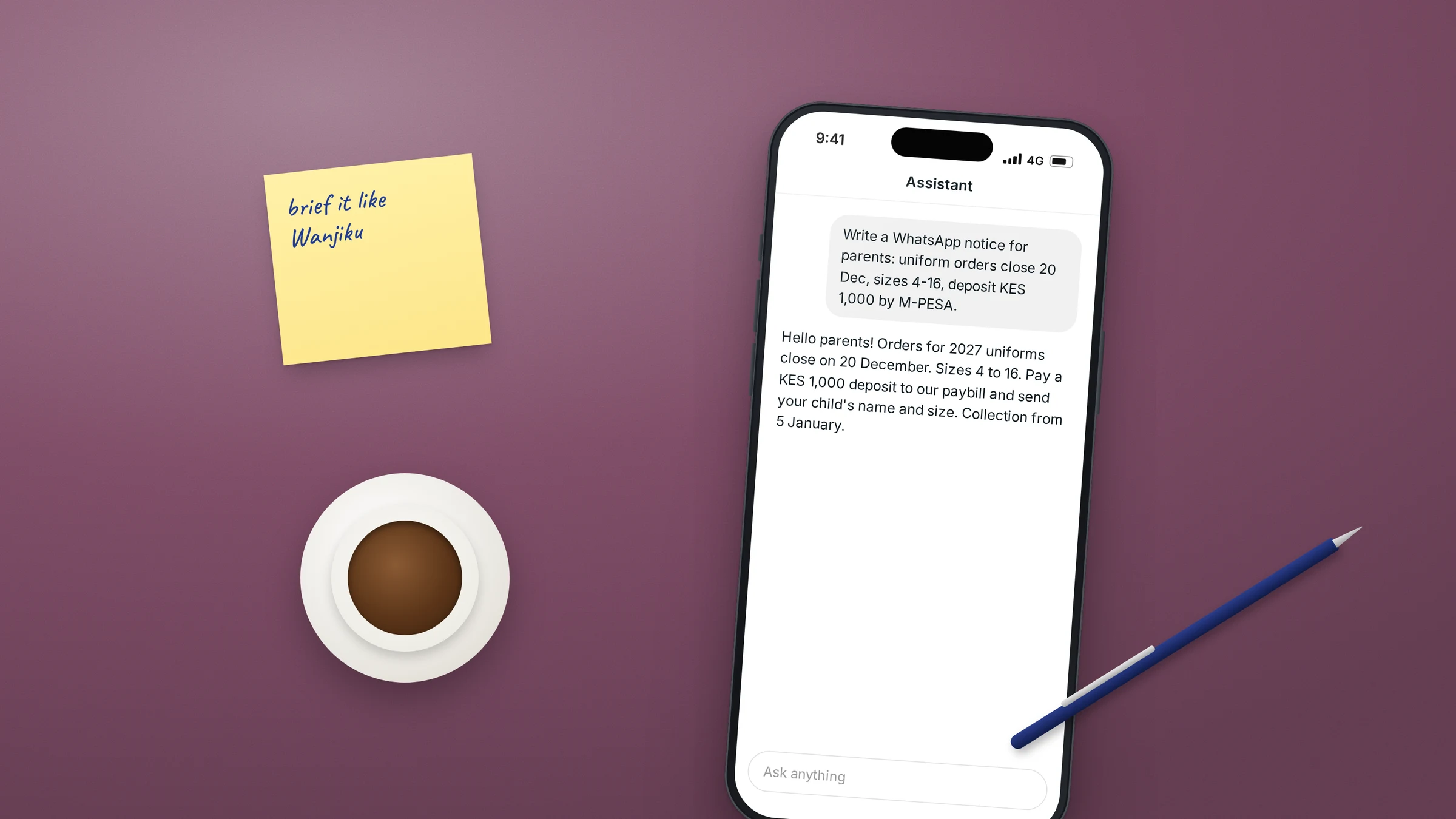
Every business has a handful of messages it sends over and over. For Esther it was "your car is ready", "we need another day", and "here is the quote". Ask an assistant to write a set of reusable replies once:
I run a garage in Nairobi. Write five short WhatsApp replies I can reuse: car ready for collection, delay of one day with an apology, quote attached, waiting for a spare part, and payment received with thanks. Friendly, under 40 words each, English with a Swahili version.
Save them as quick replies on your phone. Check: read each one out loud. If it does not sound like you, tell the assistant what to change.
2. Summaries of long things#
Spare-parts dealers send long quotations. Suppliers send long emails. Paste one in and ask:
Summarise this quotation in five lines: items, prices, total, delivery time and anything conditional. Then list anything that looks unclear.
Check: compare the total and two prices against the original. Summaries are where numbers quietly change.
3. Lists from a mess#
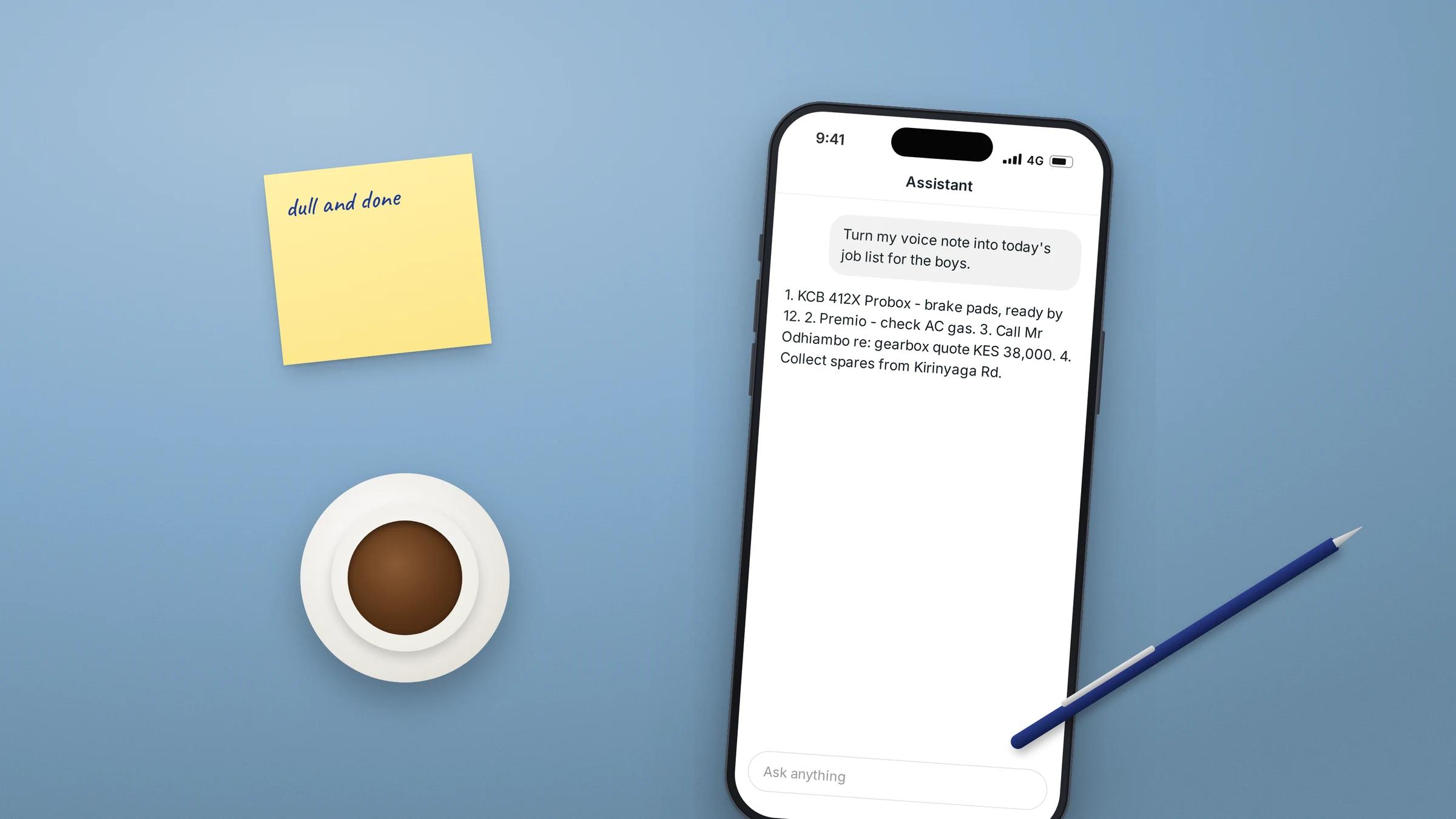
Esther's mornings start with a voice note to herself in the car. She can paste the transcript (or type the rough notes) and ask for a numbered job list for the mechanics, with car registrations first. Lists are also good for stock to check, things to buy, or questions to ask a supplier.
Check: count the items in your notes and the items in the list. Missing a job is the main way this goes wrong.
4. Letters you put off#
Overdue invoices, a price change, a note to a landlord about repairs. Letters get delayed because they are awkward to start. Give the assistant the facts and the tone:
Write a polite but firm letter to a fleet client. Three invoices are overdue: INV-221 KES 46,500, INV-230 KES 18,200, INV-236 KES 61,000. We have serviced their vehicles for four years and value the relationship. Ask for payment or a date by Friday.
We wrote a full guide to a debt follow-up letter in one prompt if this is the one you need most. Check: every invoice number and amount, character by character.
5. Notes that become actions#
After a phone call with a client or supplier, type a few rough lines and ask the assistant to turn them into a short note: what was agreed, what happens next, who does it, by when. Paste the result into the client's thread so both of you have it.
Check: the dates and the names. "Next Tuesday" is easy for an assistant to turn into the wrong date.
Why boring comes first#
These five tasks are all Stage 1 on the NGAZI ladder: AI as a capable person you brief in plain language. They build the two skills every later stage needs: briefing clearly and checking the result.
They also tell you something a sales demo never will: where the assistant stumbles on your kind of work. Esther might find it excellent at letters and summaries and careless with registration numbers. That is very useful to know before trusting anything to book customers in.
What to do this week#
Pick two of the five, not all of them. Do each one every day for a week. Keep a note of the time it saved and of every mistake you caught in the check. At the end of the week you will know, from your own work, how much to trust it and with what. That is a better basis for your next decision than any brochure.