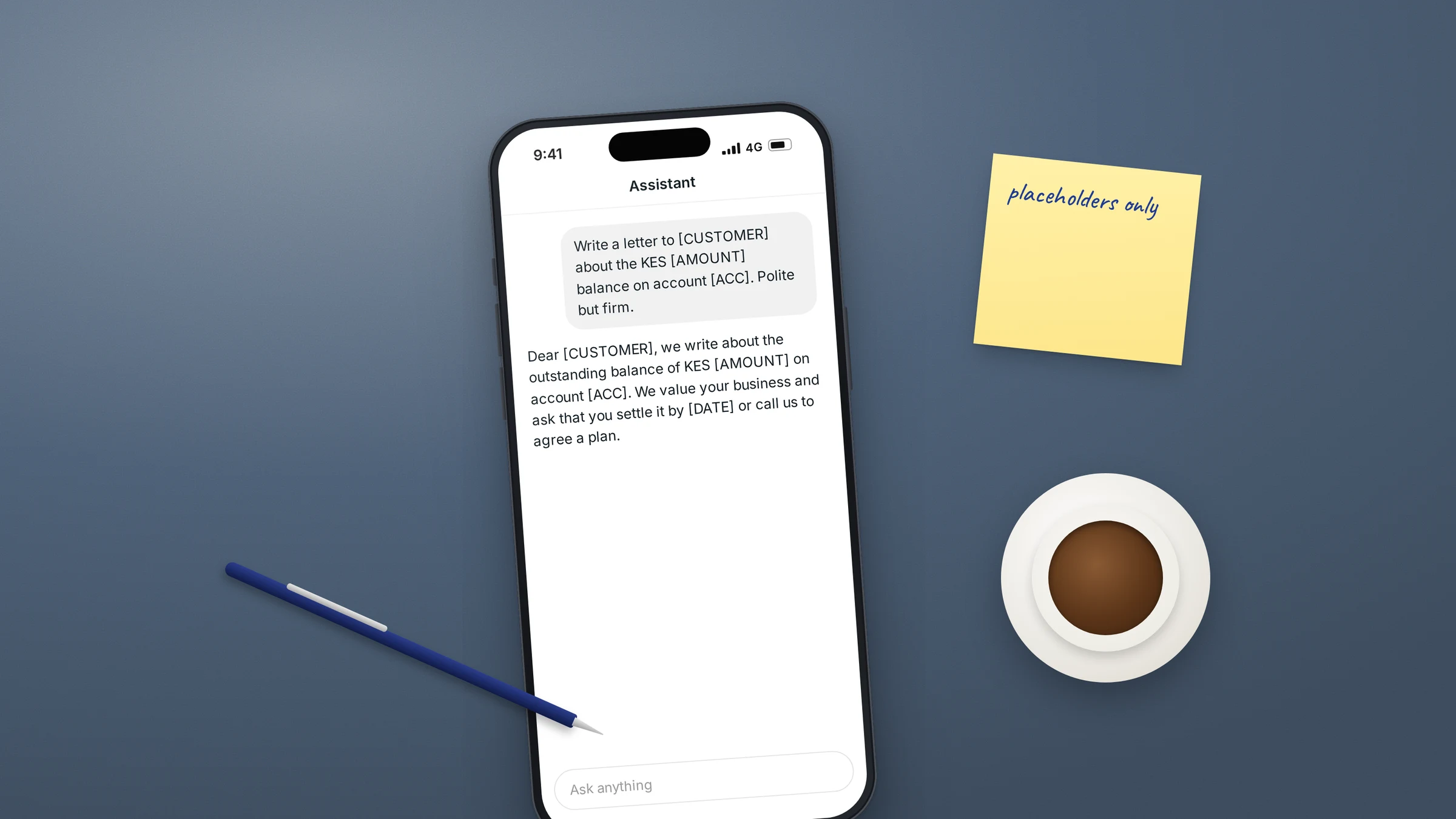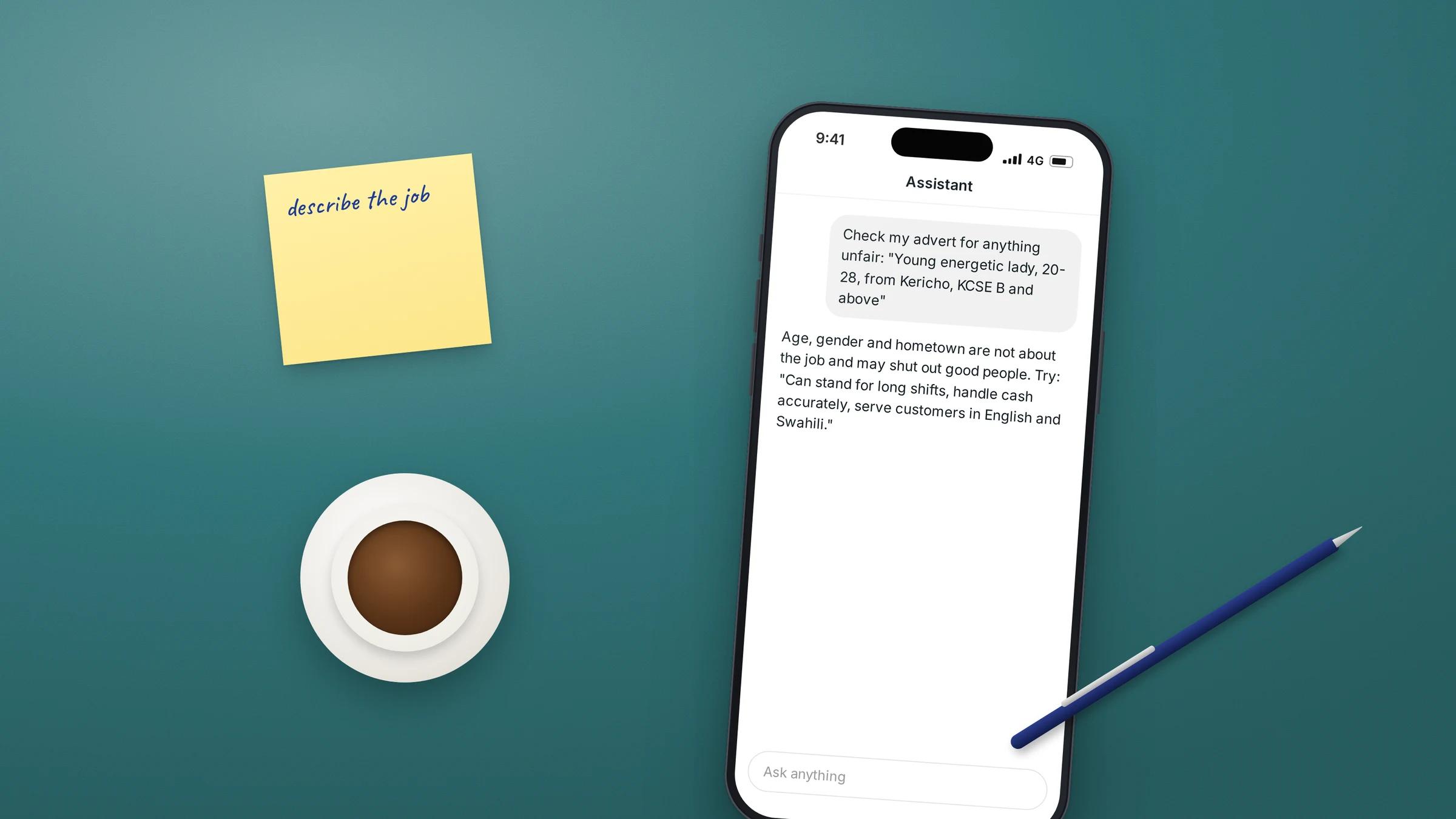
Take Akinyi, who runs a printing and stationery shop in Kisumu with four staff. One afternoon she finds that her cashier has pasted the whole customer list - names, phone numbers, how much each school still owes - into a free AI assistant to "make a nice reminder message". The message was good. The list is now sitting in a service Akinyi has never read the terms of.
Nobody did anything malicious. The cashier was trying to save time, which is exactly what we keep telling people AI is for. What was missing was a page of rules that said where the line is.
Why a page, and why now#
Most small businesses are at Stage 1 of the NGAZI ladder without ever deciding to be. Someone on the team discovered that an assistant writes a decent apology to a customer, and now it is part of the day. That is good. It is also the moment when habits form, and habits are much easier to shape in the first month than to correct in the second year.
A long policy will not be read. A one-page policy pinned next to the till or shared in the staff WhatsApp group will be. The goal is a page a new employee can understand in three minutes and remember the next day.
Part one: what AI may be used for#
Start with permission, not prohibition. If the page is only a list of "do nots", staff will hide what they are doing. List the jobs you are happy for them to hand to an assistant, for example:
- Drafting replies to common customer questions
- Turning rough notes into a clean message or letter
- Summarising a long supplier email or document
- Writing product descriptions and price-list wording
- Translating a message between English and Swahili
Then add the line that matters most: AI drafts, a person decides. Nothing an assistant writes is sent, posted or entered into the books until someone has read it properly.
Part two: what never gets pasted#
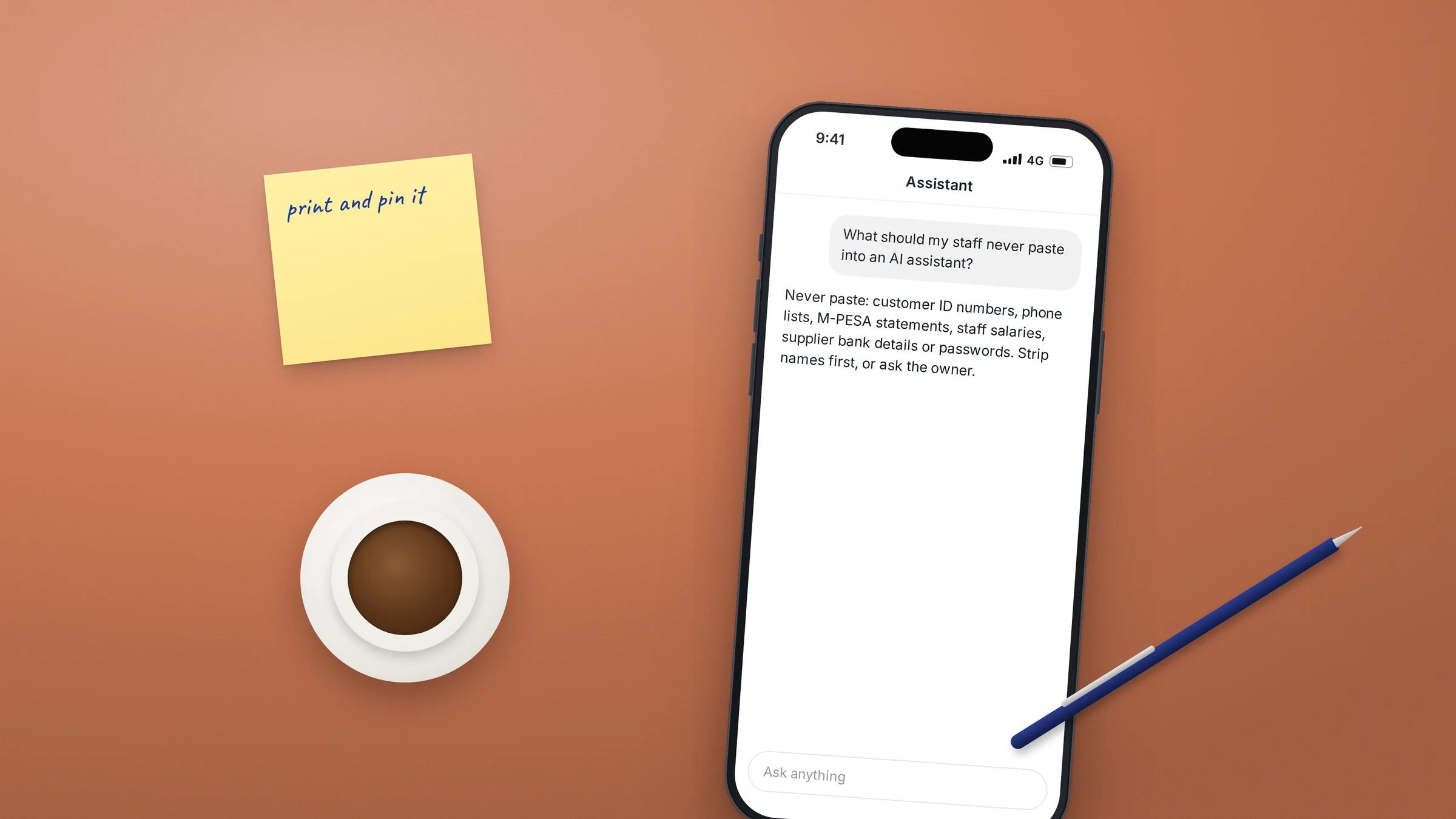
This is the part that protects you. Be specific, because "be careful with sensitive data" means nothing to a busy cashier at 5 pm. Name the actual things your business holds:
- National ID numbers, passport numbers and copies of either
- Customer phone lists and contact exports
- M-PESA statements and bank statements with names on them
- Staff salaries, payslips and personal details
- Supplier bank details, passwords, PINs and login codes
- Anything a customer told you in confidence, including complaints
If a task needs some of that data, the rule is simple: remove the names and numbers first, or ask the owner. Kenya's Data Protection Act 2019 puts duties on businesses that hold personal data, and pasting it into an outside service is the kind of thing it cares about. This page is not legal advice, so check the Office of the Data Protection Commissioner's guidance or a professional for what applies to you.
Part three: who checks what#
The last part names people. Who reads an AI-drafted message before it goes to a customer? Who reads a letter before it goes to a supplier? Is anything allowed to go out without a second pair of eyes? In a four-person shop the answer is often "the owner, for anything about money; the senior cashier, for everything else". Write it down anyway, because the day it matters is the day someone is sure they did not need to ask.
Add one line about mistakes: if you notice AI wrote something wrong, or you pasted something you should not have, tell the owner the same day. No blame for reporting. People hide mistakes they expect to be punished for.
The template#
Copy this, fill the blanks, print it.
[Business name] - how we use AI assistants Last reviewed: [date]. Owner of this page: [name].
- We use AI for: [replies, summaries, product descriptions, translations, ...]
- AI drafts, a person decides. Nothing AI writes is sent, posted or recorded until [name / role] has read it.
- Never paste: ID and passport numbers, customer phone lists, M-PESA and bank statements, salaries, supplier bank details, passwords, [anything else specific to us].
- If you need that data: remove names and numbers first, or ask [name].
- Accounts we use: [assistant name, whose account, training setting checked on date].
- Money, refunds, complaints and legal letters: always handled by [name], AI may only help with the wording.
- Mistakes: tell [name] the same day. No blame for reporting.
That is the whole thing. Seven lines.
What to do this week#
Fill in the template tonight. Read it out at the next staff meeting or send it to the group and ask each person to reply "read". Then ask one honest question: what are you already using AI for? You will learn more from the answers than from any article, including this one.
If you want a sense of where the line sits once AI connects to your own systems rather than a chat window, read how we think about keeping your business data on your own server. The policy you write today is the first draft of that thinking.