Take Faith, who works the till at a household goods shop in Nakuru. She is quick, careful with money and good with customers. The owner wants her to use a chat assistant on the shop phone to help with the messages that pile up between customers. She is willing, but nervous: what if she gets something wrong and it is her fault?
That nervousness is healthy, and the training should build on it. A cashier does not need to understand how AI works. They need to know exactly what they may use it for, the one thing they must never do, and the habit that catches mistakes. Keep it to that. Long rules are not followed at a busy counter.
Three allowed tasks#
Choose three tasks that are frequent, low-risk and mostly about words. For a typical shop:
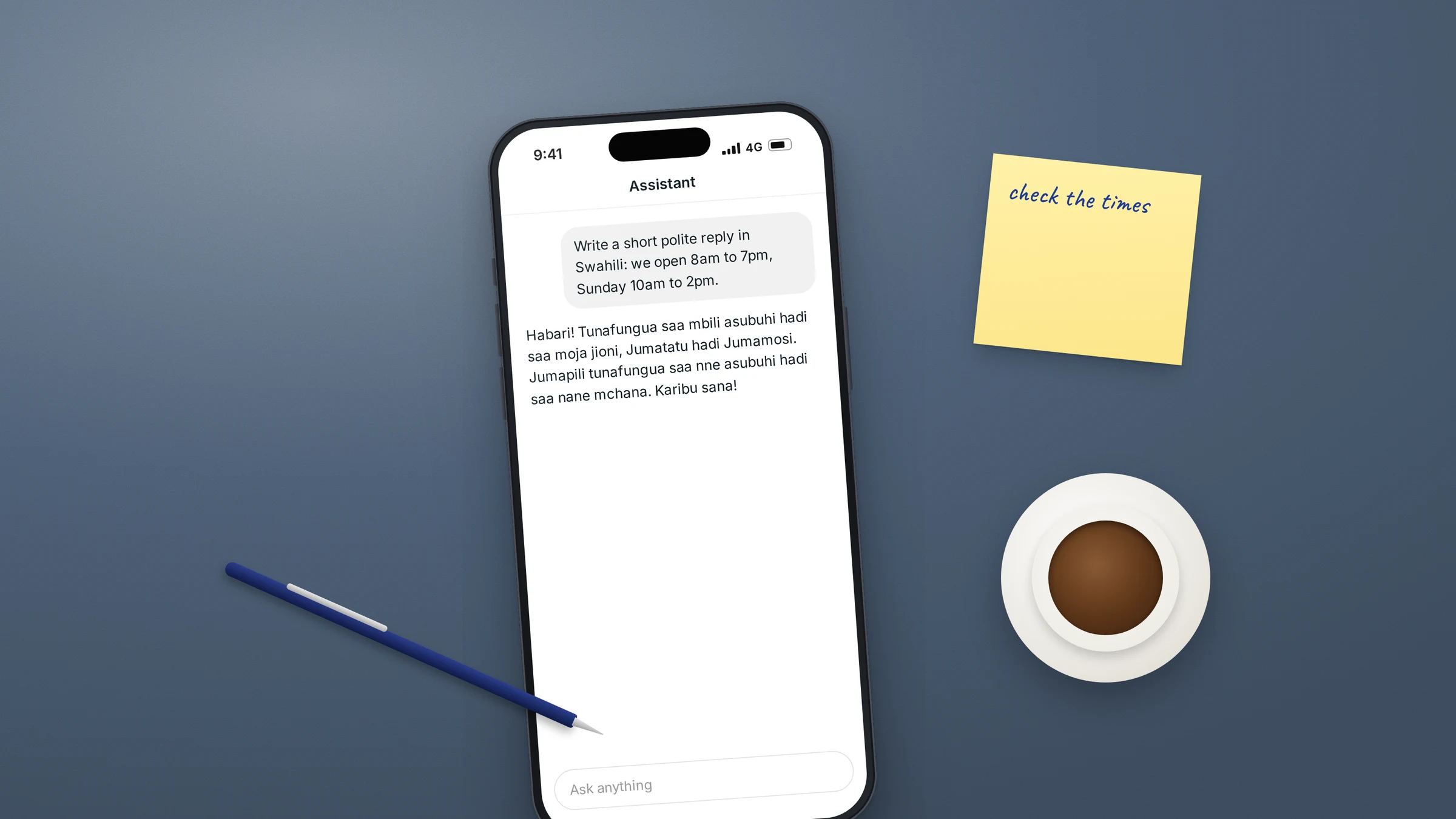
1. Customer replies about general information. Opening hours, location, delivery areas, how to pay, whether you do layaway. The assistant helps write them clearly and politely, in English or Swahili. These replies come up again and again, and a good wording can then be saved and reused.
2. Rewriting notes into tidy messages. "tell supplier the 20 buckets came 4 cracked want replacement" becomes a polite, clear message the owner approves. Cashiers often write these notes already; the assistant just makes them presentable.
3. Simple signs and notices. "Card machine not working today, M-PESA and cash only." "Closed on Monday for stock count." Short, printed, put up by the till.
That is the list. Write it on a card and stick it beside the phone. Anything not on the card, ask the owner first. After a month you can add a fourth task if the first three are going well.
Notice what is not on the list: prices, stock levels, discounts, refunds and complaints. The assistant does not know your prices or what is on your shelves, and it will happily make something up. Those answers come from the till system or from a person.
One rule that is never broken#
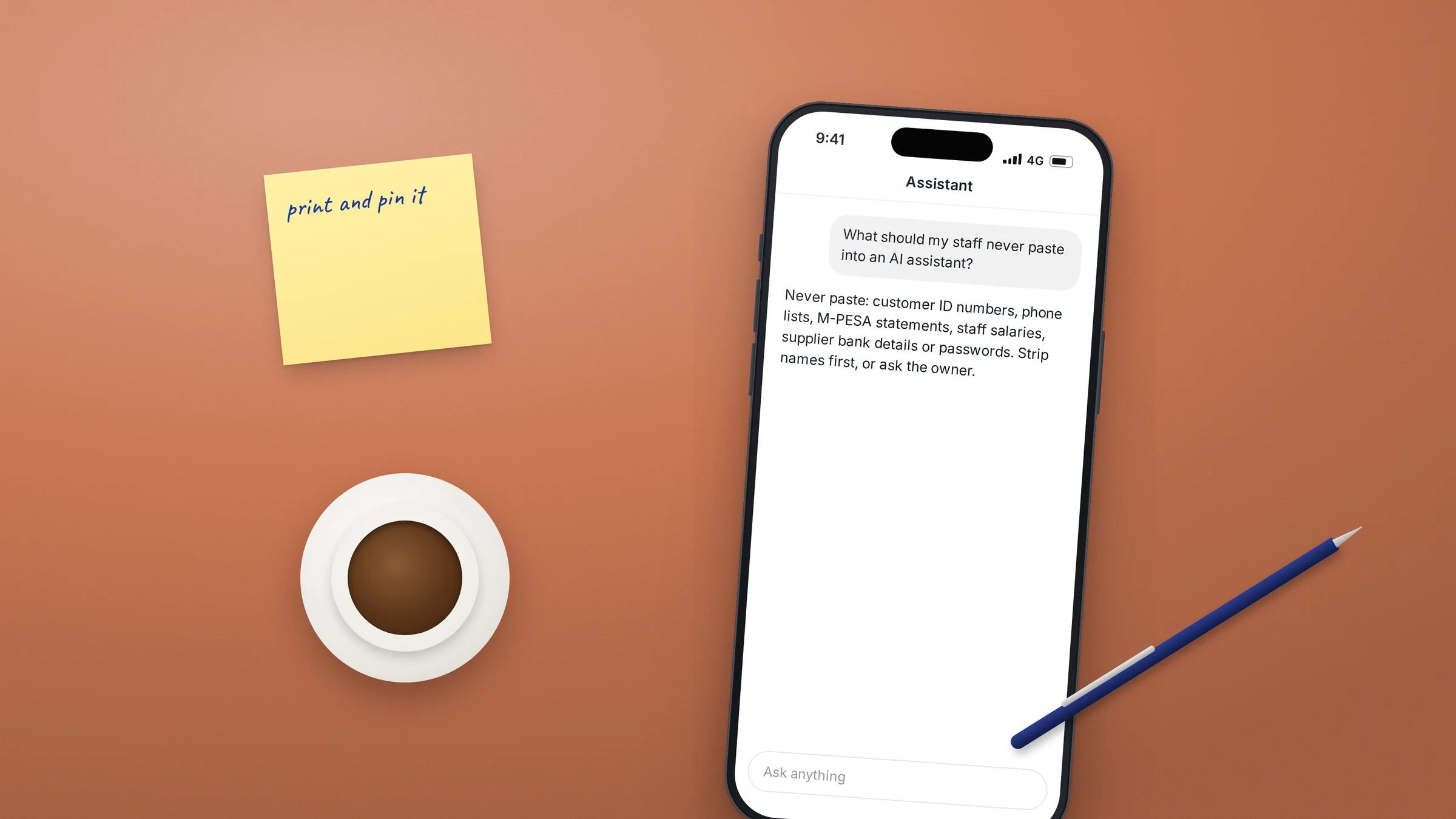
No customer details and no shop secrets go into the assistant.
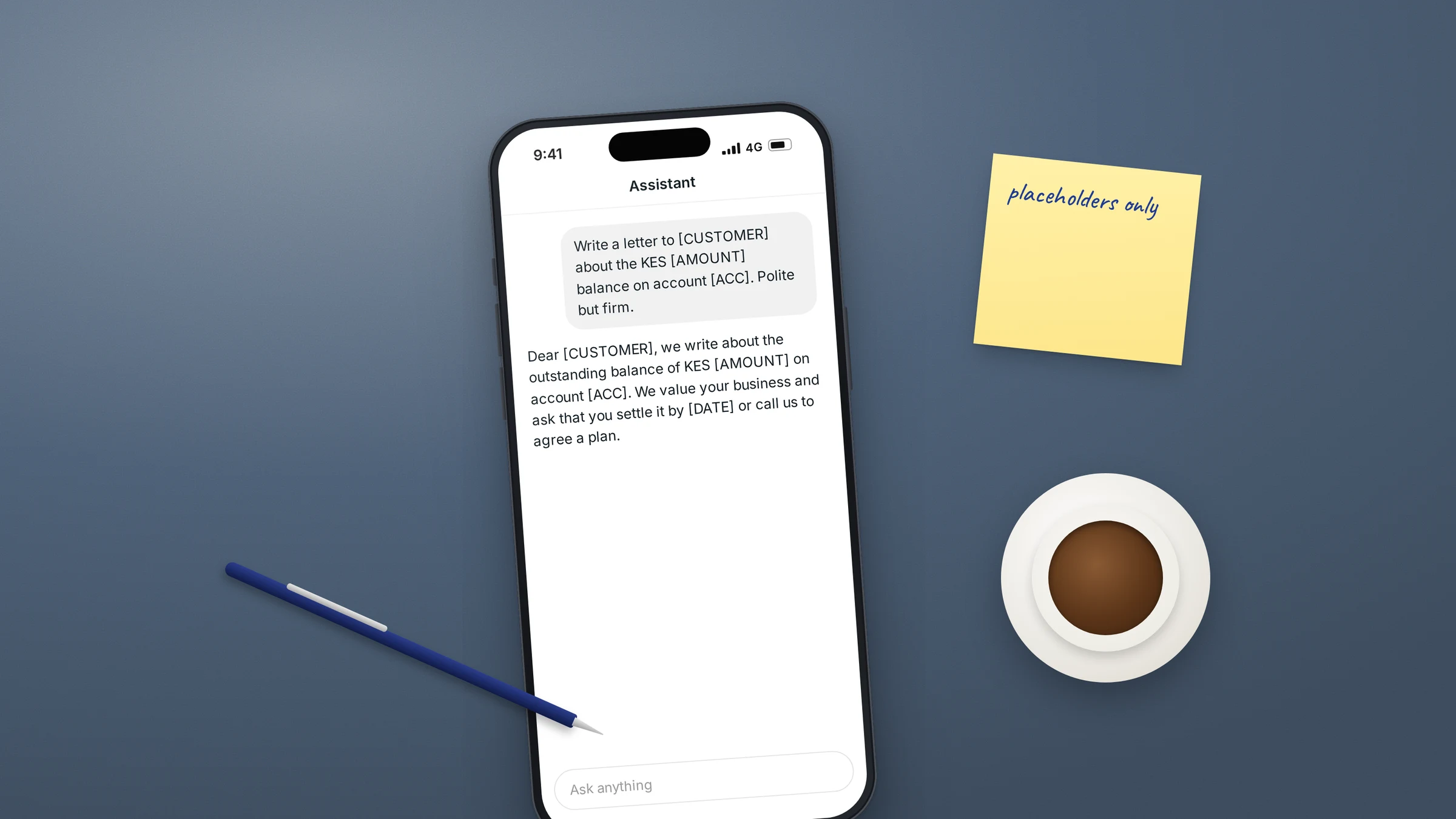
In practice: no customer names with phone numbers, no M-PESA codes, no ID numbers, no till passwords, no screenshots of the system. If a reply needs a name, the cashier types "[NAME]" and fills it in herself before sending.
Explain why in one sentence: "We do not know where it keeps what we type, so we never type anything we would not print on the shop window." The fuller list is in what never to paste into a chat assistant, worth reading yourself before the training.
One check before anything leaves the counter#
Before any message is sent or any notice printed, the cashier reads it once, slowly, and checks three things:
- Numbers. Times, dates, amounts, phone numbers. Are they exactly what she meant? Assistants sometimes "tidy" 7pm into 7:30pm or change a date.
- Promises. Does it promise anything she was not asked to promise, such as "free delivery" or "we will refund you"? Delete it.
- Tone. Would she say this to the customer's face? If it sounds stiff or strange, shorten it.
If anything is wrong, fix it by hand. It is quicker than arguing with the assistant. If she is unsure, she asks the owner. Nobody is ever in trouble for asking.
Running the training#
One afternoon is enough. A simple plan:
- Show, 15 minutes. The owner does each of the three tasks while the cashier watches, saying out loud what they are checking.
- Try, 30 minutes. The cashier does five real examples from the past week's messages. The owner watches and does not take over.
- Break it, 10 minutes. Ask the assistant something it cannot know, like "how much is our 20-litre bucket?", and look at the confident made-up answer together. This lesson sticks.
- Agree, 5 minutes. Read the card: three tasks, one rule, one check.
Then check in after a week. Look at a few sent messages together and ask what was easy and what felt risky. If you introduced AI to the wider team, this fits with how to tell your team AI is coming without scaring them.
What to do this week#
Write the card: three allowed tasks for your shop, one rule, one check. Then book an hour with the cashier on a quiet afternoon and run the four steps above, including the made-up price. The card does the remembering; the afternoon builds the confidence.