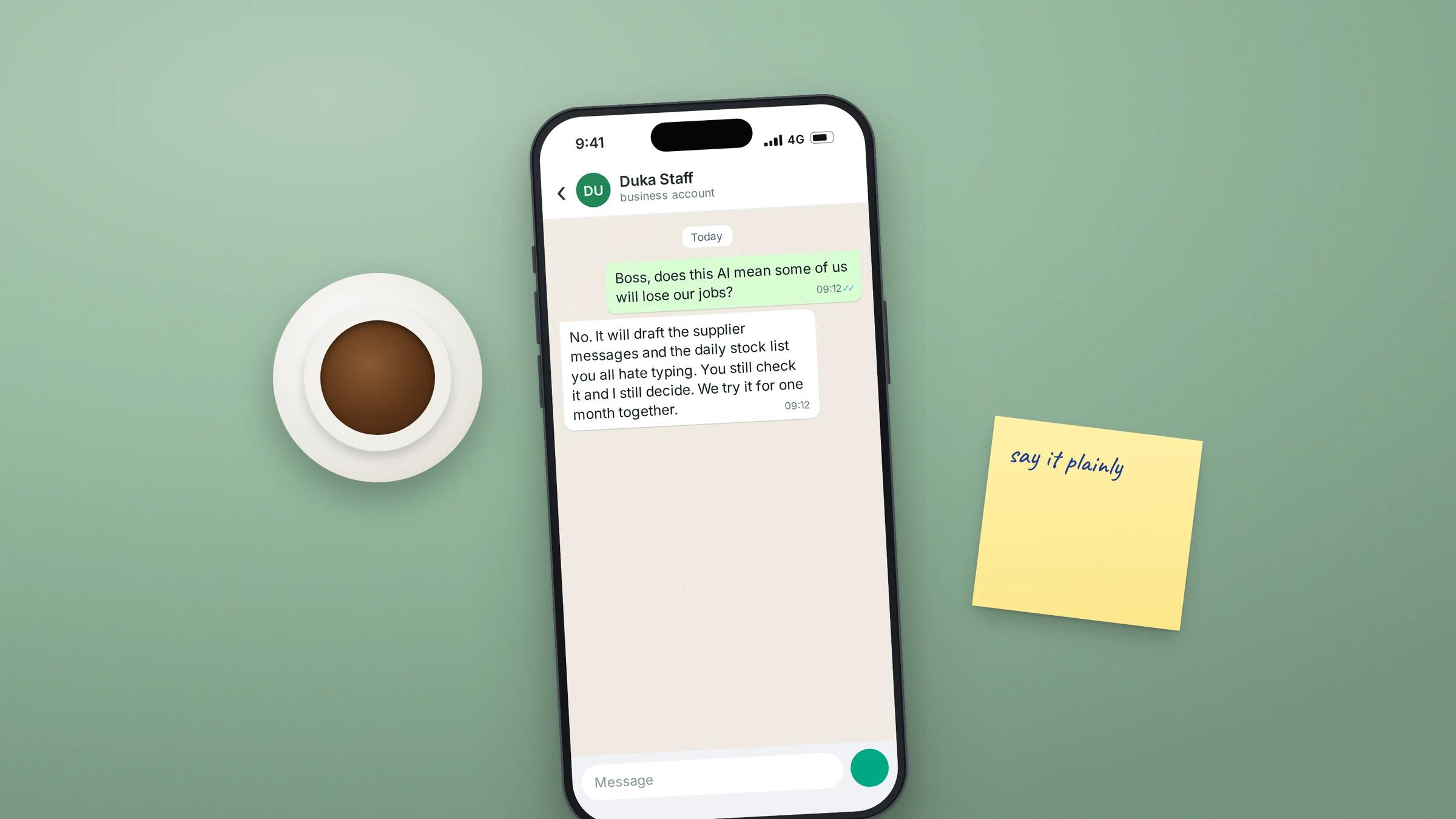
Take Mercy, who runs a cosmetics wholesale shop in Gikomba with six staff (an illustrative example). She had been using a chat assistant for a few weeks to draft supplier messages, and it was saving her time. So one morning she mentioned, almost in passing, that she wanted "to bring AI into the shop". By lunchtime two of her staff had quietly asked a cousin about jobs elsewhere.
Nothing about her plan threatened anyone. But she had announced a technology instead of describing a change, and people filled the gap with the worst version they had heard about. Here is how to have that conversation so it lands the way you mean it.
Say exactly what will change#
"We are bringing in AI" tells staff nothing except that something unknown is coming. Replace it with a specific sentence about work they recognise:
- "The assistant will draft the weekly order messages to suppliers. Otieno will still check and send them."
- "It will turn the stock count sheet into a typed list, so nobody has to retype it at night."
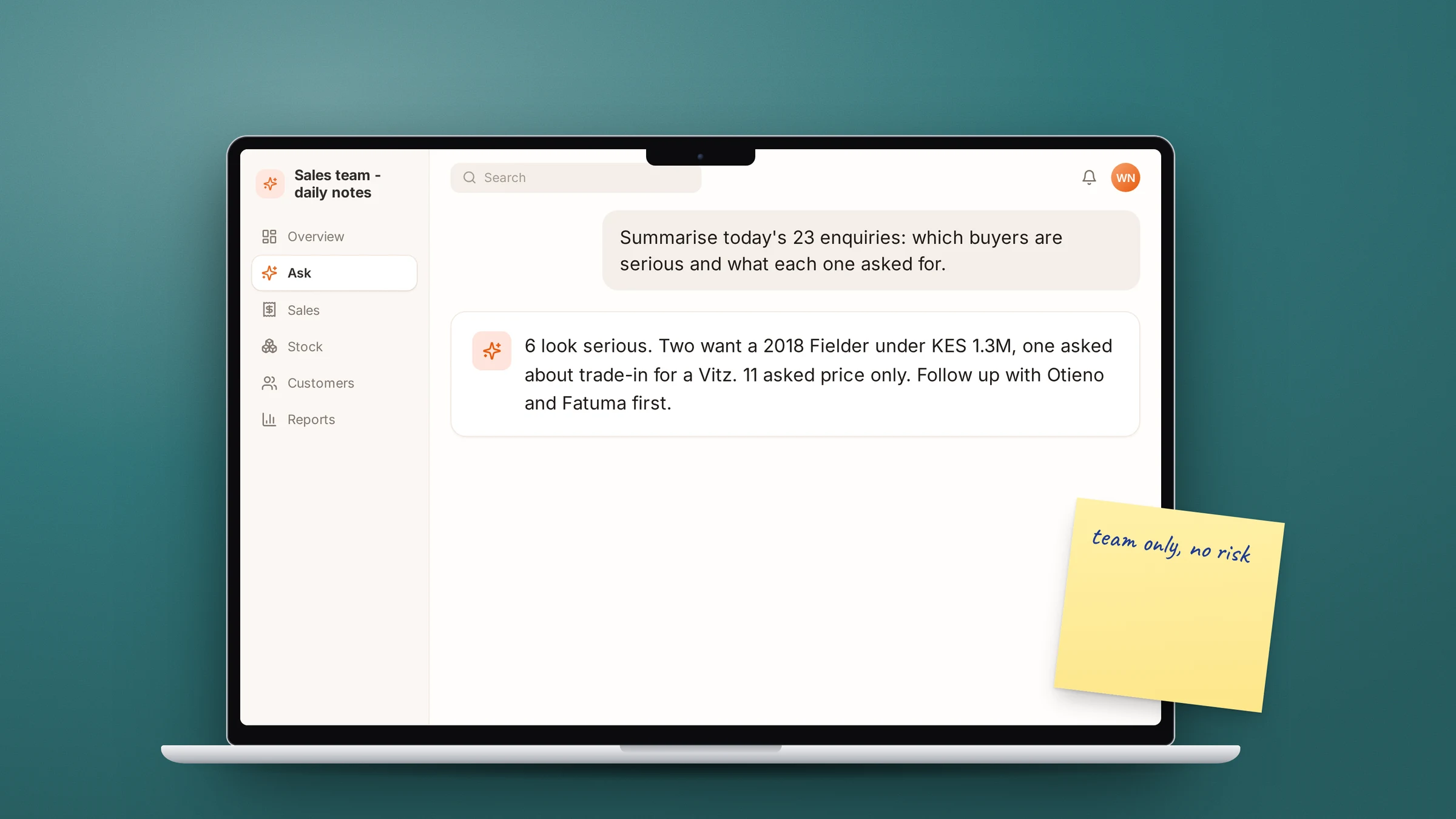
- "It will suggest replies to the common questions customers ask on WhatsApp. You choose whether to use them."
Each sentence names a task, names a person, and makes it clear the person stays. If you cannot write a sentence like this yet, you are not ready to announce anything. Try it yourself for another two weeks first.
Say what will not change#
People worry about what you do not say. Address it directly:
- Jobs. If you have no plan to cut roles, say so, plainly, and keep to it. If you do not know yet, do not promise. Say what you do know: "Nothing changes for at least the next three months while we learn."
- Pay and hours. Unchanged, unless you say otherwise.
- Who is responsible. A mistake in a drafted message is caught by the person who sends it, the same as a mistake they typed. Nobody gets blamed for what the assistant got wrong if they checked in good faith.
The tool drafts, a person checks, the owner decides. Say that sentence until your team can say it back to you.
Make clear who decides#
The biggest fear is not losing a job. It is losing control: being told by a machine what to do, or being judged by one. So be clear about the order of authority.
The assistant suggests. Staff review and can reject any suggestion without explaining themselves. You set the rules about what it may be used for. Write those rules down on one page; we explain how in the one-page AI policy every small business should write. Pin it where everyone can see it.
Then add one thing that surprises people: ask them where it is wrong. Make it a small team habit that someone who spots a bad draft says so in the group. Catching the tool's mistakes becomes a skill people are proud of, not a threat they put up with.
Start with the chores nobody wants#
Your first task decides how the team feels about everything after it. Do not start with the work people are proud of, such as handling the big customers or negotiating with suppliers. Start with the job everyone avoids.
Ask the team directly: "Which part of your day do you most wish someone else would do?" In most shops the answers come quickly. Typing up the day's stock count. Writing the same delivery directions twenty times. Turning a voice note from the boss into a message for a supplier.
Pick one. Let the person who hates it most be the first to try the assistant on it, with you beside them for the first few goes. If it saves them twenty minutes a day, they will tell the others, and that is worth more than anything you say. For more ideas, see five boring tasks to hand AI before anything exciting.
A one-month rhythm#
- Week 1. Have the conversation. One task, one volunteer.
- Week 2. A ten-minute check-in: what did it save, what did it get wrong?
- Week 3. Add a second person or a second chore, chosen by the team.
- Week 4. Decide together whether to keep it, change it or drop it.
That last step matters. If it does not help, say so and stop. A team that has seen you drop a tool that did not work will trust you when you bring in the next one.
What to do this week#
Before you say the word "AI" to anyone, write three sentences: what will change, what will not, and who decides. Then ask each person which chore they would most like to be rid of. You will have your first task, and your team will have heard about the change from you, in your words.