"How much should I put aside for AI next year?" Picture a furniture maker in Gikomba asking that, having heard figures from friends ranging from nothing to the price of a car. Both ends are real. A business that spends nothing can still get value from free tools; a business that pays for a custom system before its records are in order can spend a lot and get very little.
There is no correct figure for every business. But there is a sensible way to work one out for yours, and it starts with where you are, not with what AI can do.
Start from the stage you are at#
The NGAZI ladder is useful here, because each stage spends money on different things.
Stage 0: no digital data. Your first-year AI budget is close to zero, and that is correct. The money belongs in getting the business written down: a point-of-sale or accounting system, and the staff time to use it properly. Spending on AI here is like buying a fuel gauge for a car with no tank.
Stage 1: AI as a person. The main cost is a paid assistant subscription for the people who will use it most, plus their time learning. Many owners start on a free plan and upgrade one or two people once they use it daily. We compared what the paid tier actually adds in free or paid AI assistant.
Stage 2: AI on your documents. Costs grow modestly: a tool or setup that lets AI read your own price lists, policies or contracts, and someone's time to organise those documents. The organising is usually the bigger cost.
Stage 3: AI in the workflow. This is the first stage with real build costs: connecting AI to your system, approval steps, testing, and a running cost every time the feature is used. Budget for the build, the monthly running cost and someone to look after it.
Stage 4: AI on your accumulated history. Costs depend on the size of your data and how often you ask questions. The precondition is years of clean records, which you have already paid for.
Cap the budget by what the time is worth#
Within a stage, the best limit comes from your own numbers. Pick the task you want AI to help with, and work out what it costs you today:
- Count the hours a month people spend on it.
- Multiply by what an hour of their time costs you.
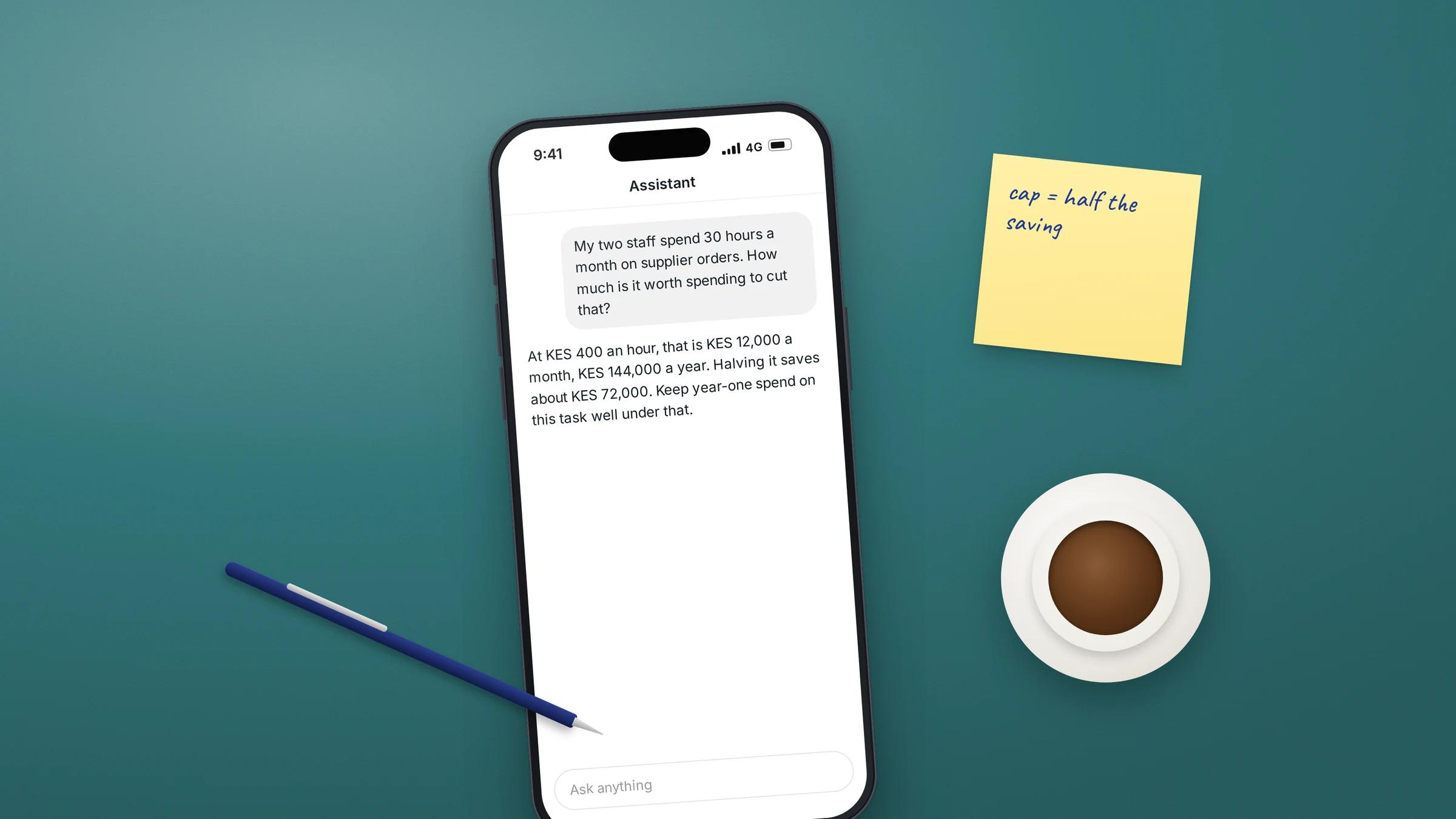
- Decide how much of that time the tool could realistically save. Be cautious: assume half unless you have tested it.
Say two staff spend 30 hours a month preparing supplier orders, and their time costs you about KES 400 an hour. That is KES 12,000 a month, or KES 144,000 a year. If a tool halves the time, the saving is about KES 72,000 a year. Your first-year spend on that task, including setup and running costs, should sit well below that, because the saving is a guess until you measure it.
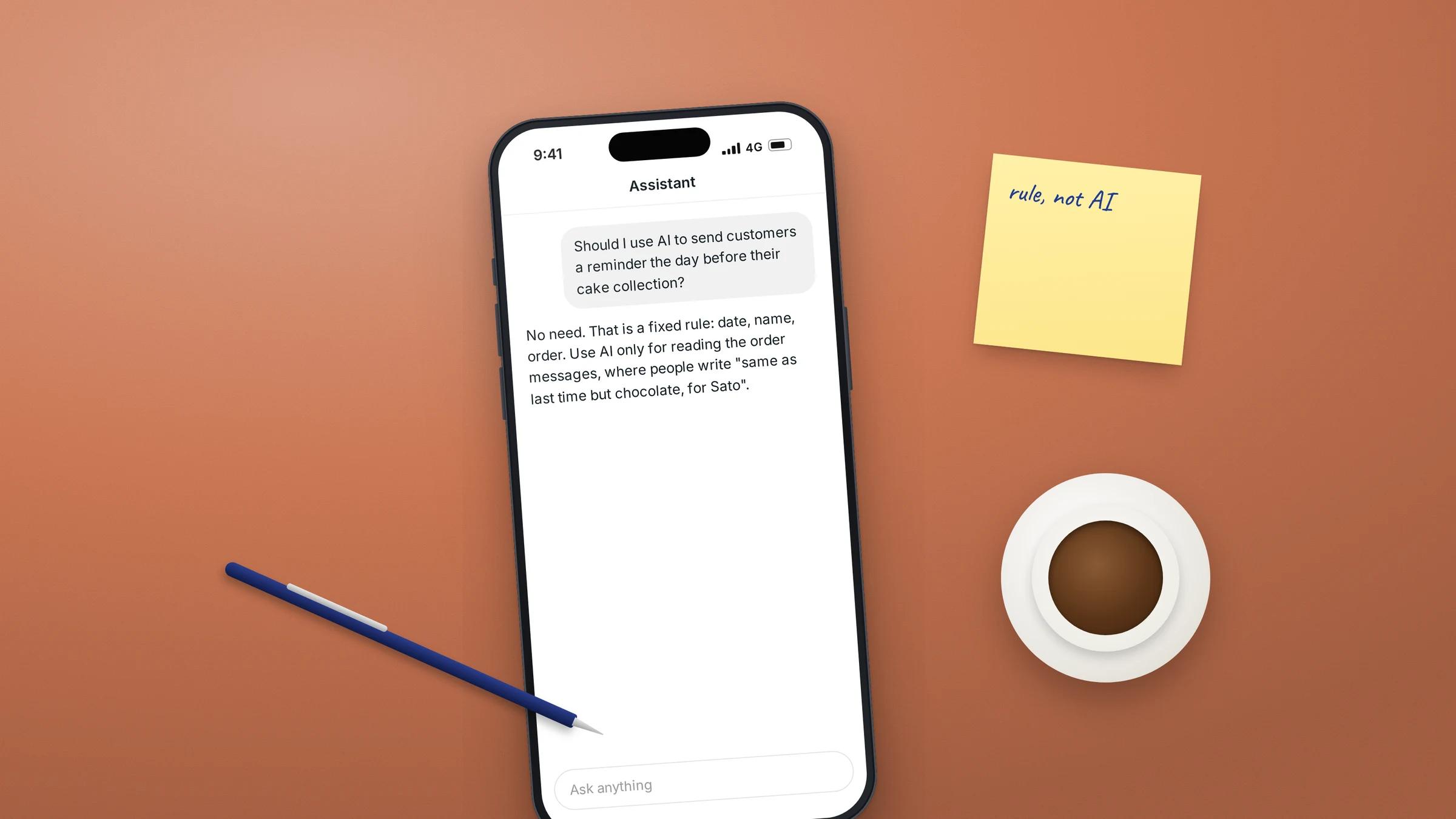
This one sum stops most bad decisions. A system quoted at many times the yearly value of the task it improves is not an investment, however impressive the demo.
Price the problem before you price the solution.
Where first-year money is usually wasted#
The same mistakes come up again and again:
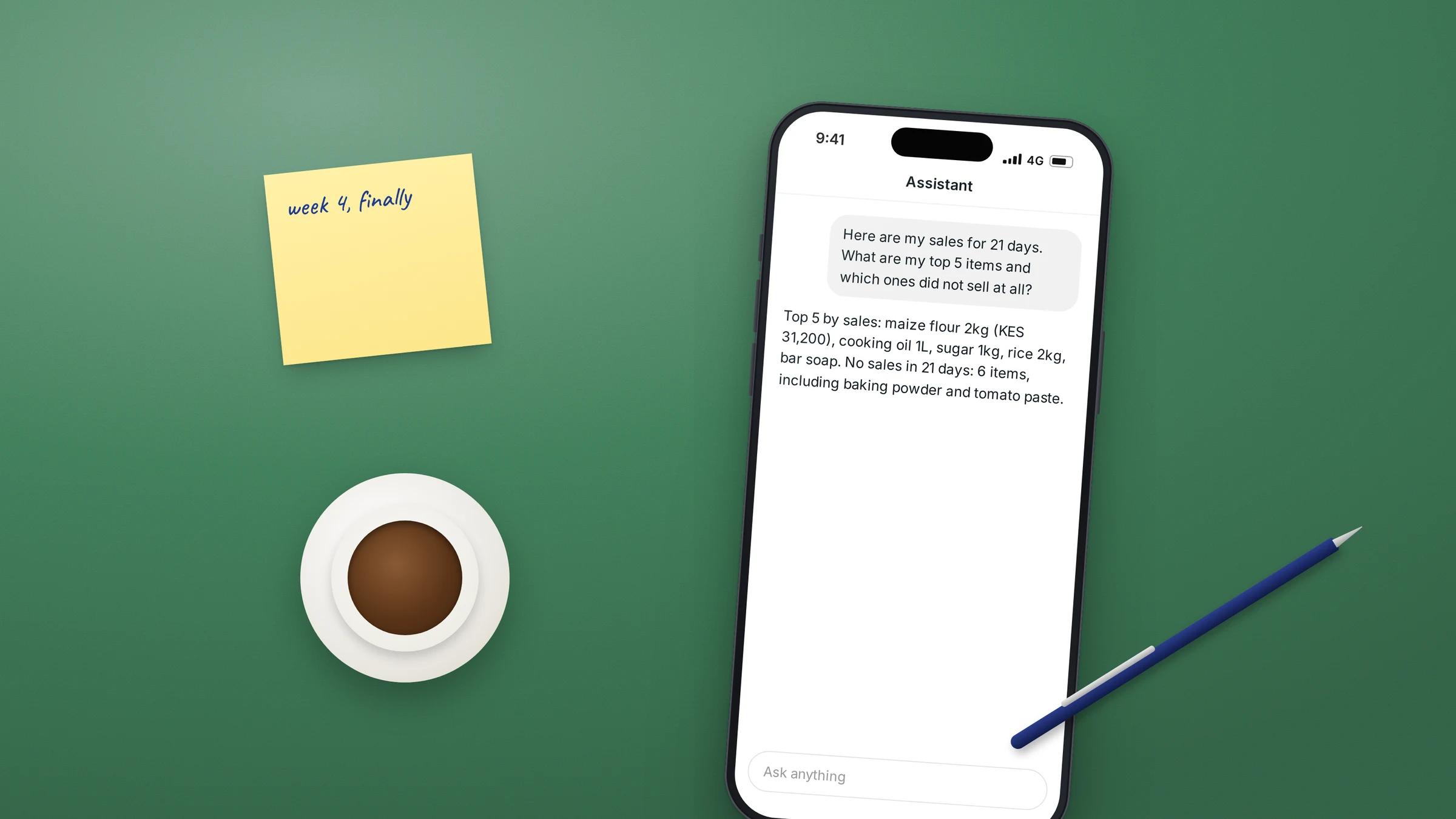
- Buying before recording. Paying for an AI analyst when sales are still in an exercise book. It has nothing to read.
- Too many subscriptions. Five different AI tools, each used twice. One tool used daily by the right person beats five used occasionally.
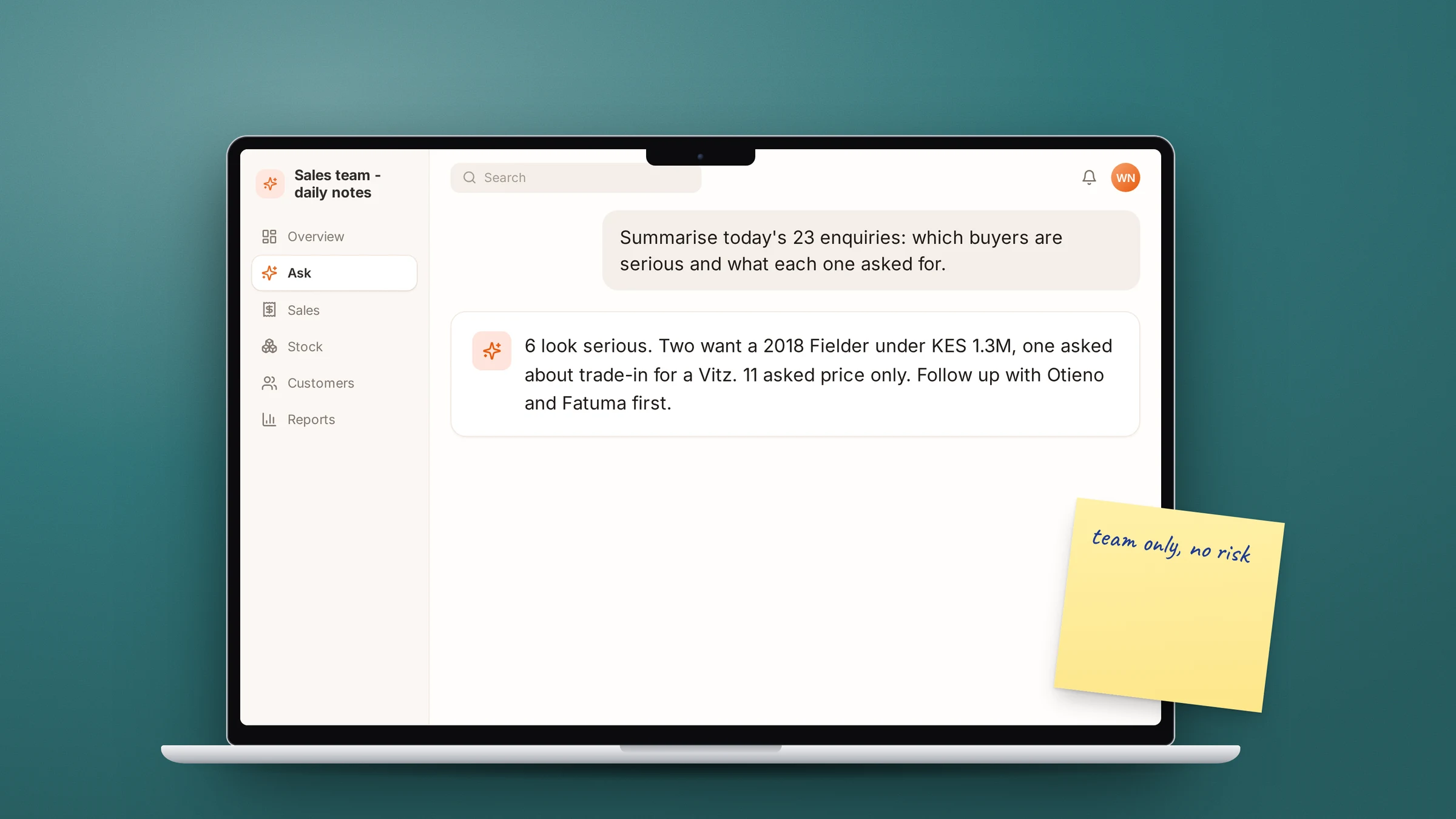
- The most exciting project first. A customer-facing chatbot before the team has used AI internally. Mistakes in front of customers cost more than mistakes in the back office.
- No running-cost estimate. A build that looks affordable until the monthly bill arrives, because nobody multiplied the cost per request by the number of requests.
- No measurement. Paying for a year without ever checking whether the task got faster.
A sensible shape for year one#
For most small businesses, a good first year looks like this: most of the money goes on records and the systems that hold them; a small, steady amount goes on assistant subscriptions for the people who use them daily; and one carefully chosen Stage 3 project is considered only once the records are reliable and someone has measured the task it would improve.
That is not a timid plan. It is the plan that leaves you with something working in month twelve.
What to do this week#
Pick the one task you most want help with. Write down the hours it takes each month, what those hours cost, and half of that figure. That half is your ceiling for year-one spending on that task. Hold every quote and subscription against it.