Take Achieng, an example owner of a mini-supermarket in Kitengela. On Monday a delivery arrives with an invoice that looks slightly different. The 10kg bag of rice that cost her KES 1,500 now costs KES 1,650. Cooking oil and sugar have moved too. She is busy, the van is waiting, she signs and carries on. Three weeks later she notices the month's profit is thin, and cannot immediately say why.
A supplier increase is easy to absorb without noticing. The shelf price stays where it was, sales look normal, and the lost margin hides inside a busy month.
Step one: see what you lost#
Start with the numbers for the rice:
- Shelf price: KES 1,800
- Old cost: KES 1,500, so margin was 300 / 1,800 = 16.7%
- New cost: KES 1,650, so margin is now 150 / 1,800 = 8.3%
A 10% rise in cost has halved the margin. That is the number that matters, and it is why a "small" increase is often not small at all. If you are unsure of the difference between margin and markup, our worked example on margin or markup will save you from the most common mistake here.
Now the two prices worth knowing:
- To keep the same margin (16.7%): 1,650 / (1 - 0.167) = about KES 1,980.
- To keep the same shilling profit (KES 300): 1,650 + 300 = KES 1,950.
Somewhere between "no change" and KES 1,980 is your decision. The arithmetic tells you the cost of each option.
Step two: check the street#
Before moving the price, find out what others charge. Send someone, or go yourself, to two or three shops your customers could easily use instead, and note their price for the same item and size.
If everyone nearby has already moved to KES 1,950, so can you. If the shop across the road is still at KES 1,800, you have a choice: match them for now and recover margin elsewhere, or move anyway and accept that some customers will compare. For staple items like rice and sugar, customers notice. For less compared items, they often do not.
When the same item comes from several suppliers, this is also the moment to ask the others for a price. We showed how to put three supplier quotes in one table without retyping them.
Step three: decide when#
Achieng still has 25 bags she bought at KES 1,500. There are two honest ways to think about them:
Change the price now. The next bag she buys will cost KES 1,650, so the money from selling this one has to pay for that. Many shops price this way, especially when costs are rising quickly.
Change it when the old stock runs out. Customers see a steadier price, and the shop takes the full increase only on the new stock. This is kinder in a competitive street and costs margin in a rising market.
Neither is wrong. What is wrong is not deciding. Pick a rule for your shop and use it every time, so staff are not improvising at the till.
Let an assistant do the comparison#
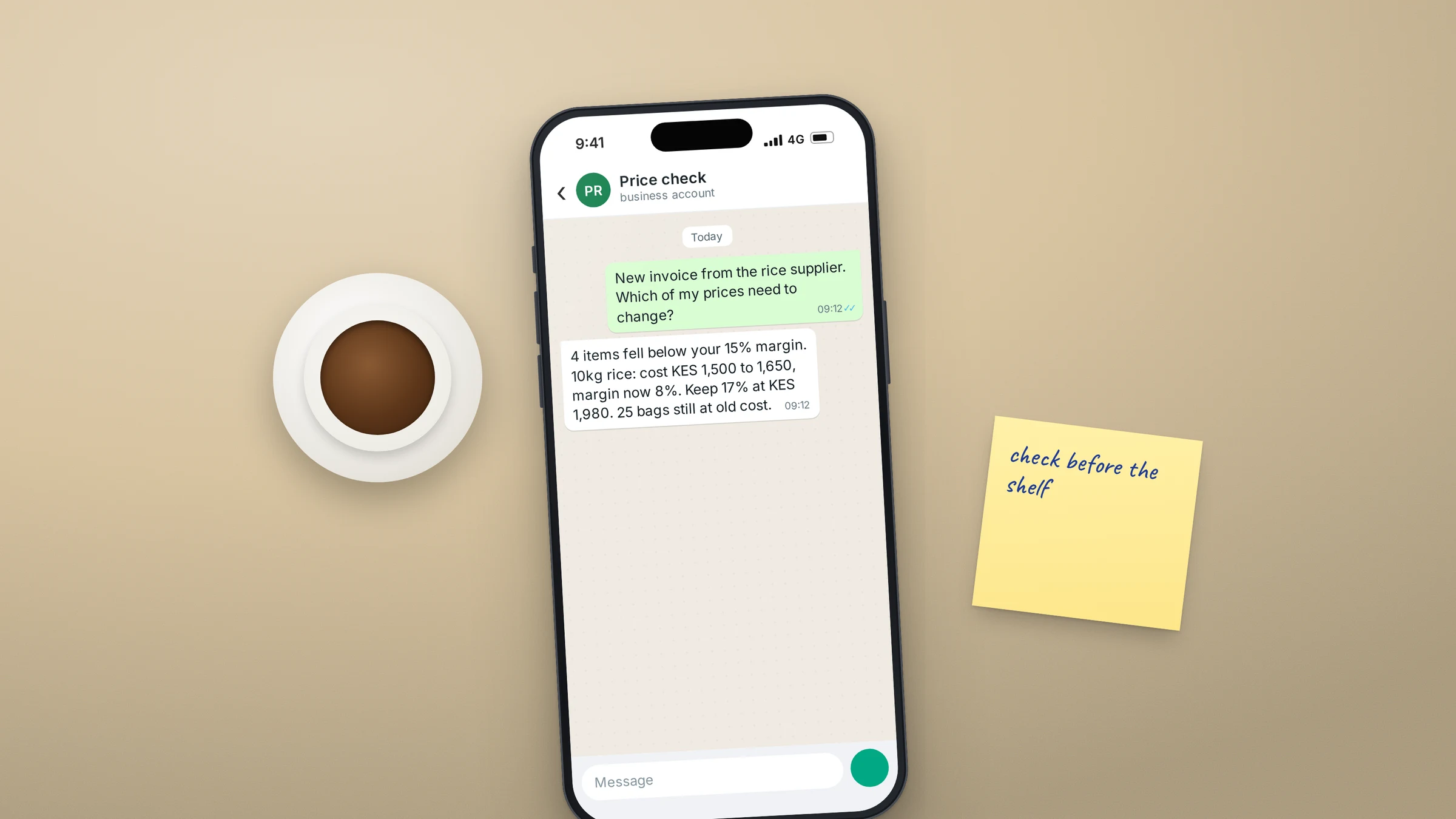
This is a Stage 2 task on the NGAZI ladder: an assistant working on your own documents. Take a photo or PDF of the new invoice and an export of your price list with costs, and ask:
Compare the costs on this invoice with the costs in my price list. For every item where the cost changed, show old cost, new cost, current selling price, current margin and the price that would keep the old margin. Flag any item now below 15% margin.
Check two rows by hand. If they are right, you have a pricing worksheet in five minutes instead of an evening.
What to do this week#
Find the last three supplier invoices. For each item on them, compare the cost with what you paid before. Any item where cost rose and the shelf price did not is leaking margin right now. Work out the new margin for each, check the street price for the top five, and decide your rule for old stock. Then write that rule down where staff can see it.