Ask the owner of a phone accessories shop in Luthuli Avenue what her best item is and she will answer without thinking: chargers. They fly off the counter. Customers come in asking for them by name. She reorders every week, she negotiates hard on price, and she watches their stock more closely than anything else in the shop.
Then you work out what each item actually earned her last month, after what she paid the supplier, and chargers come fourth. Screen protectors, which she barely thinks about, earned almost twice as much. This is an illustrative example, but the pattern is common, and it costs owners money in quiet ways.
Busy is not the same as profitable#
Every item earns money in two ways at once: how many you sell, and how much you keep from each sale. The second part is the gross margin per unit, which is the selling price minus what you paid.
| Item | Units sold | Price | Cost | Margin per unit | Margin earned |
|---|---|---|---|---|---|
| Charger | 412 | KES 450 | KES 400 | KES 50 | KES 20,600 |
| Screen protector | 230 | KES 300 | KES 120 | KES 180 | KES 41,400 |
| Earphones | 95 | KES 800 | KES 480 | KES 320 | KES 30,400 |
| Phone case | 160 | KES 500 | KES 340 | KES 160 | KES 25,600 |
Chargers sell the most units and earn the least. The fastest item on the counter is the slowest earner on the list.
Why does this happen? Fast sellers are the items customers compare prices on. Competitors use them to pull people in, so their prices get squeezed. Meanwhile, the owner's attention follows the volume: more reorders, more shelf space, more haggling with the supplier over a few shillings.
If you are not sure whether your figures are margins or markups, read margin or markup: the mix-up that hides losses before you rank anything.
How to rank your stock by earnings#
You need two numbers per item for the same period: units sold and the cost price you paid. Selling price you probably know.
- Pick a period. One month is enough to start, three is better for slow items.
- List items with units sold. From your till, sales book or system.
- Add the cost per unit. From your latest purchase invoices. If you bought at different prices, use the most recent one for now and note that it is approximate.
- Work out margin earned. (Price minus cost) times units sold.
- Sort by margin earned, not units. Read the top ten carefully.
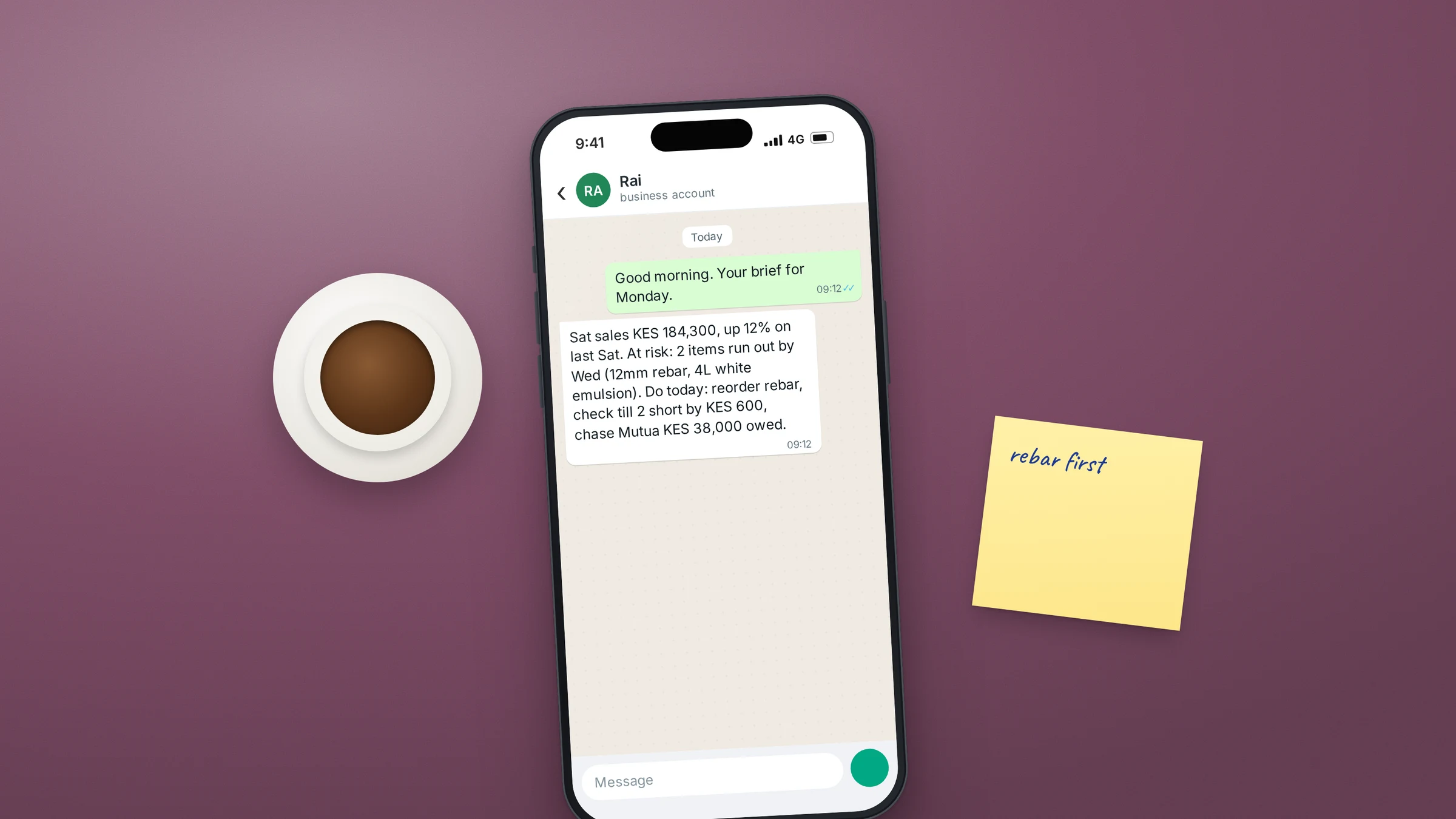
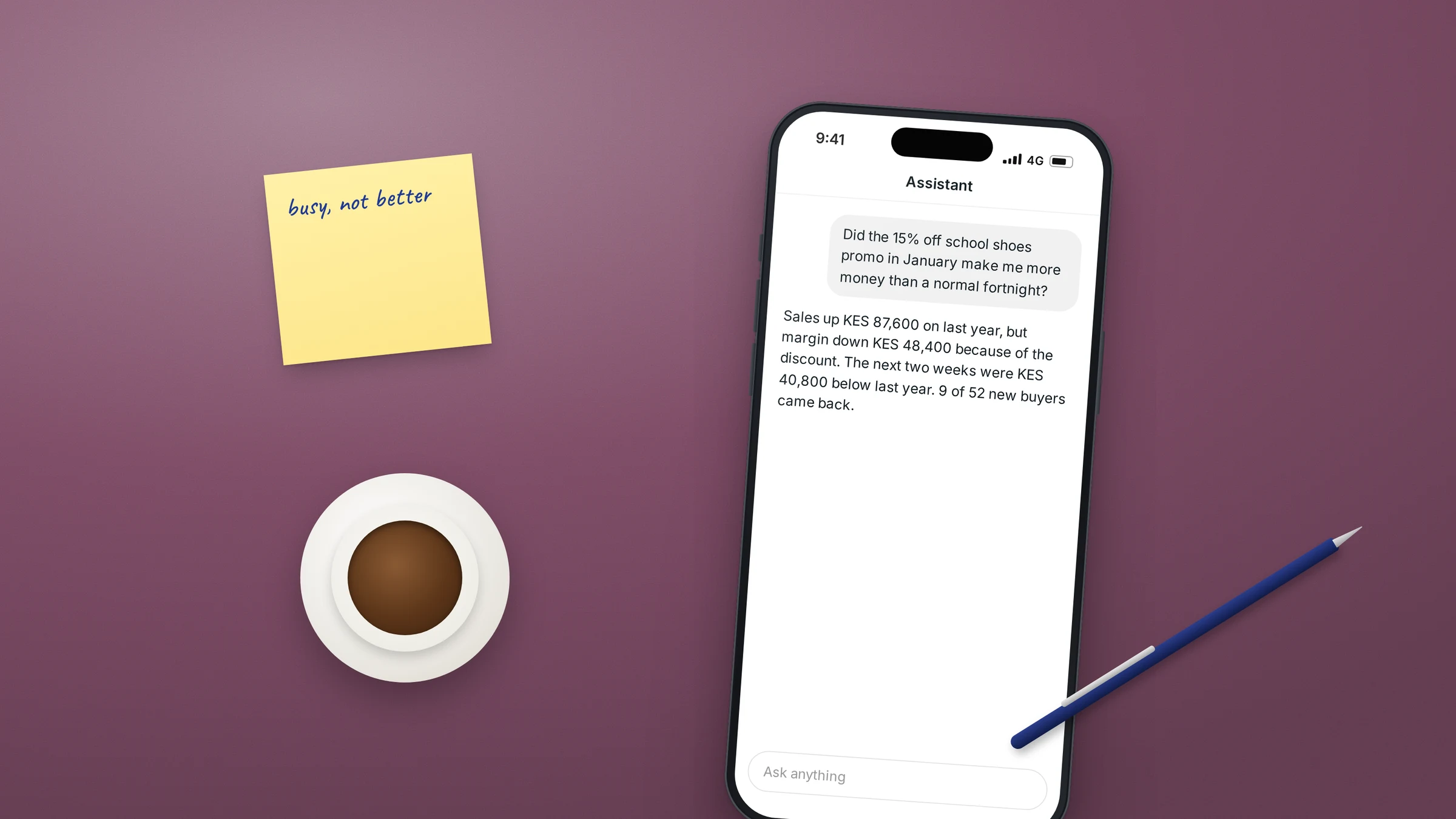
This is a good job for an assistant if your records are in a spreadsheet or a typed list: paste the three columns in, ask it to calculate and sort, then check two or three rows by hand. If you run UpeoRetail, you can simply ask Rai, which shows the figures behind its answer so you can check them. That is the point of asking your shop anything: the question is easy, the data was always there.
What to do with a busy low earner#
Do not drop it. A fast, thin item often brings in customers who then buy something else. A charger customer is a good screen protector customer. But do stop treating it as your star. Options:
- Check the price. If you have not raised the price since your supplier did, you may be selling at almost no margin. Even KES 30 more per unit on 412 chargers is over KES 12,000 a month.
- Pair it. Place the high-earner next to the busy one. "Charger and screen protector for KES 700" can earn more than either alone.
- Move your attention. Spend the negotiating effort on the items that earn. A better cost on earphones moves the total more than another fight over chargers.
- Keep it stocked, not overstocked. Busy items deserve reliable stock, but cash tied up in a thin item earns little while it sits.
What to do this week#
Take your ten fastest-selling items. For each, write down last month's units, selling price and what you paid. Multiply out the margin earned and sort the list. If the order surprises you, look at the item that dropped furthest and ask one question: when did I last check its price against my cost?