Take Peter, who runs a shoe shop in Eldoret. Every January he puts school shoes on 15% off for two weeks, and every January the shop is packed. Parents queue at the till, his two attendants work through lunch, and he goes home tired and satisfied. Ask him whether the promotion works and he will say yes without hesitation. Ask him how much extra profit it made and he will pause.
That pause is the right reaction. A promotion can fill a shop and still lose money, or simply move sales that would have happened anyway into a cheaper fortnight. You can tell which, using sales records you probably already keep. Three checks are enough.
Check 1: compare with a fair "before" and "after"#
The busy fortnight on its own tells you nothing. You need to compare it with what would have happened without the promotion. The closest thing you have is your own normal trading.
Take three periods of the same length:
- Before: the two weeks just before the promotion, or the same fortnight last year if the season matters (school shoes in January certainly do).
- During: the promotion itself.
- After: the two weeks just after.
Then look at total sales for the promoted items in each. Here is an illustrative version of Peter's numbers:
| Period | Pairs sold | Sales |
|---|---|---|
| Same fortnight last year, no promotion | 210 | KES 504,000 |
| Promotion fortnight | 290 | KES 591,600 |
| Two weeks after | 95 | KES 228,000 |
| Same two weeks last year | 112 | KES 268,800 |
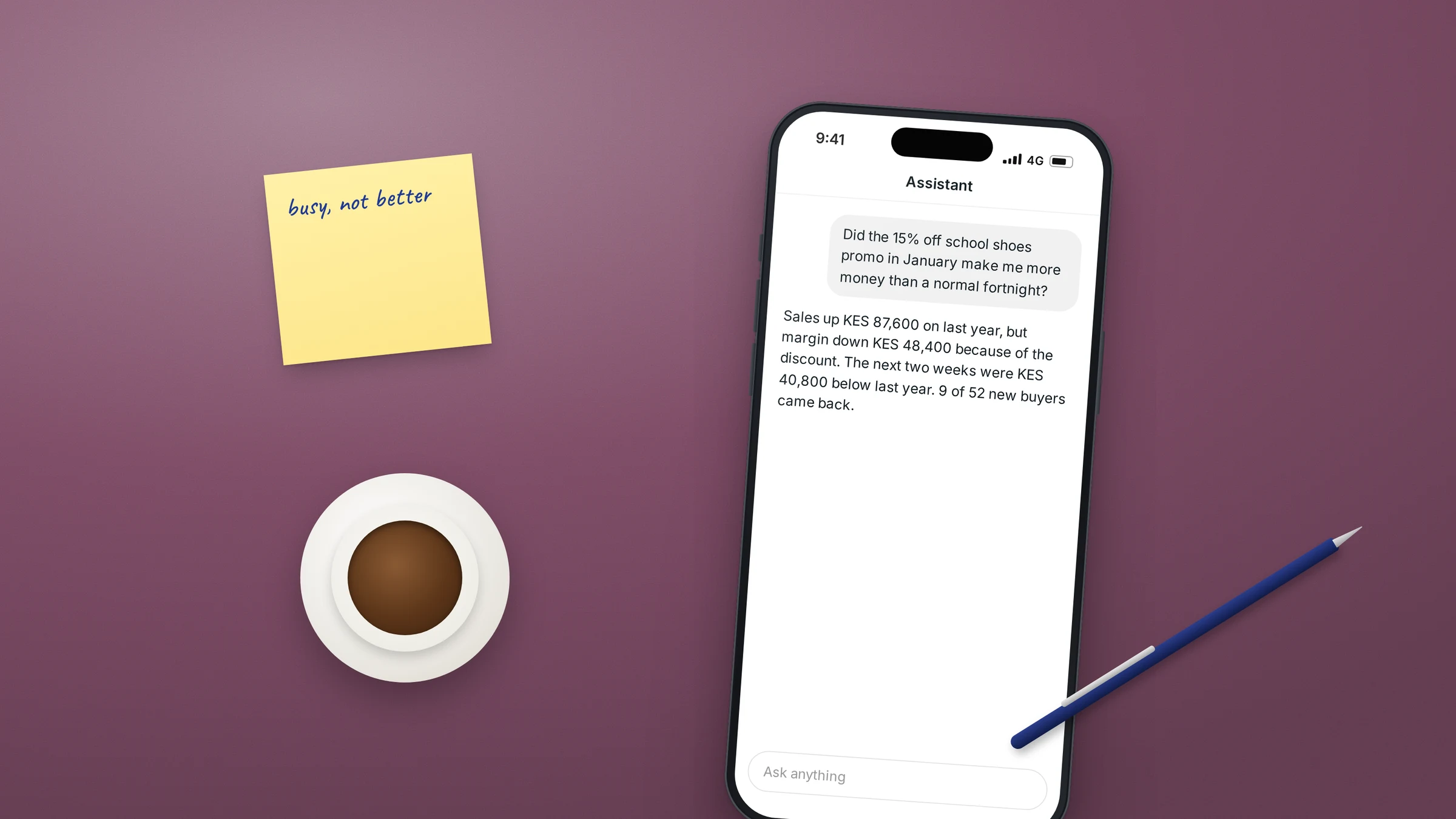
Sales during the promotion were up KES 87,600. But the two weeks after were KES 40,800 down on last year. Some of the "extra" sales were parents who would have bought in early February anyway, and simply came earlier for the discount. This is called pulling sales forward, and it is the most common reason a promotion looks better than it was.
Check 2: count the margin you gave away#
Sales are not profit. A 15% discount comes straight off your margin, not off the selling price as a whole. If a pair sells at KES 2,400 and costs you KES 1,700, you normally keep KES 700. At 15% off, it sells at KES 2,040 and you keep KES 340. You need to sell more than twice as many pairs just to earn the same.
So compare margin earned, not sales, across the three periods: (price you actually charged minus cost) times pairs sold. In the example, 290 pairs at KES 340 margin is KES 98,600. The same fortnight last year, 210 pairs at KES 700, was KES 147,000. The packed fortnight earned less than the quiet one.
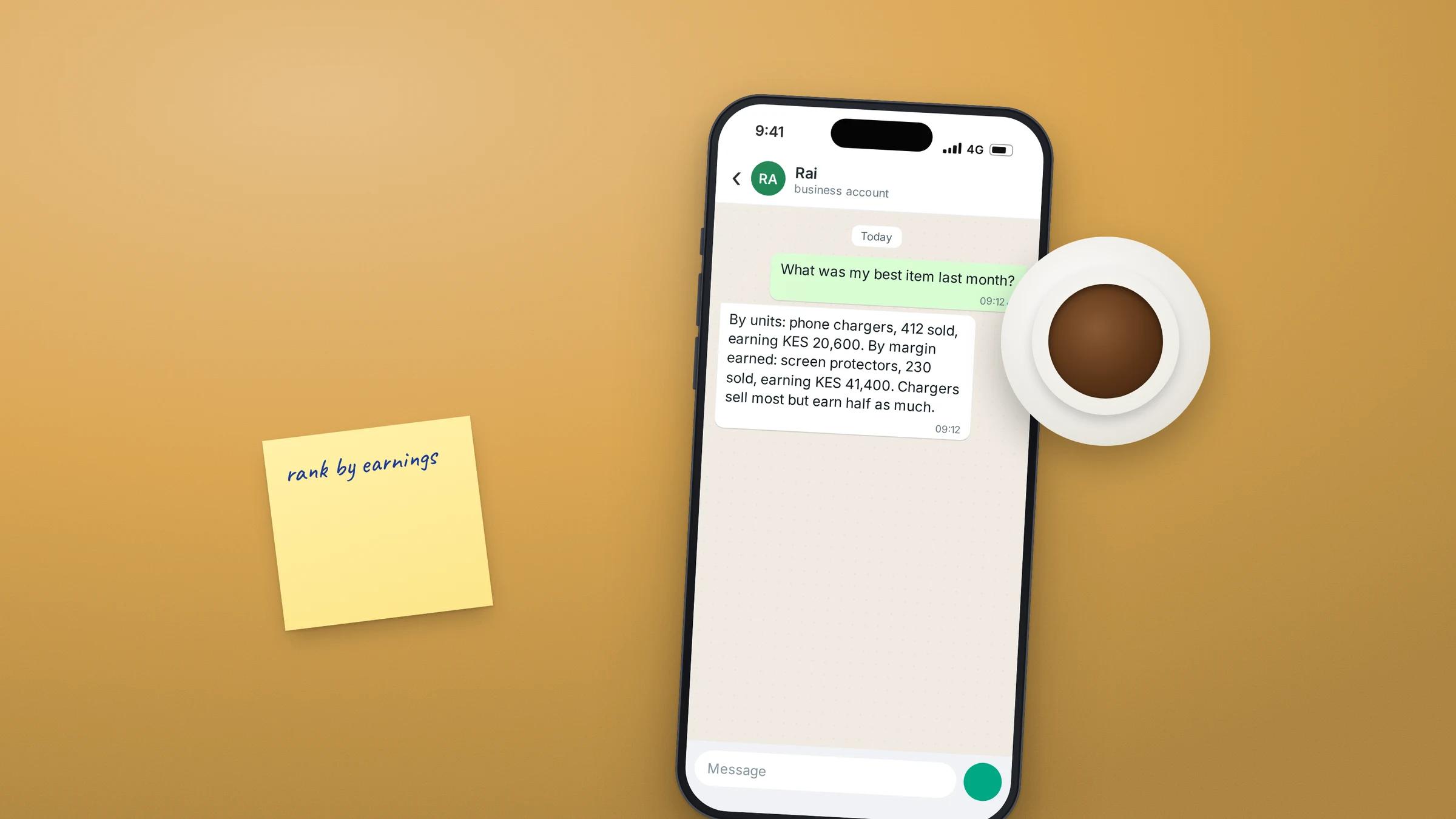
This is where many owners are surprised, and it connects to a wider point: your best-selling item may be your worst earner. Volume feels like success even when it is not.
Check 3: did new customers come back?#
The best argument for a promotion is that it brings in people who keep buying at full price. That is testable if you record who buys, even roughly: a phone number at the till, a loyalty card, M-PESA names.
Count the customers who bought for the first time during the promotion. Then count how many of them bought again in the following two or three months, at normal prices. In Peter's illustrative case, 52 new buyers came in, and 9 came back. Whether that is good depends on what a returning customer is worth to you over a year. But now it is a number, not a feeling.
If you do not record customers at all, this check is impossible, and that is worth knowing before the next promotion. Collecting a phone number with consent at the till is a stage 0 habit that pays later.
Let an assistant do the arithmetic#
The three checks are a natural stage 2 task: an assistant working on your documents. Export the sales lines for the promoted items for the relevant weeks, with date, quantity, price charged and, if you have it, customer. Add the cost per unit. Remove phone numbers and replace customer names with codes. Then ask:
Compare these three periods for pairs sold, sales and margin earned. Then tell me how many customers bought for the first time in the promotion and how many bought again afterwards.
Check two or three of its figures against your own records. If anything looks off, see how to check an AI answer in under a minute.
What to do this week#
Pick the last promotion you ran. Pull the sales for the promoted items for the fortnight before, during and after. Work out margin earned for each period. Before you plan the next promotion, write down what result would count as success: more margin, more new customers who return, or clearing old stock. Then you will know what to measure.