Take an electrical shop on Kirinyaga Road, an illustrative example, that buys cable from three suppliers. The owner, Kevin, always gave most of his orders to the one with the lowest price per metre. Yet every few weeks he was turning customers away because a size was out of stock, and his storekeeper spent Friday afternoons on the phone about invoices that did not match what came off the lorry.
The cheapest price on a quote is only one part of what a supplier costs you. A late delivery means lost sales. A short delivery means a second trip or an angry customer. A wrong invoice means hours of checking and, sometimes, money paid for goods you never got. A supplier scorecard puts those costs next to the price, using records you already keep.
The three questions#
For every delivery, ask:
- On time? Did it arrive by the date agreed when you ordered? Yes or no.
- Complete? What share of the ordered quantity actually arrived? 100 ordered, 85 delivered, is 85%.
- Correct? Did the invoice match what was delivered, at the agreed price? Yes or no.
That is the whole scorecard. You can add more later, such as quality or damaged goods, but these three cover most of what goes wrong, and they can be answered from paper.
Where the data comes from#
You need three documents per order, and most shops already have them in some form:
| Question | Compare | With |
|---|---|---|
| On time | Date expected on your order | Date on the delivery note |
| Complete | Quantity on your order | Quantity received and signed for |
| Correct | Invoice lines and prices | Delivery note and agreed price |
If your orders are WhatsApp messages, that still works: the date and quantities are in the chat. The weakest link is usually the receiving step. If nobody counts what comes off the lorry and signs for it, "complete" cannot be measured. Fixing that one habit is worth more than the scorecard itself. Reading delivery notes from a photo helps here; we showed how in photo of a delivery note.
Building it with an assistant#
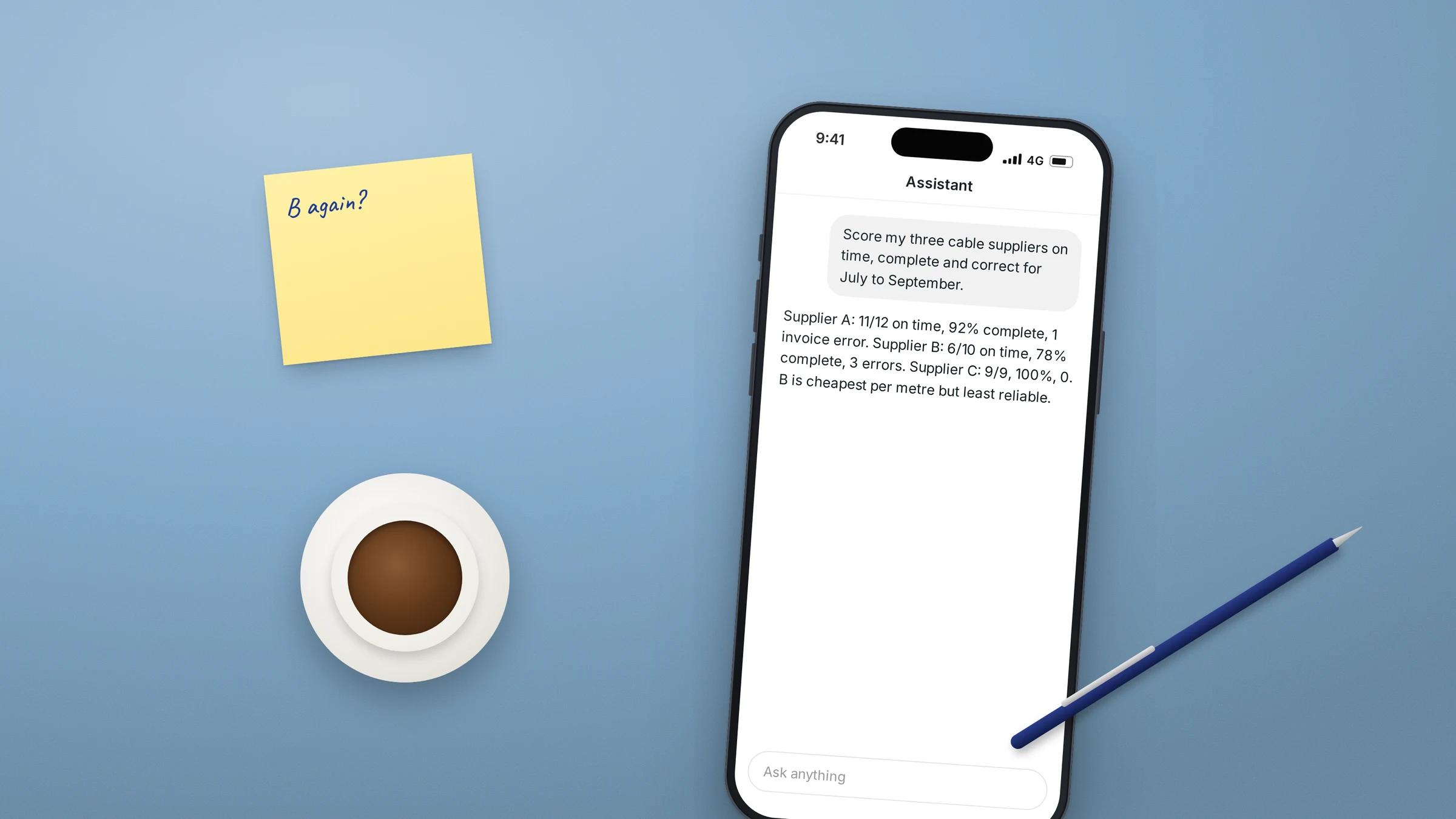
This is a natural stage 2 task on the NGAZI ladder: AI working on your documents. Gather a quarter's worth of orders, delivery notes and invoices for one product group, as typed lists or clear photos. Remove anything you would not want shared, such as bank details. Then ask a capable assistant something like:
For each supplier, list every order with: order date, expected date, delivery date, quantity ordered, quantity received, and whether the invoice matched. Then give each supplier three scores: share of deliveries on time, average share of quantity delivered, and number of invoices with errors.
Two cautions. First, check a handful of rows yourself against the paper. If the assistant misread a date, the scores are wrong. Second, ask it to list any document it could not read rather than filling the gap. A scorecard with "3 delivery notes unreadable" is honest; one that quietly guessed is not.
If you run UpeoRetail, Rai can answer questions like this from the records in the system itself, with the figures behind each score.
Turning scores into decisions#
Now put price next to reliability. In Kevin's case, an example table might look like this:
| Supplier | Price per metre | On time | Complete | Invoice errors |
|---|---|---|---|---|
| A | KES 118 | 11 of 12 | 92% | 1 |
| B | KES 109 | 6 of 10 | 78% | 3 |
| C | KES 121 | 9 of 9 | 100% | 0 |
Supplier B is about 8% cheaper than A. But four of its ten deliveries were late and more than a fifth of what was ordered never came, so for those metres you either lose the sales or make an emergency purchase at a higher price. That saving can vanish quickly.
Use the scorecard in three ways:
- Split orders. Fast-moving sizes go to the reliable supplier; slower lines can go to the cheapest.
- Talk with evidence. "Six of your last ten deliveries were late" is a better conversation than "you are always late". Many suppliers improve once they know you are counting.
- Compare quotes properly. When new quotes arrive, look at them side by side with each supplier's record. See three supplier quotes, one table for laying quotes out fairly.
What to do this week#
Choose your three most important suppliers. Pull their last ten deliveries each and fill in the three questions, on paper if you like. It will take an afternoon. Then ask yourself whether the supplier with the best price is still the supplier you would choose.