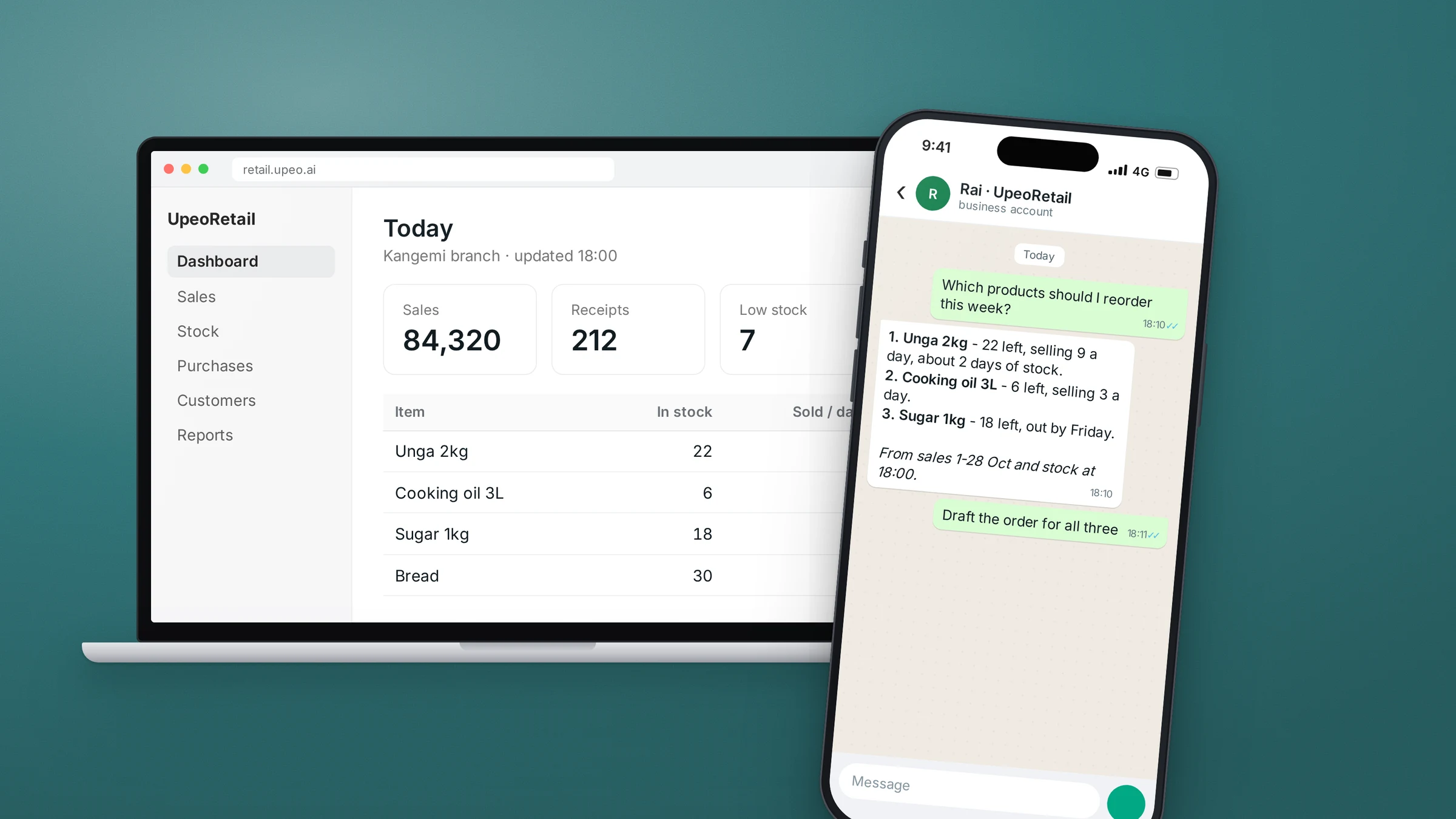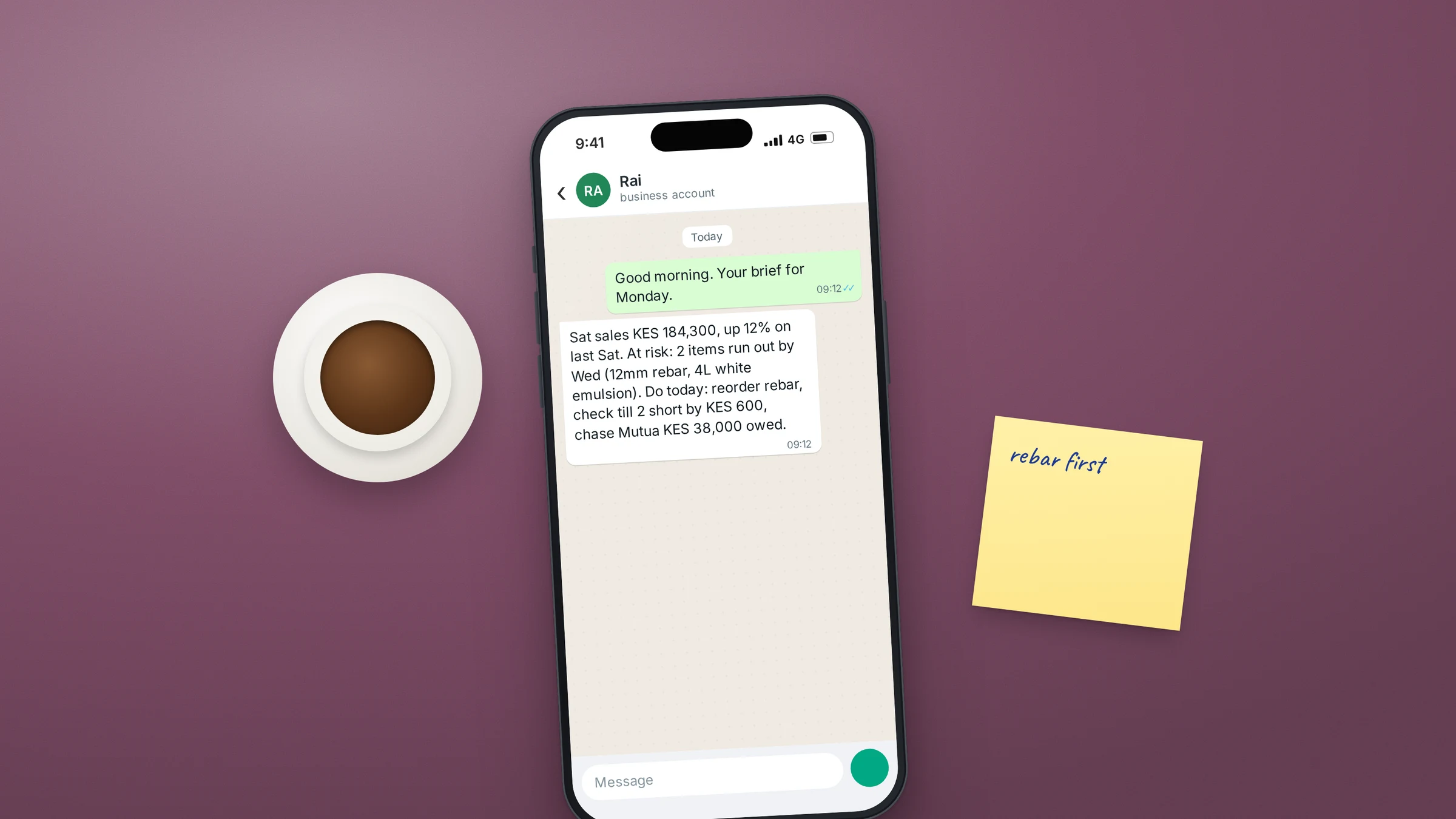
Take Juma, who opens his hardware shop in Juja at 7:30. At 7:00, while he is still at the kiosk with his tea, his phone shows a WhatsApp message from Rai, the AI analyst inside UpeoRetail. It is his morning brief: what moved yesterday, what is at risk, and three things worth doing today. By the time he opens the shutters, he knows that 12mm rebar will run out by Wednesday, that till 2 was KES 600 short on Saturday, and that a contractor who owes him KES 38,000 has not paid in 45 days.
None of that information is new. It was all in his records. What is new is that it arrived, sorted and ranked, before the day started deciding things for him.
What is in the brief#
The brief is a short digest that arrives on schedule, built from the shop's own records. It has three parts:
- What moved: yesterday's sales against a sensible comparison, such as the same day last week, and anything unusual in what sold.
- What is at risk: fast-moving items about to run out, margins slipping on a category, a supplier's price that jumped, tills that did not reconcile.
- Three things worth doing: specific actions, each with the figure behind it.
Every point cites its numbers, which is the rule Rai follows for all advice: you can check it rather than trust it. If you are new to Rai, meet Rai explains the rest of what it does.
Read it in this order#
Five minutes is enough if you read in the right order.
1. Risks first. Anything about to run out, a till that does not balance or a price that moved needs action today. An item that will be out by Wednesday needs an order placed on Monday, while the supplier still has time to deliver.
2. The three things. These are ranked. Do the first one before you open, if it is quick, such as approving a purchase order draft or sending a payment reminder. Put the other two on the day's list with a name next to each.
3. What moved, last. Yesterday's sales are interesting and reassuring, but rarely urgent. Read them for surprises: a slow item that suddenly sold well, a usually busy day that was quiet.
Ask one follow-up question#
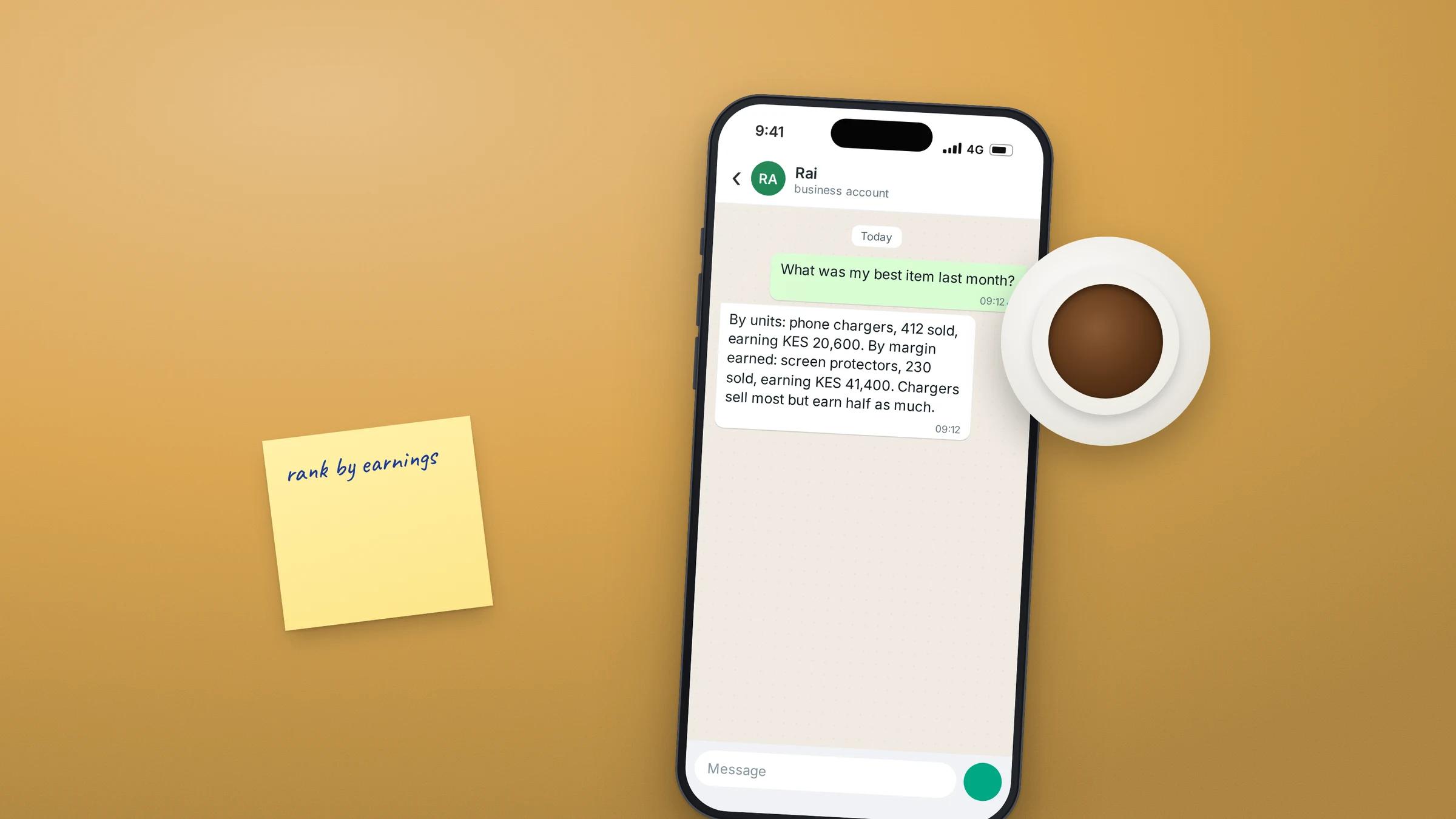
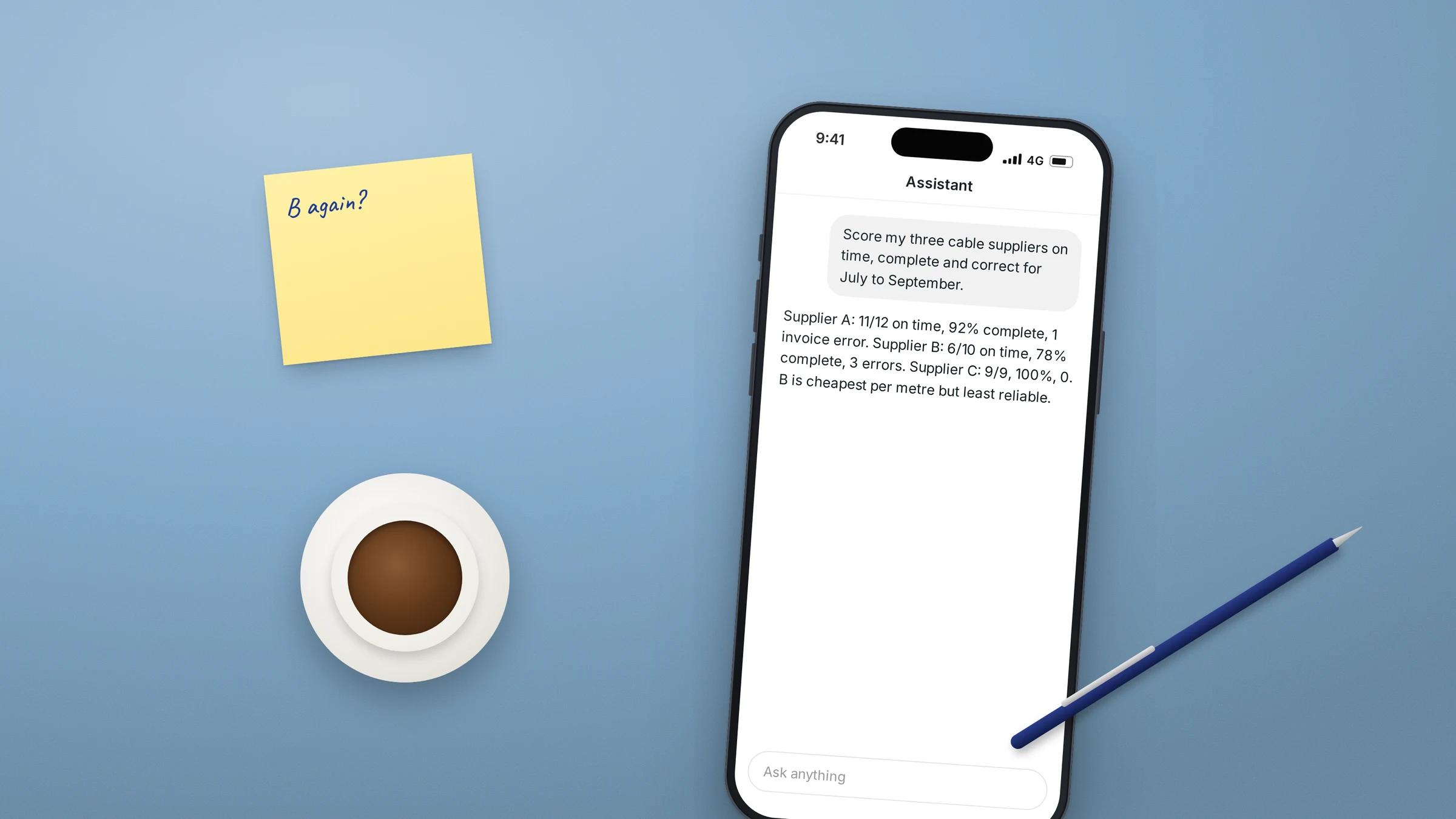
The brief is a starting point, not the whole conversation. Because it arrives in WhatsApp, you can reply to it with a question, in English, Swahili or Sheng, and get an answer from the same records.
Good follow-ups are short and specific:
- "Why did white emulsion sell so fast last week?"
- "Which customers bought 12mm rebar this month?"
- "Show me till 2's shortfalls for the last 30 days."
- "What did I pay each supplier for rebar this year?"
One question a day is enough. Over a few weeks, the questions you keep asking tell you what to save as a regular report.
The brief tells you where to look. The follow-up question tells you why.
Act, then approve#
Some of the things the brief suggests involve changing your records: drafting a purchase order for the rebar, for example. Rai prepares the draft, shows you the item, quantity, supplier, price and its reasoning, and waits. Nothing is created until you approve, and every approved action is logged. That is the rule we hold to everywhere, and it means you can act on the brief from your phone without worrying about what happens if a suggestion is wrong.
Read the reasoning before you tap. If Rai suggests 40 lengths of rebar because you sold 12 a week for eight weeks, and you know a big contractor's order is about to come in, you change the quantity. The brief knows your history. You know your week.
Make it a habit, not a report#
The value of the brief comes from reading it every day, not from any single morning. Owners who make it part of opening, like checking the float, start to see patterns: which days are slow, which items always run out after a public holiday, which customers pay late every month. That is Stage 4 on the NGAZI ladder: AI working on the history your shop has built up, one morning at a time.
A few habits help:
- Read it at the same time, before opening.
- Share the "do today" items with the staff member who opens with you.
- Once a week, look back at the week's briefs and ask whether you acted on the risks in time.
- If a point is never useful, tell us. A brief that is always skipped needs changing.
What to do this week#
If you use Rai, read your brief before opening every day this week in the order above: risks, the three things, then what moved. Act on the top item before you open, and ask one follow-up question each day. On Saturday, count how many risks you caught in time. If you do not use Rai yet, the same discipline works with a printed sales and stock report: five minutes, risks first, one action.