Take Abdi, who runs an electronics shop on Luthuli Avenue. Every year around now his phone fills with offers, as suppliers want him to take "Black Friday stock": a pallet of blenders at a special price, a container share of 43-inch TVs, earphones by the carton. Last year he said yes to most of it. His sales that week were the best of the year. In February he was still holding fourteen blenders and paying a supplier for TVs he had sold at a discount that barely covered the cost.
Black Friday has become a real trading week for many Kenyan shops, especially in electronics, fashion and supermarkets. The question is not whether to take part. It is how much to buy, of what, with which money. Your own records answer all three better than any supplier.
Read last year's sale week#
If your sales are recorded item by item, start with three comparisons for last year:
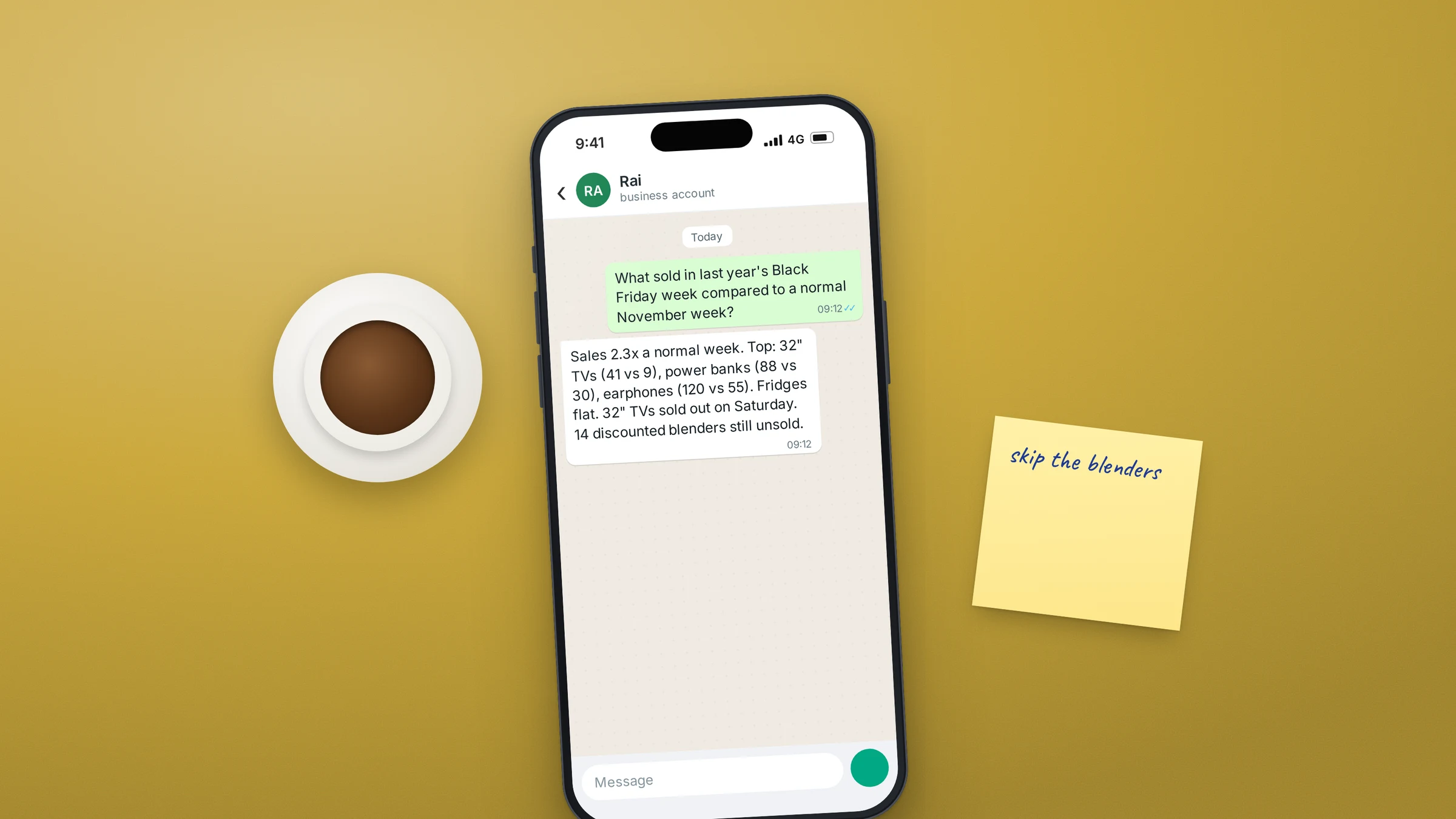
- The sale week against a normal November week. How much higher were total sales, and which items made the difference? Often a handful of items carry most of the increase.
- What sold out, and when. An item that ran out on Saturday morning lost you sales; you probably need more of it this year.
- What was left over. Items bought specially for the sale that were still on the shelf in January. These are the costly mistakes.
Then look at margin, not only units. A TV sold at a discount that left KES 400 profit is a very different success from earphones sold at full margin. Our piece on best-sellers that are your worst earners explains why the two lists differ.
If you use Rai, the analyst in UpeoRetail, these are plain questions you can ask in WhatsApp: "what sold in last year's Black Friday week compared with a normal November week?" It answers from your records with the figures shown. Without it, a sales report for the two weeks and an hour with a pen gets you the same answers.
Separate fast movers from promises#
Last year's list gives you three groups:
- Proven sale items: sold well in the sale week last year, at a margin you were happy with. Buy more, especially if they sold out.
- Everyday fast movers: items that sell steadily all year and also rise in a sale week, like power banks and phone accessories. Top these up; even if the sale is quiet, they sell in December.
- Supplier specials: new items offered at a "Black Friday price" that you have no history for. Treat these with suspicion. If you want to try one, buy a small quantity and see.
The last group is where hope does the buying. A special price on something your customers do not already ask for is not a bargain; it is stock.
Decide the cash first, then the stock#
Black Friday stock is bought in November and sold in late November and December, but suppliers are paid on their terms, and January brings school fees for many of your customers and rent for you. So set a cash limit before you set quantities:
- How much can you tie up in extra stock without missing rent, salaries or supplier payments?
- Which suppliers will give you credit or sale-or-return on sale stock?
- What is the worst case: if a third of the extra stock does not sell until February, can you carry it?
Then fill that limit in order: proven sale items first, fast movers second, a small test of anything new last. If the money runs out before the specials, that is the plan working.
Hope buys a pallet. Your records buy what sold out last year.
Watch the week as it happens#
During the sale week, check sales by item each evening against the same day last year. If a proven item is selling faster, reorder early while suppliers still have stock. If something is not moving by Saturday, do not discount it further in a panic; it may sell steadily in December at a better price.
After the week, write down three lines: what sold out, what was left, and whether the week made more profit than a normal one. That note is the start of next year's plan, and it is Stage 4 on the NGAZI ladder: each year's records making the next decision better.
What to do this week#
Pull last year's sales for Black Friday week and an ordinary November week. List the ten items with the biggest increase, mark which sold out and which were left over, and set your cash limit for sale stock. Only then reply to the supplier offers.