Take Kamau, who runs an agrovet and hardware shop outside Nyeri. Every March the same thing happens. The first heavy rain comes, farmers who have been waiting walk in for seed, fertiliser and gumboots, and builders want gutters and roofing nails before the ground turns to mud. Kamau sells out of size 9 gumboots in the second week, phones his supplier, and learns that every other shop in the county has made the same call.
The long rains in much of Kenya run roughly from March to May. Kamau does not need a weather forecast to plan for them. He needs to read what his own shop did in the last two long rains, and he needs to do it now, in November, while suppliers are quiet and he has time to think.
What your history can answer#
If your sales have been recorded item by item for two years or more, three questions become easy to answer, and they are the ones that decide the season:
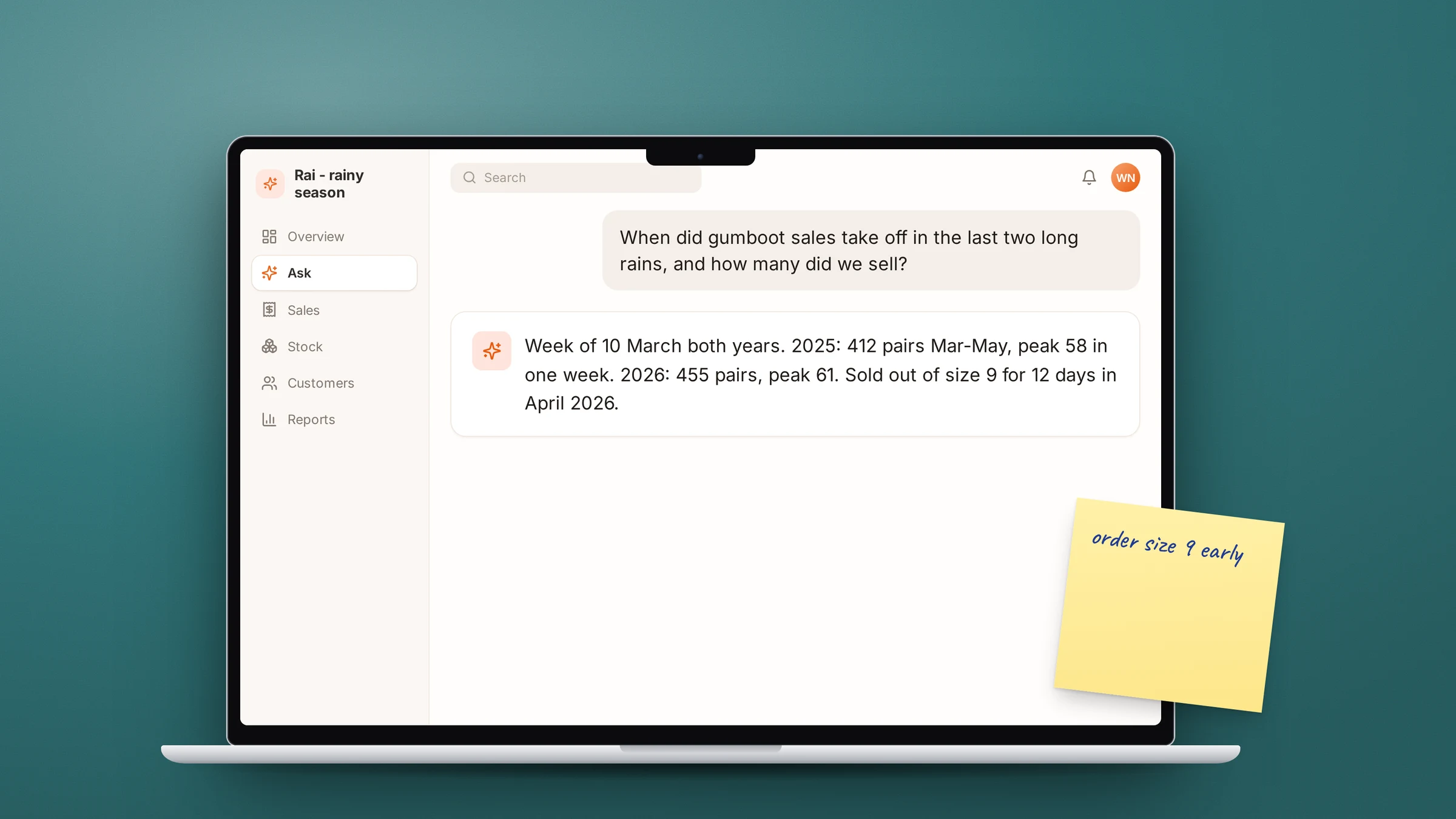
- When does the wave start? Look at weekly sales for your rain items from February to June in each of the last two years. Most shops find a clear week where sales jump. That week moves a little with the weather, but usually within a fortnight.
- How big is it? Add up each item's sales over the season, and note the best single week. The total tells you how much to buy; the peak week tells you how much must be on the shelf at once.
- Where did you run out? A week of zero sales in the middle of the season, for an item that was selling well either side of it, is almost always a stock-out, not a sudden lack of interest. Those gaps are lost sales your records can show you.
This is Stage 4 on the NGAZI ladder: AI on your accumulated history. An analyst like Rai answers these questions in plain language from the shop's own records, with the figures shown, but the same questions can be answered by hand from a sales report if you are patient. The point is the questions.
Separate the items that follow the rain#
Not everything sells more in the rain. Split your list into three groups:
- Rain items: gumboots, raincoats, umbrellas, gutters and downpipes, roofing sheets and nails, waterproofing, seeds and planting fertiliser for agrovets, tarpaulins.
- Items that slow down: cement and building sand often dip when sites stop work in heavy rain; outdoor paint too.
- Everything else: carry on with your normal reorder points.
The second group matters as much as the first. If cement slows for six weeks every April, you do not want April's cash tied up in it. Ask your history the same three questions for those items and you will see the dip.
Turn the history into an order plan#
Take each rain item and write one line: last two seasons' totals, the peak week, the start week, and any stock-out. Then decide:
- Quantity: start from the better of the two seasons if you ran out in either, the average if you did not. Adjust for anything you know has changed, such as a new competitor nearby.
- Timing: have the first half on the shelf two weeks before the usual start week. Keep the second half on order, to arrive after the wave begins.
- Sizes and variants: gumboots run out by size, not as a whole. Your history shows which sizes sold out first. Order to that pattern, not evenly.
Then add up what it all costs. For many shops the rainy-season order is the biggest cash outlay of the first half of the year, and it lands just after January's school fees. Knowing the figure in November means you can talk to suppliers about terms, or put money aside, instead of discovering the gap in February.
Check the plan against the season as it comes#
History tells you what usually happens. It does not tell you this year's weather. So once the season starts, compare each week against the same week last year. If gumboots are running well ahead, bring the second order forward. If the rain is late, hold it. A weekly digest that shows "this week against the same week last year" for your rain items makes that a two-minute check instead of an evening's work.
What to do this week#
Pull weekly sales from February to June for your five biggest rain items, for every year you have recorded. Mark the start week, the peak week and any zero weeks in the middle. If your sales are not recorded by item yet, that is the job for this season, so next year you have something to read. Our guide to reorder points without a spreadsheet covers the everyday side.