Picture a Monday morning at a small outpatient clinic in Machakos: the benches are full by eight. The front desk feels the pressure first: patients asking how much longer, someone who has been waiting since seven, a parent with a restless child. The administrator, call her Akinyi, is sure the problem is the lab. The clinical officer is sure it is registration. Both have been arguing about it for months.
Neither of them is guessing badly. They just each see one part of the visit. The clinic already writes down enough to settle the argument; nobody has put the times side by side.
This article is about clinic operations only: how patients move through the building, not anything to do with diagnosis or treatment.
A visit is a chain of steps#
Every outpatient visit, however small the clinic, is a chain. Typically:
- Arrival and registration at the front desk.
- Triage, where vital signs are taken.
- Consultation.
- Lab, if tests are requested, and back to the clinician with results.
- Billing or insurance checks.
- Pharmacy.
- Exit.
A patient's total wait is the sum of the gaps between those steps. Measuring the total alone tells you there is a problem. Measuring each gap tells you where.
Where the times already are#
Most clinics have more timestamps than they realise:
- The registration system or the register book. Arrival time, often written by hand.
- The patient file or electronic record. The time the consultation was opened.
- The lab request and result log. Time requested, time sample taken, time result out.
- The billing or insurance record. The time a claim or invoice was created.
- The pharmacy dispensing log. Time dispensed.
If you use a clinic system, many of these are recorded automatically. If you are on paper, they are often still there, in different books, in different handwriting.
Putting it together, with AI as the reader#
This is where Stage 2 of the NGAZI ladder, AI on your documents, earns its keep. Take one month of visit records as a simple table: visit number, date, arrival time, consultation start, lab request, lab result, pharmacy dispensed. Even if it took a staff member two afternoons to type it from the books, that is one table.
Give it to an assistant and ask plain questions:
- What is the average time from arrival to consultation, by day of the week?
- How long between lab request and result, morning versus afternoon?
- Which hour of the day has the longest wait for the pharmacy?
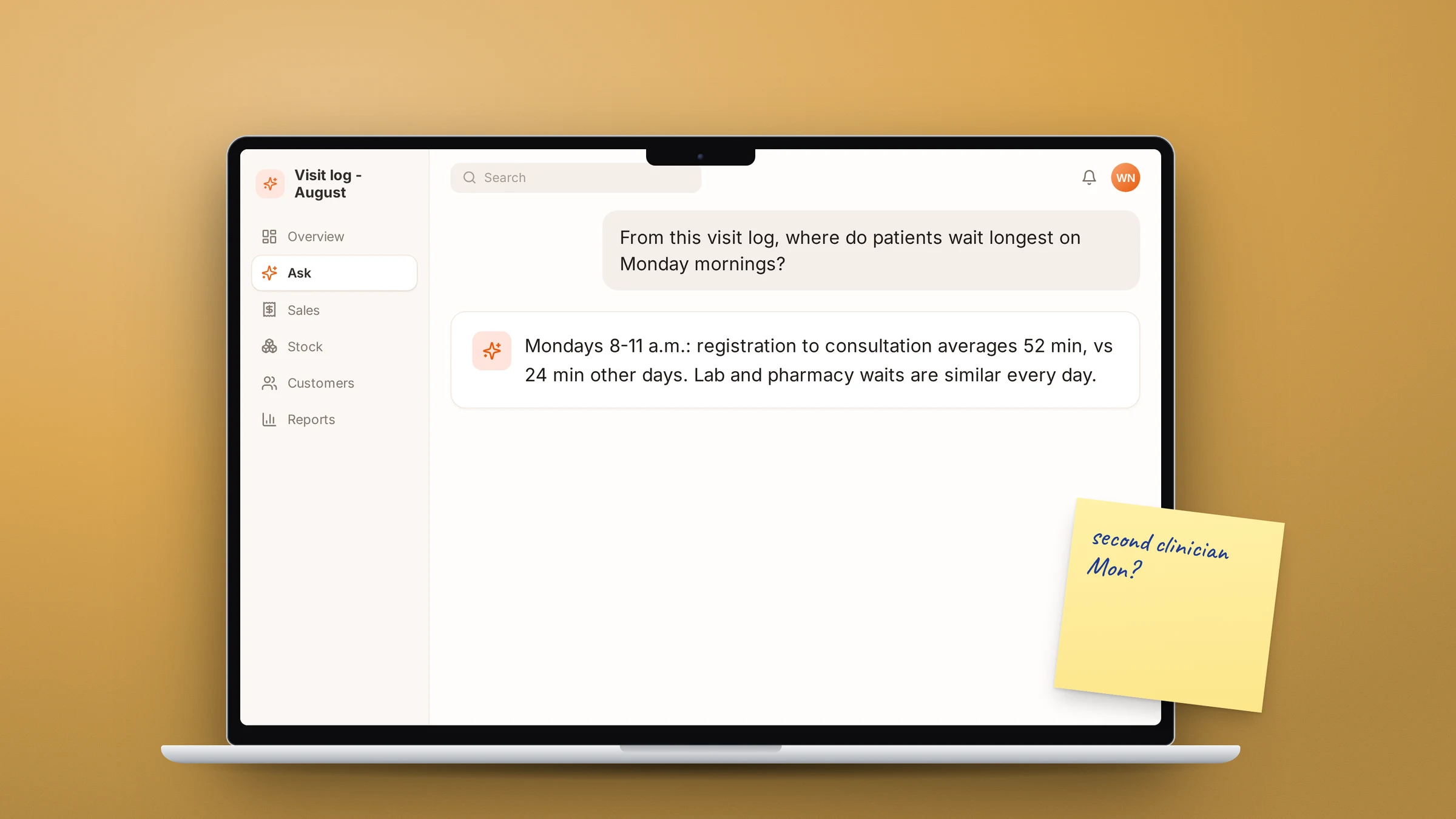
Ask it to show the figures it used and to say how many visits each average is based on. Then check one or two by hand. If the assistant says Monday's wait is 52 minutes from 40 visits, pick three Monday visits from the table and work them out yourself. If those agree, trust the pattern. How to check an AI answer in under a minute has the routine.
What the numbers usually point to#
In a clinic like Akinyi's, an exercise like this often shows that the slow step is not the one everybody blamed. A few patterns worth looking for:
Monday and post-holiday mornings. Arrivals bunch up before the first clinician starts. If the gap between registration and consultation doubles on Mondays and nothing else changes, the fix is staffing or start times, not a faster lab.
Lab round trips. If patients wait for results and then queue again to see the same clinician, the second queue can be longer than the test. A separate return slot can help.
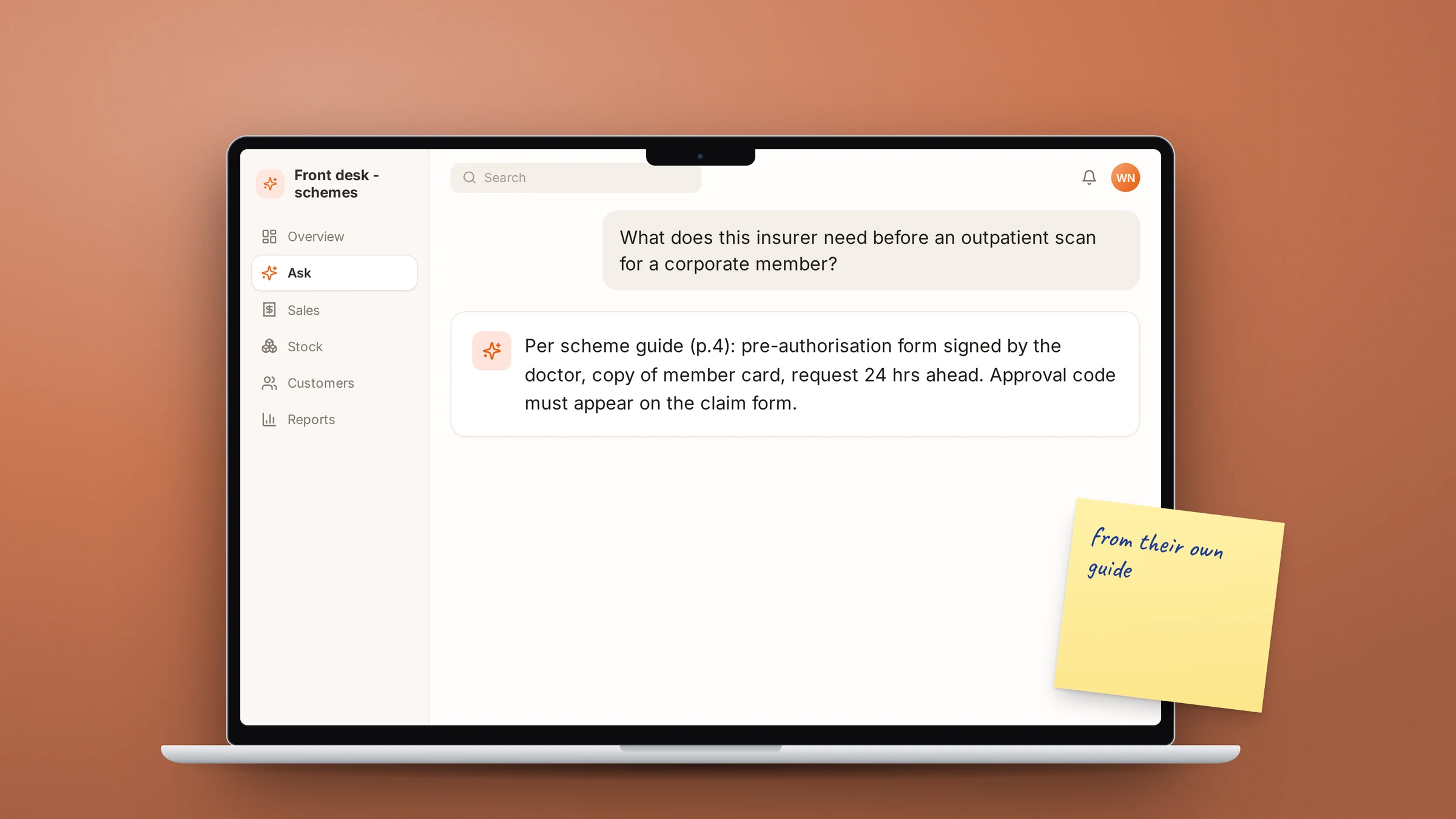
Insurance checks. If billing gaps are long only for insured patients, the front desk may be checking cover at the end instead of at registration. The insurance paperwork article looks at that step in detail.
Pharmacy at closing. A short afternoon pharmacy shift can create a queue at the very end of the visit, which is the part patients remember.
Measure one change at a time#
Once you know the slow step, change one thing and measure the same gap for two weeks. If you add a second clinician on Monday mornings, look only at Monday's arrival-to-consultation time. If it falls, keep the change. If it does not, the cause is somewhere else and you have saved yourself from a permanent extra cost.
The table you built is now your baseline. Keep filling it, and the same questions can be asked every month.
What to do this week#
Choose one week. At the front desk, write the arrival time next to every patient's name. Ask the clinician to note the time each consultation starts, and the pharmacy to note the time each prescription is dispensed. Three columns, one week. At the end, put the times in a table with visit numbers instead of names and work out the two gaps. That alone will tell you whether the wait is before or after the consultation.