Picture a small dental clinic in Thika on a Tuesday. The 9:30 slot is empty. The patient booked it two weeks ago, then her child fell sick and she forgot. She would happily have come on Wednesday. Meanwhile a patient who called on Monday asking for anything this week was told there was nothing until Friday.
That empty chair is not really about a careless patient. It is about a clinic that had no easy way to find out, in time, that the slot was free.
This article is about clinic operations only: scheduling and communication. It has nothing to say about diagnosis or treatment.
Start by measuring your own no-shows#
Before changing anything, count. For the last four weeks, how many booked appointments did not arrive and did not call? Divide by the total booked. That is your no-show rate, and it is the only figure that matters here. Clinics differ a lot, and someone else's number tells you nothing about yours.
Also note which slots go empty. Early mornings, Mondays, the first appointment after a public holiday? Patterns tell you where reminders matter most.
Timing: two reminders, not one#
A single reminder sent a week before is easy to read and forget. A single reminder sent an hour before is too late to fill the slot. What works for most clinics is two:
- One or two days before. Long enough that a patient who cannot come has time to move, and the clinic has time to offer the slot to someone else.
- The morning of. A short nudge, ideally at least a couple of hours before the appointment.
Avoid sending at night. A reminder at 10 pm reads like an intrusion, and the patient who means to reply "in the morning" often does not.
Wording: short, private, one action#
A good reminder fits on a phone lock screen:
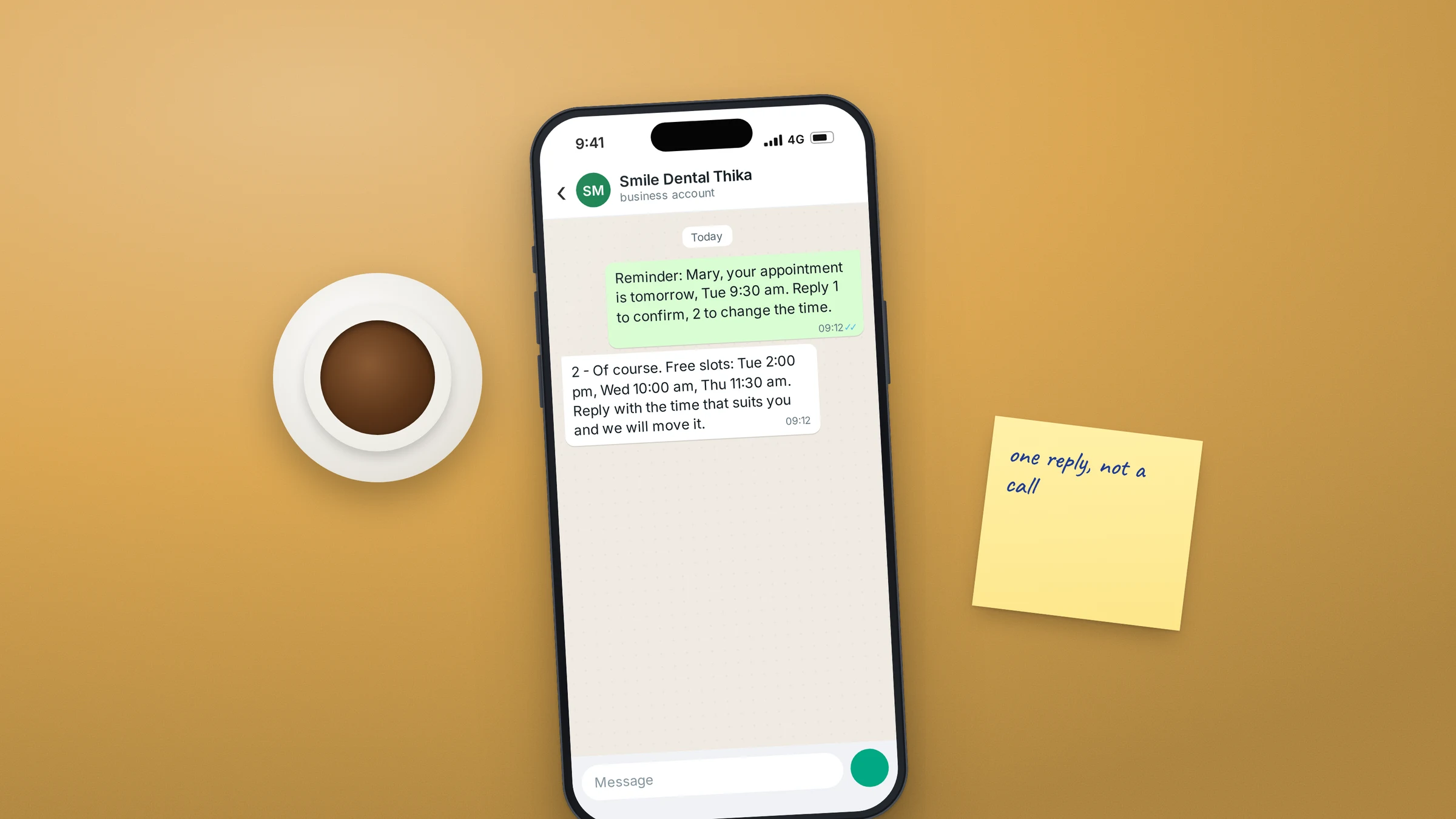
Hi Mary, this is Smile Dental, Thika. Your appointment is tomorrow, Tuesday at 9:30 am. Reply 1 to confirm or 2 to change the time.
Notice what it does not say. It does not name the treatment, the doctor's speciality or anything about the patient's health. Phones are shared with spouses, children and colleagues, and a preview can be read by anyone nearby. The reminder only needs to say when and where.
Write the reminder in the language the patient used when booking. If you have Swahili-speaking patients, keep a Swahili version ready rather than translating on the fly.
Rescheduling: one reply, real slots#
The most important line in the reminder is "reply 2 to change the time". A patient who has to call, wait on hold and negotiate a new time will often just not come. A patient who can reply "2" and pick from three real free slots usually will.
This is where Stage 3 of the NGAZI ladder earns its place: an assistant working inside the clinic's booking system, not beside it. When a patient replies "2", it looks up actual free slots, offers three, and moves the booking when the patient picks one. The freed 9:30 slot then shows as open, so the front desk can offer it to the person on the waiting list.
The assistant should hand over to a person the moment the reply is anything other than a confirmation or a time choice. "I'm in pain, can I come today?" is not a scheduling question for software. It goes straight to the front desk.
What to do this week#
Count your no-shows for the last four weeks. Then write your two reminder messages, the day-before and the morning-of, using the pattern above: who you are, when, where, reply 1 or 2. Send them by hand for two weeks if you have no system, and count again.
If you already use an AI assistant for drafting, it can help you write versions in English and Swahili. We covered how in write supplier and customer messages in two minutes. The part that cuts no-shows, though, is not the wording. It is sending it on time, every time, and making it easy to say "not that day".