Take Faith, who works the front desk at a small outpatient clinic in Nakuru. Say one morning she counts the WhatsApp messages that came in before 10am: 41. Eleven ask about opening hours. Seven ask how much a consultation costs. Five ask for directions. Four ask whether the clinic takes a particular insurance cover. The rest are bookings, lab results and, in two cases, a worried parent describing a child's fever.
The last two are the ones that matter most, and they are sitting in the same queue as "do you open on Sunday?". That is the problem this article is about: not replacing Faith, but clearing the repeat questions out of her way so she sees the important ones first.
Write down the twenty questions first#
Before any tool, spend one week tallying. Every message that asks something the clinic has answered before goes on a list. For most clinics the list settles at about twenty, in four groups:
- Hours and days: weekday hours, weekends, public holidays, lab hours if different, when the pharmacy closes.
- Prices: consultation fee, common tests, whether a follow-up visit is charged, payment methods (M-PESA paybill, card, cash).
- Location and access: directions from a landmark, parking, wheelchair access, which floor.
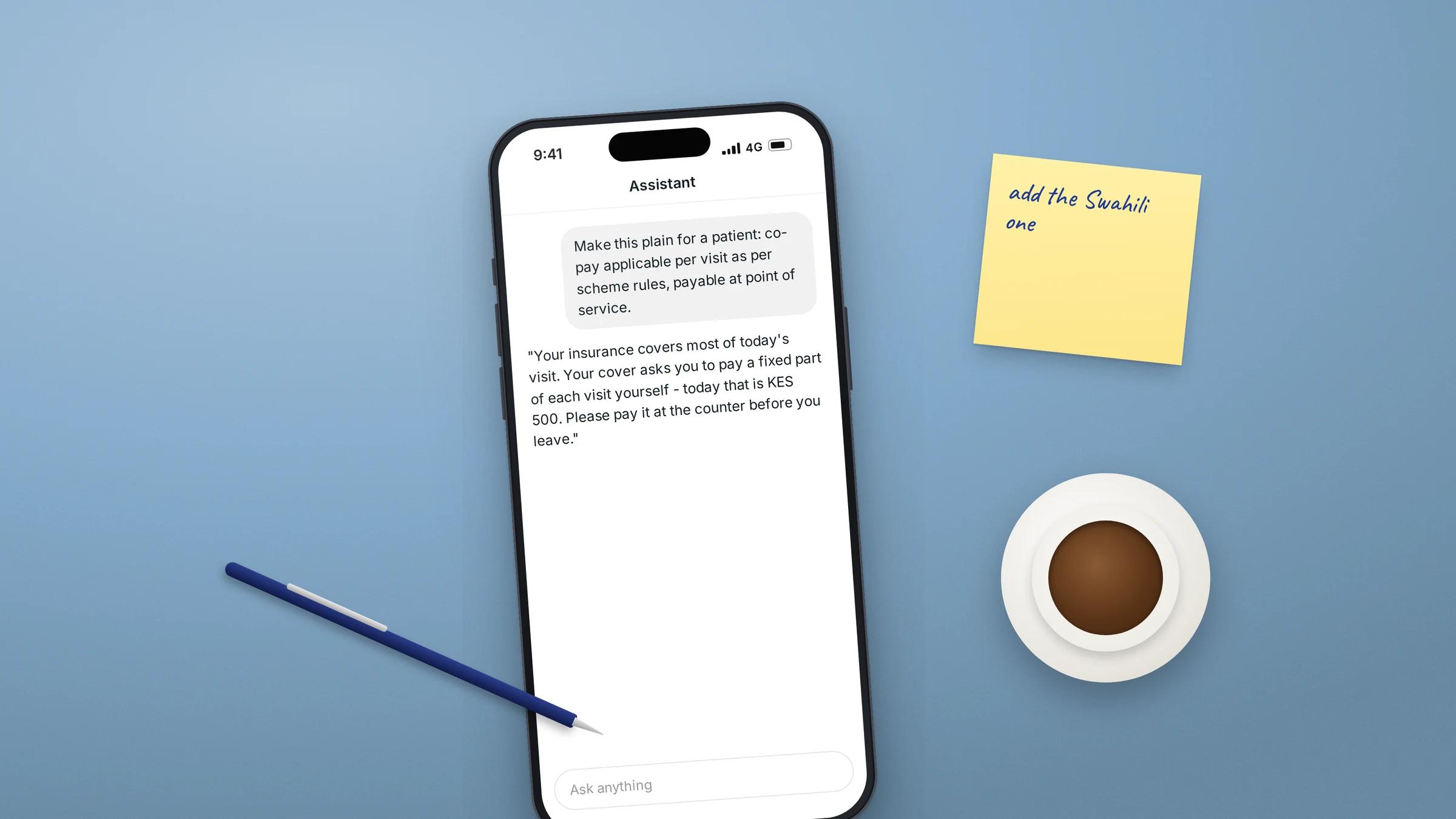
- Insurance and paperwork: which covers are accepted, what to bring, whether pre-approval is needed for a procedure.
Then write the answer to each, once, in plain language, and have the clinic manager approve it. This page is the only source the WhatsApp assistant may answer from. If a price is not on it, the assistant does not know it.
How the answering works#
A WhatsApp assistant for this job has two parts, and it helps to know which is which.
The first part is plain rules. Opening hours change on public holidays, so the hours answer reads from a calendar the manager keeps up to date. The consultation fee comes from the approved page. Directions are a fixed text and a map pin. None of this needs AI.
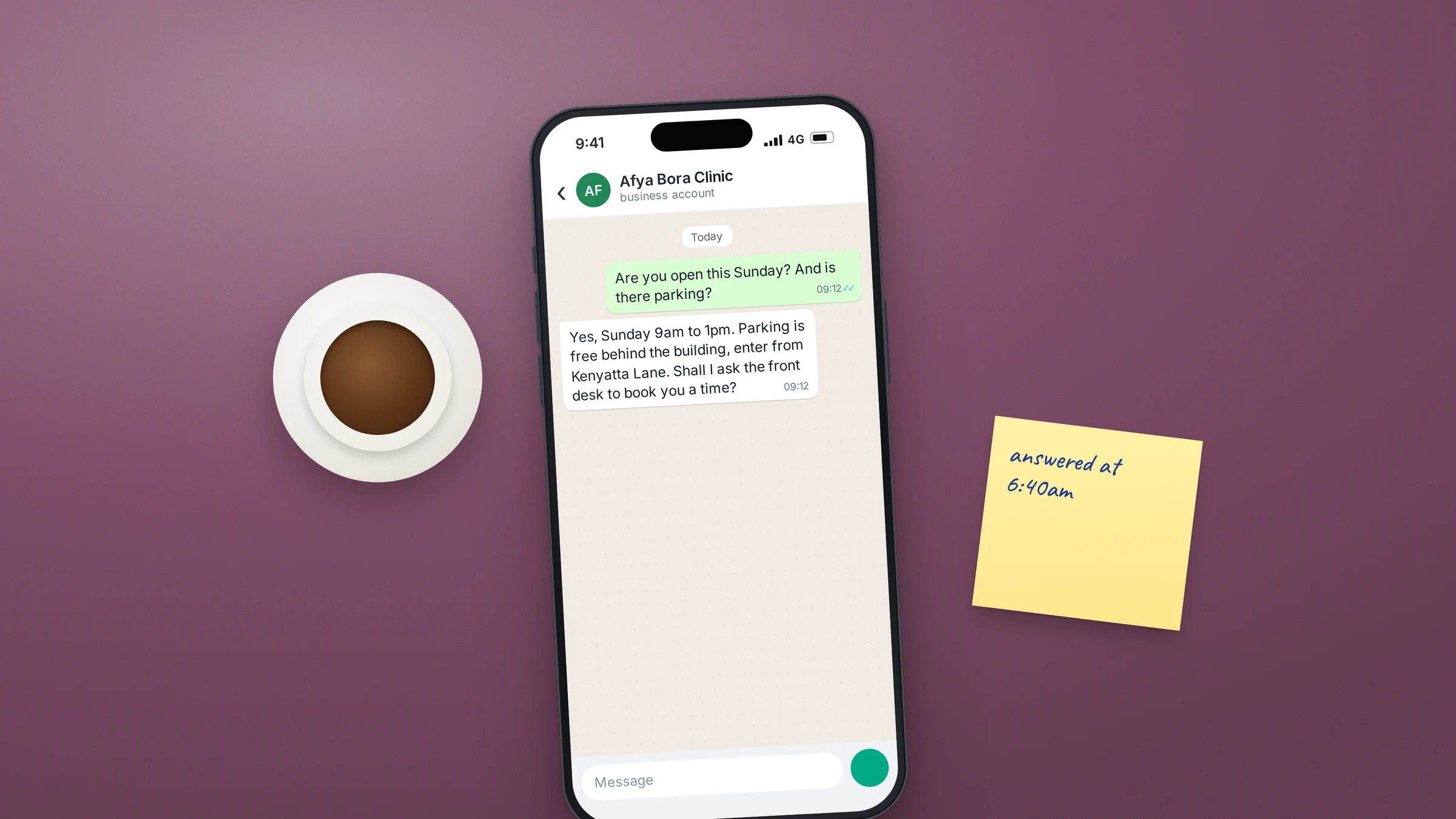
The second part is AI, and it does one narrow thing: it reads the patient's message, which may be in English, Swahili or a mix of both, may have typos and may ask three things at once, and works out which of the approved answers apply. "Hi doc, mnafungua Sunday? na mko wapi exactly" is two questions: hours and location. The assistant replies with both approved answers, in the language the patient used.
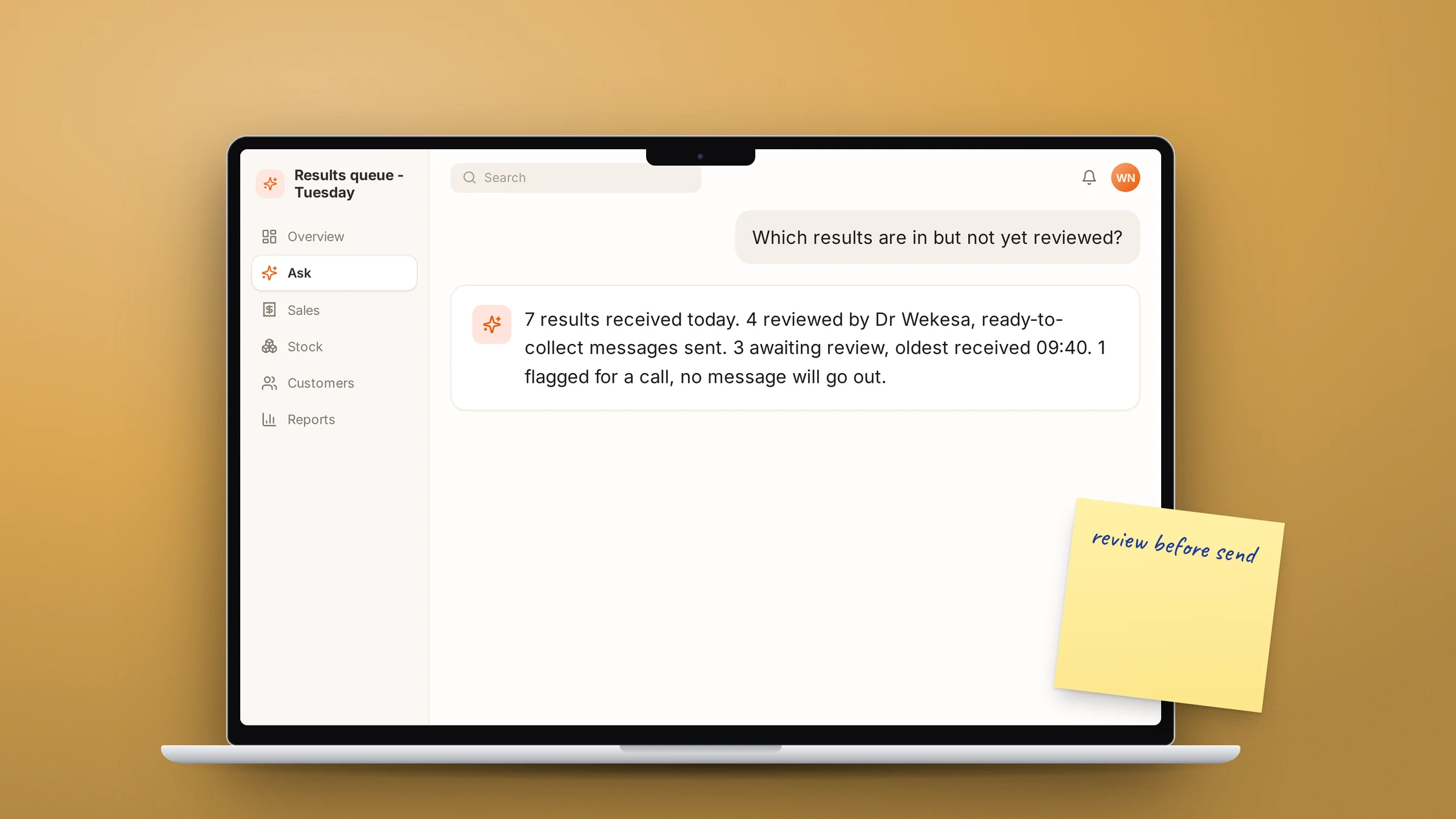
When the message does not match any approved answer, or matches one of the clinical topics, the assistant does not guess. It replies with a holding message ("Thank you, I am passing this to our front desk now") and puts the conversation at the top of Faith's queue.
The handover is the product#
Clinics that try this usually spend their energy on the answers and too little on the handover. The handover is what patients remember.
A good handover:
- tells the patient honestly that a person will reply, and roughly when during working hours;
- puts the conversation in the front desk's queue with the reason it was handed over ("mentions chest pain", "asks about a lab result", "question not on the approved list");
- puts anything that sounds urgent at the top and alerts the person on duty;
- never leaves a patient talking to the assistant after it has handed over.
Outside working hours, the holding message should say when the desk opens and, for anything that sounds urgent, give the clinic's emergency guidance as the clinic has written it. The assistant does not compose that advice; it sends the approved text.
The assistant earns its place by answering "are you open?" in seconds, and by knowing instantly that a message about a fever is not its business.
Keep the answers true#
The biggest risk is not a clever wrong answer. It is a stale right one: the consultation fee went up in October and the page still says the old figure. Three habits prevent most of it:
- One person owns the approved page, and any price or hours change goes through them.
- Every answer has a "last checked" date; anything older than three months gets reviewed.
- Once a week, the front desk reads twenty assistant conversations and flags any reply that was wrong, unclear or should have been handed over.
Those weekly flags also tell you which question to add next. If people keep asking whether you do school medicals, that is question twenty-one.
What to do this week#
Ask your front desk to keep a tally for five working days: every WhatsApp question, one tick per repeat. At the end of the week, write approved answers for the top ten, have the manager sign them off, and save them as quick replies in WhatsApp Business. That alone saves time, and it is the page any assistant will need later. If you want help wiring the rest, we cover clinic operations under Solutions.