A receptionist at a small clinic in Thika has a stack of referral letters to type before the end of the day. A colleague tells her a chat assistant can do it in minutes. All she has to do is paste in the patient's details, the doctor's notes and the test results, and ask for a tidy letter.
It would work. The letter would look good. And she would have just sent a patient's medical details to a company the clinic has no agreement with, on a personal account, with no record of where that data now lives.
Clinics are right to want help with paperwork. The front desk is where much of a clinic's time goes. But healthcare has two lines that AI must never cross, and every person in the clinic should know them by heart.
Line one: AI never diagnoses or advises treatment#
General chat assistants are fluent, confident and sometimes wrong. In a shop, a wrong answer costs some money. In a clinic, a wrong answer about symptoms, dosage or results can harm a person.
So the rule is absolute. AI is not used to:
- suggest what a patient might have, from symptoms or results;
- recommend a medicine, a dose or a change to treatment;
- interpret a lab result or an image for a patient;
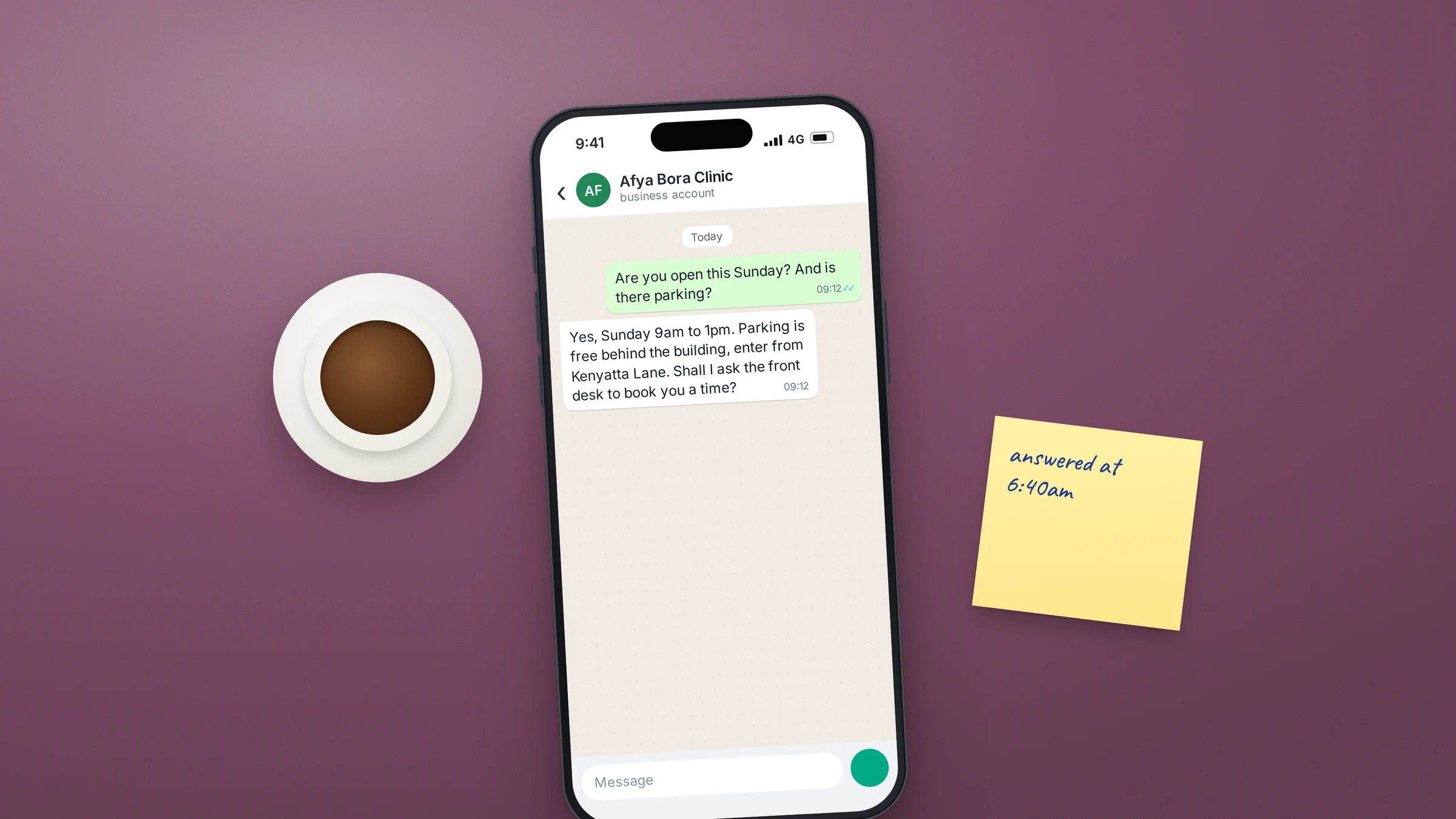
- answer a patient's medical question on WhatsApp, even "just roughly".
This is true even when the clinician "will check it later". Drafts anchor thinking. A plausible suggestion on the screen shapes what a tired person sees, and that is not a risk worth taking on the clinic's behalf. Clinical judgement belongs to clinicians.
Line two: patient records never go into public tools#
Kenya's Data Protection Act 2019 treats health data as sensitive personal data, and clinics carry real duties for how it is collected, stored and shared. You do not need to be a lawyer to apply the practical rule that follows from that:
Nothing that identifies a patient goes into a public or personal AI account. That means no names, no phone numbers, no ID or insurance numbers, no file numbers, no dates of birth, and no clinical details, together or separately. Photos of patient files, screenshots of the system, and voice notes describing a case all count.
Why so strict? Because once it is pasted, you cannot take it back. You do not control where it is stored, who at the provider can see it, or whether it is kept. And you would struggle to tell a patient, or the ODPC, where their information has gone.
What AI can safely do at a clinic#
Plenty, as long as patients stay out of it. Good uses at stage 1 of the NGAZI ladder are all about templates and wording:
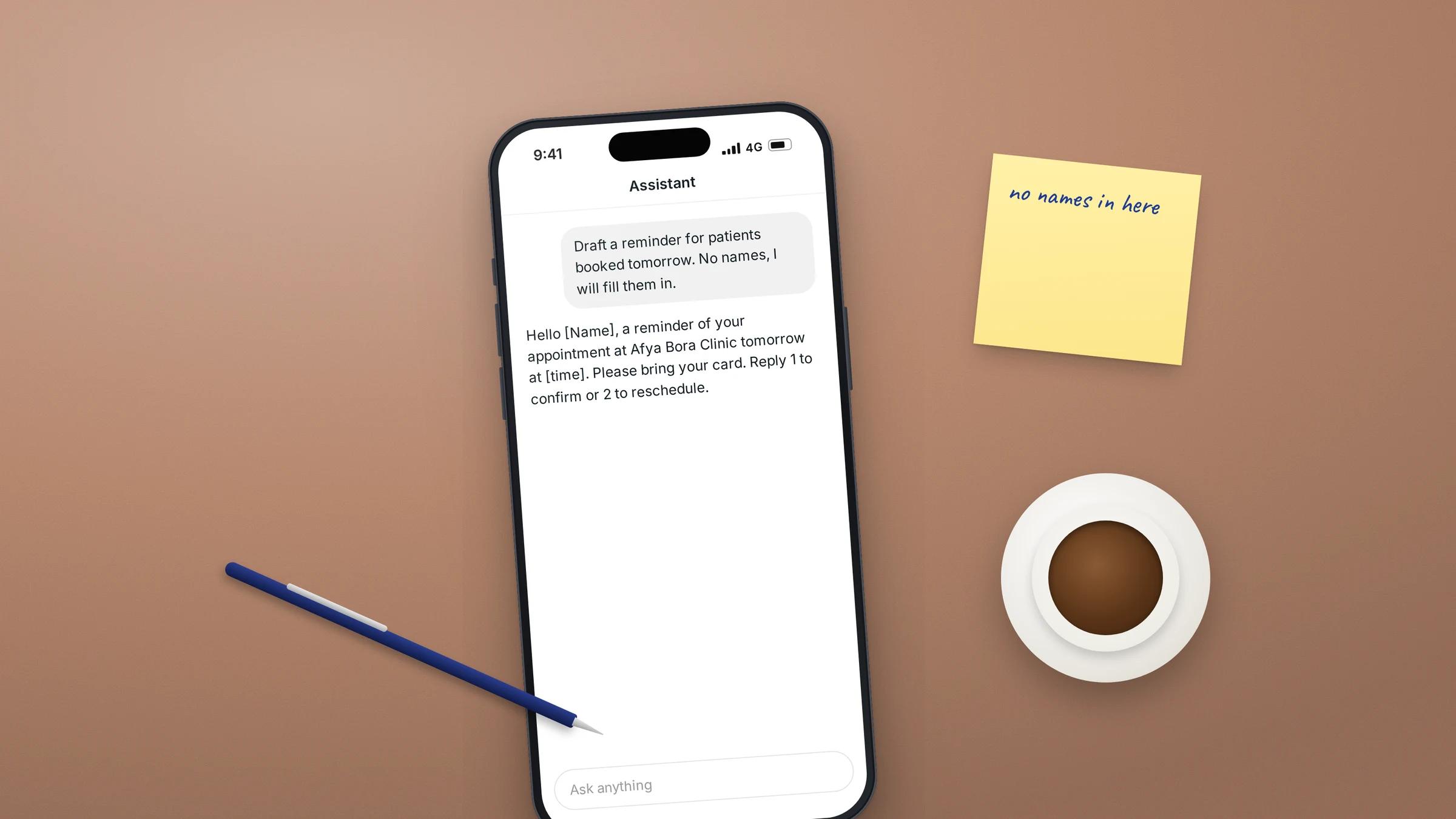
- Reminder and confirmation templates with blanks for name and time, filled in by your own system. We cover the approach in appointment reminders that cut no-shows.
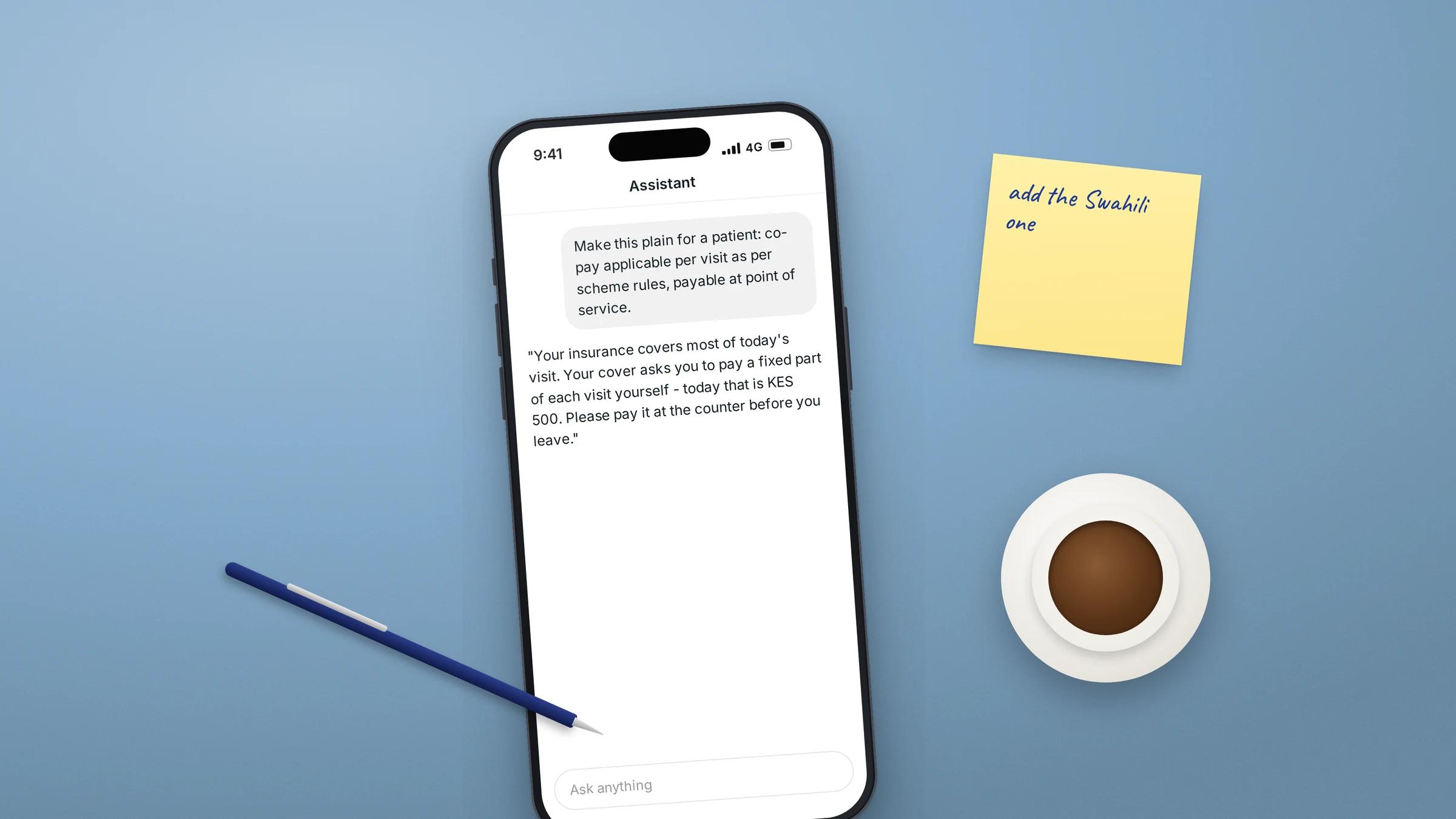
- Notices and signs: new opening hours, the queue process, what to bring for an insurance claim, in English and Swahili.
- Staff documents: a cleaning rota, an opening checklist, a first draft of a front-desk procedure.
- Supplier and admin letters: a reorder note to a supplier, a letter to the landlord about the water, with no patient involved.
The test is simple: could this text be pinned on the waiting room wall without harming anyone? If yes, an assistant can help draft it. If no, it stays out.
When you want more than templates#
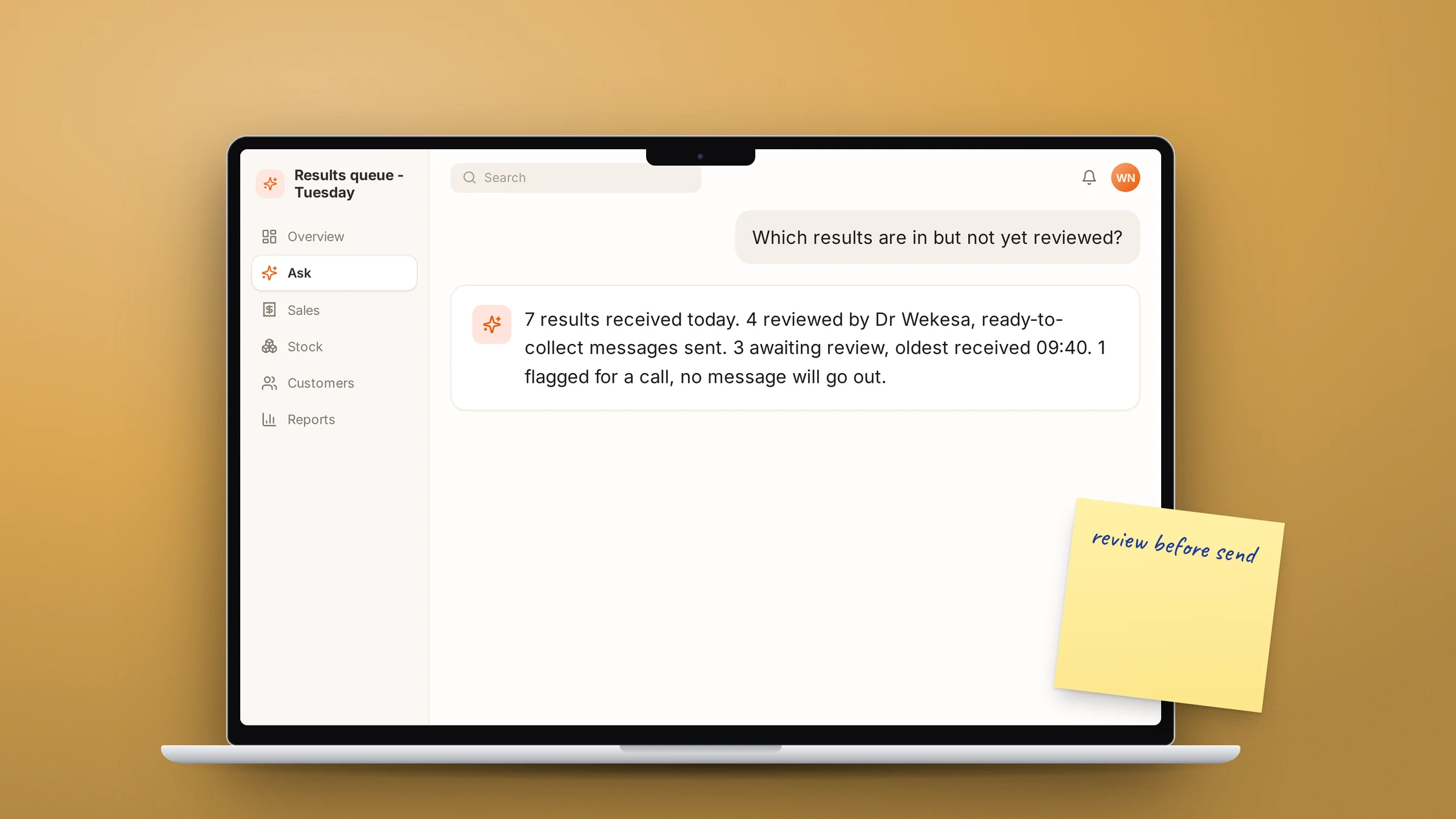
Some clinics will want AI that works with real records, such as summarising a day's bookings for the manager. That is possible, but it is a different setup altogether: a system the clinic controls, an agreement with any provider that touches the data, access limited by role, and a log of who saw what. The design question to ask any vendor is where the data goes. Our answer for Rai is in your business data never leaves your server, and the same question applies to anyone selling clinic software.
Until you have that, the answer is templates only.
What to do this week#
Call a ten-minute staff meeting and say the two lines out loud: AI never diagnoses or advises treatment, and patient details never go into a public tool. Write them on a card at the front desk. Then give the team one safe task, such as rewriting your appointment reminder template in clear English and Swahili, so they see what the assistant is actually for.