Picture a pharmacy owner in Nakuru doing her quarterly shelf check on a quiet Sunday. Behind the front row of a fast-selling cough syrup she finds eighteen bottles that expired last month, from an older delivery that someone stacked behind the new one. The newer stock sold. The older stock sat. She writes off the value, puts the bottles aside for proper disposal, and wonders how many other shelves look the same.
This article is about the stock-keeping side of a pharmacy: receiving, shelving, selling and returning. It is not clinical or dispensing guidance, and your regulator's rules on handling and disposing of expired products come first.
FEFO, and why FIFO is not enough#
Most shops are taught FIFO: first in, first out. In a pharmacy the rule that matters is FEFO: first expiry, first out. They are usually the same, but not always. A supplier can deliver a batch this month that expires before the one you received last month. Sell by arrival date and you sell the wrong one first.
FEFO only works when every unit on the shelf can be traced to a batch, and every batch has an expiry date in the system. Paper and memory cannot do that past a few dozen products.
Start at the receiving desk#
The whole routine stands or falls on one moment: when goods arrive. For every line on the delivery note, record:
- Product and quantity.
- Batch number, as printed on the pack.
- Expiry date, as printed on the pack.
- Cost price.
If one delivery carries two batches of the same product, record them as two lines. It takes a minute longer and saves hours later. Systems built on ERPNext, which UpeoRetail runs on, track stock per batch with its expiry date, so each batch has its own quantity.
This is also a good place for a light check. If the expiry on a new delivery is closer than you would normally accept, say under six months for a slow mover, raise it with the supplier before you sign, not after.
Sell the right batch at the counter#
With batches recorded, the system can suggest the batch with the earliest expiry each time an item is sold. Two habits make that suggestion match what is on the shelf:
Shelve new stock behind old stock. Every time. Put this on a card by the stockroom door. The front row should always be the earliest expiry.
Pick the batch the system suggests. If the staff member picks a different one, the system's count drifts from the shelf. A weekly spot check of five fast movers, comparing system batch quantities with what is physically there, catches drift early.
Alerts that give you time to act#
An expiry alert on the day is useless. The value of tracking expiry is that you can see it coming. A sensible schedule:
| Months before expiry | What to do |
|---|---|
| 6 | Check whether current sales will clear it; if not, flag it |
| 3 | Move it to the front, consider a supplier return or transfer |
| 1 | Last chance for any return; otherwise plan the write-off |
Supplier return terms differ, and many only accept returns up to a certain point before expiry. Write each main supplier's terms next to their name in the system, so the alert can say whether a return is still possible.
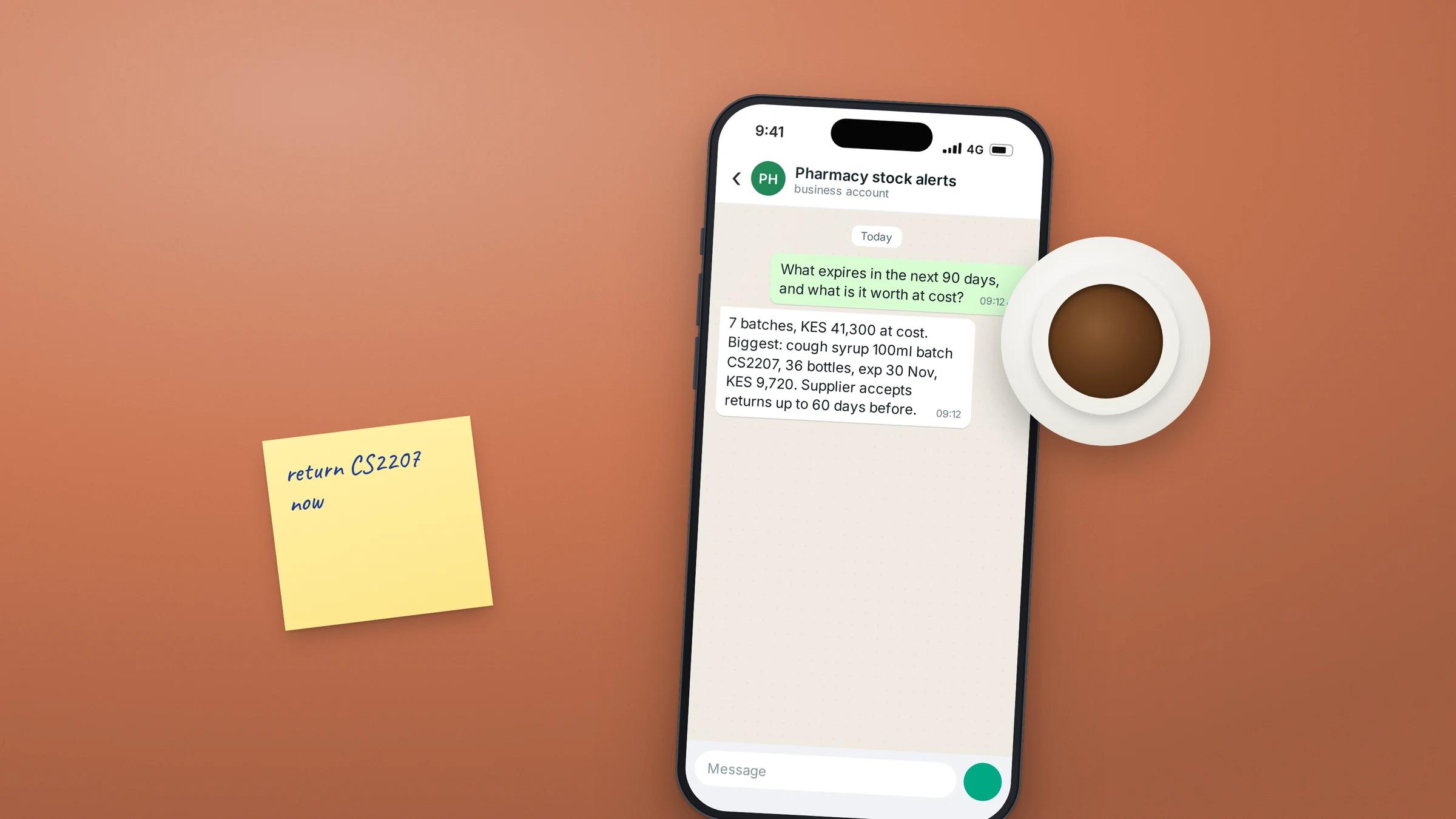
This is Stage 3 on the NGAZI ladder, AI in the workflow. A daily or weekly message lists batches entering each window, their quantities and their value at cost, sorted by value. An assistant can also look at the sales rate and say "at the current rate, 22 of these 36 bottles will still be on the shelf at expiry", which is the number that decides whether to act. The decision, return or keep, stays with you.
Look back once a quarter#
Every write-off is a lesson about ordering. Once a quarter, list the expired items and ask why each one expired. Usually it is one of three things: you bought too much of a slow mover, a supplier delivered short-dated stock, or the batch was shelved wrongly. The first one is a reorder problem; reorder points without a spreadsheet covers it.
What to do this week#
Take your twenty highest-value products. For each, check the shelf and the stockroom and write down every batch you hold, its expiry date and its quantity. Anything expiring within three months goes on a list with its cost value. Call the suppliers about the top three on that list this week, while a return may still be possible.