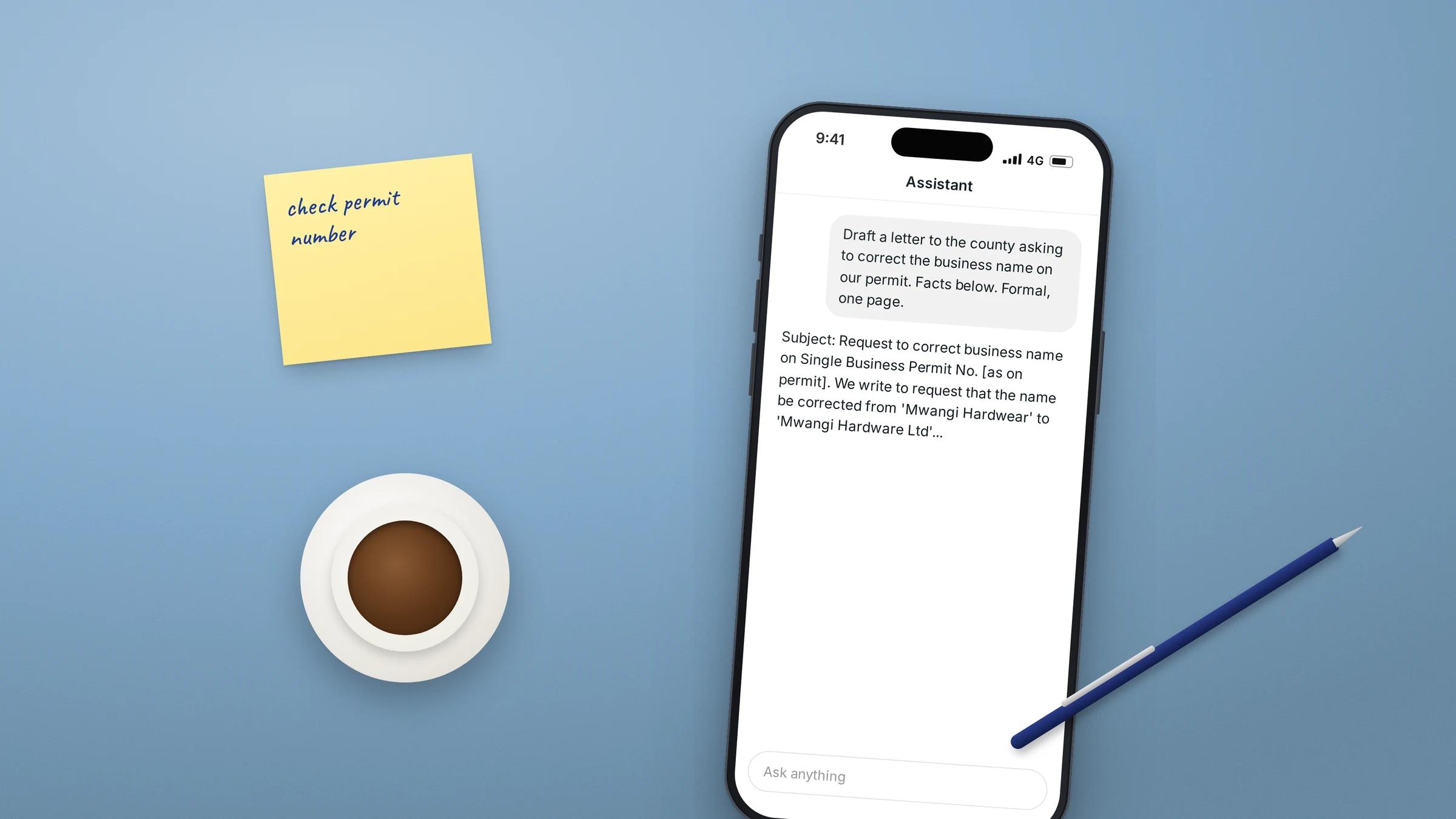
Take Mwangi, who runs a hardware shop in Thika. His single business permit came back from the county with the business name misspelt, and his bank will not accept it for a loan application until it matches his company registration. He needs to write a letter. He knows exactly what happened. He just dreads writing it, because it feels like it has to sound official, and he is not sure what an official letter is supposed to look like.
This is a very good job for an AI assistant. It is mostly about structure and tone, and a small mistake in wording is easy to fix before it goes out. It is Stage 1 on the NGAZI ladder: AI as a capable helper for a task you supervise.
The same goes for letters to KRA: a request for a meeting, a cover letter for documents, a note explaining a delay in responding. But there is one firm line, and it comes first.
The line: the assistant writes, it does not advise#
An assistant can produce a confident paragraph about tax law that is wrong, out of date, or does not apply to you. It cannot know your full tax position, and it may not know the current rules. So:
- Never ask an assistant what you owe, whether a penalty applies, or how something should be treated for tax. Those are questions for your accountant or tax adviser, and for KRA's own published guidance.
- Every figure in the letter comes from your records or your accountant, never from the assistant.
- If the letter responds to a tax assessment, audit, demand or dispute, have your accountant or adviser review it before it is sent. A badly worded admission in a letter can matter.
With that settled, here is how to get a good draft.
Give it the facts in a list#
Before asking for anything, write down the facts in plain bullet points. Speak them if you prefer. For Mwangi's permit:
- Business: Mwangi Hardware Ltd, Thika, company registration number (from the certificate).
- Permit: single business permit, number as printed, issued on (date).
- Problem: name printed as "Mwangi Hardwear", should match the registration certificate.
- Request: a corrected permit.
- Attached: copy of the permit, copy of the registration certificate, receipt for the permit fee.
- Contact: phone number and email.
That list is most of the work. The assistant is only arranging it.
Ask for the structure you want#
Then ask for a letter with a clear brief:
Write a formal letter to the county licensing office from the facts below. One page. Plain English, polite and direct. Structure: subject line, who we are, what happened, what we are asking for, list of attachments, contact details. Do not add any facts, dates, numbers or legal references that are not in my list. Leave a [placeholder] for anything you need but I did not give.
The placeholder instruction is important. It turns "the assistant guessed the permit number" into "the assistant left a gap for you to fill".
A good official letter, to any office, usually has the same shape: a subject line that says what it is about, a first sentence that says what you want, the background in a few short paragraphs, the request stated again clearly, and a list of what is attached. Short is better. The person reading it has a pile of others.
Check it like the officer will#
Before you print or send it:
- Every name, number and date against the source document: the permit, the certificate, the PIN certificate, the letter you are replying to.
- The request is stated once, clearly, near the top.
- Nothing is admitted or promised that you did not intend. Read every sentence that begins "we acknowledge" or "we will".
- The attachments listed are actually attached.
- The tone is polite and calm, even if you are frustrated.
If you are replying to a letter from KRA or the county, give the assistant their letter too and ask it to quote their reference number in your subject line. Then check that it copied the reference exactly. How to check an AI answer in under a minute has a quick routine that works for letters as well.
Keep a copy and a record#
File the signed letter, the attachments and proof of delivery or submission together, and note the date. If you send it through an online portal, save the acknowledgement. Most follow-ups with any office start with "we wrote to you on...", and you want that date and copy at hand.
For similar letters to customers who owe you money, a debt follow-up letter in one prompt uses the same approach.
What to do this week#
Think of one letter you have been putting off: a correction, a request, a cover note for documents. Write the facts as a bullet list. Use the brief above to get a draft, fill the placeholders from your documents, and check it against the five points. If the letter touches tax figures or a dispute, send the draft to your accountant before anyone else.