Take Mr Omondi, a nurse in Leeds who owns twelve flats in Kitengela, managed by a local agent. Every month he receives a spreadsheet with forty rows: rent receipts, a plumber, a water bill, the agent's commission, a deposit refund. At the bottom is a figure, and that figure lands in his account a few days later. It is usually less than he expected, and working out why takes him an evening and two WhatsApp calls across three time zones.
The agent is honest and the spreadsheet is accurate. It just answers the wrong question. It tells Omondi what happened. He wants to know whether things are fine.
What owners actually ask#
Talk to landlords and the same five questions come up, in roughly this order:
- How much rent was due, and how much came in?
- What did you spend, and on what?
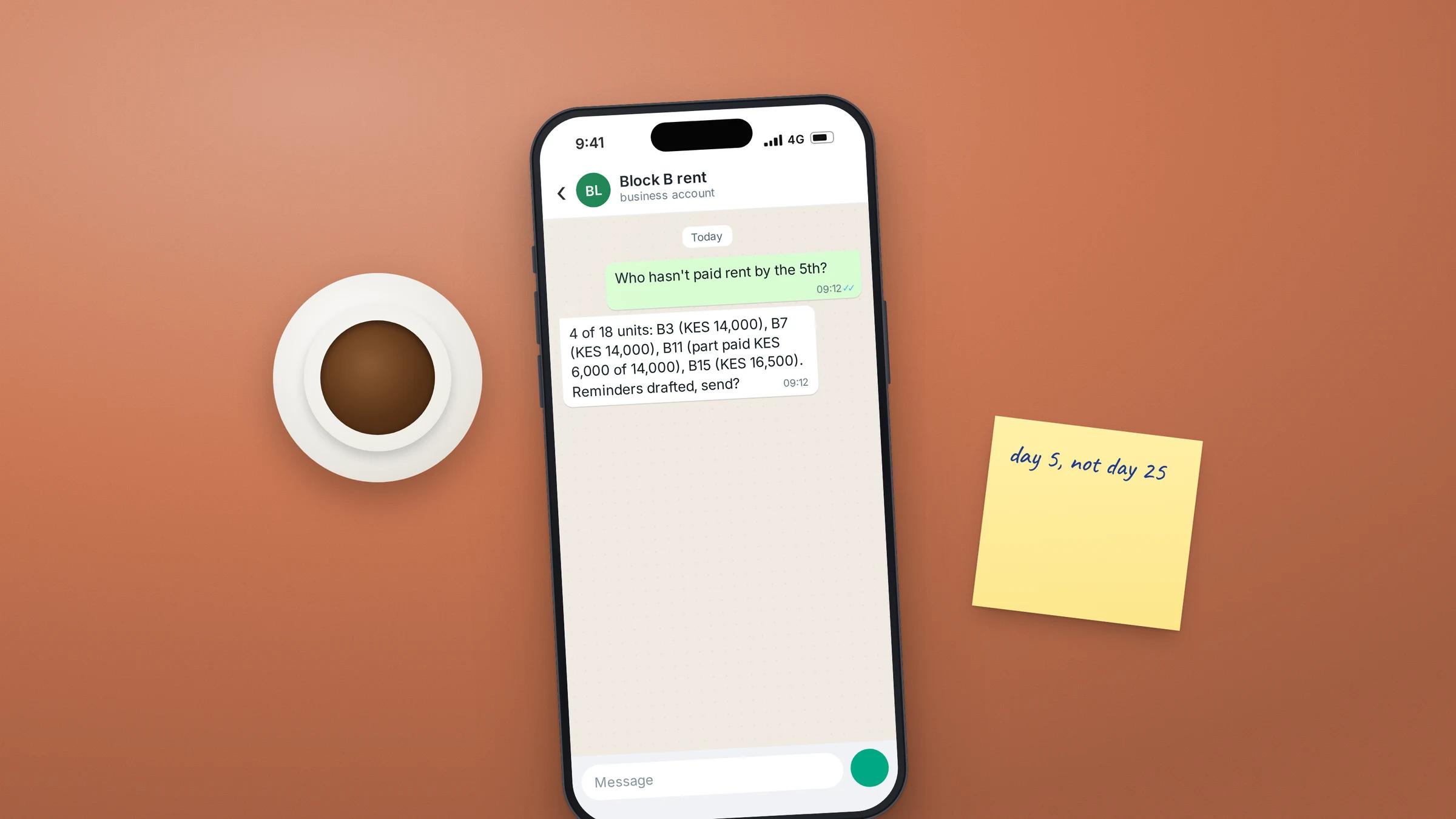
- Who is behind, and what are you doing about it?
- What have you sent me, and when?
- Is anything coming that I should know about? A vacancy, a big repair, a lease ending.
A statement that answers those five on the first page will be read. A transaction list that makes the owner work them out will generate calls.
A layout that answers them#
The format we suggest has four blocks, in this order.
1. The summary. Five lines, nothing else:
| KES | |
|---|---|
| Rent due this month | 216,000 |
| Rent collected | 198,000 |
| Expenses paid | 23,400 |
| Management fee (10% of rent collected) | 19,800 |
| Net paid to you | 154,800 |
2. Units. One row per unit: tenant, rent due, paid, balance, notes. Vacant units are listed too, with "vacant since" and what is being done. An owner should never discover a vacancy by noticing the rent is lower.
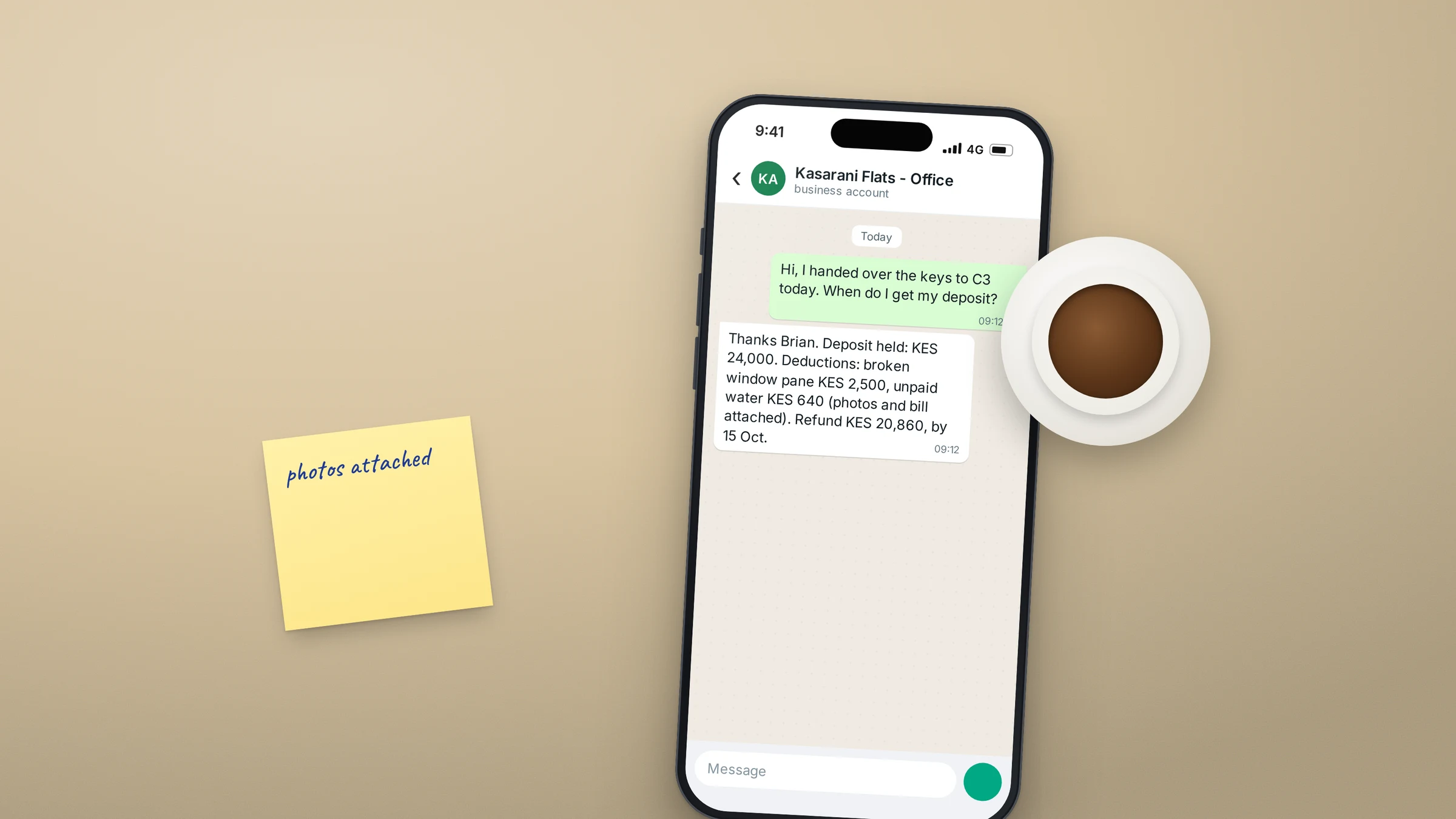
3. Expenses. Each expense with the date, the unit, what it was, the amount, and a receipt the owner can open. "Repairs KES 23,400" invites suspicion. "Unit 2, geyser element replaced, fundi invoice attached" does not.
4. Arrears and next month. Who owes, how much, how long, and the agreed plan. Then anything coming: leases ending, planned works, rent reviews. Rent arrears: a monthly routine that works covers how to run the arrears side.
Where the figures come from#
None of this needs to be built by hand each month if the records are kept as you go. A property system like ISHI, which holds units, leases and rent together, already has the rent due and paid per unit. Expenses need to be recorded against a unit when they happen, with the receipt, which is why the maintenance ticket routine closes every job with a cost.
If you are still on spreadsheets, keep three sheets per property: rent roll (unit, tenant, rent, paid), expenses (date, unit, item, amount, receipt link) and payments to the owner. The statement is a summary of those three, nothing more.
Let an assistant write the note, not the numbers#
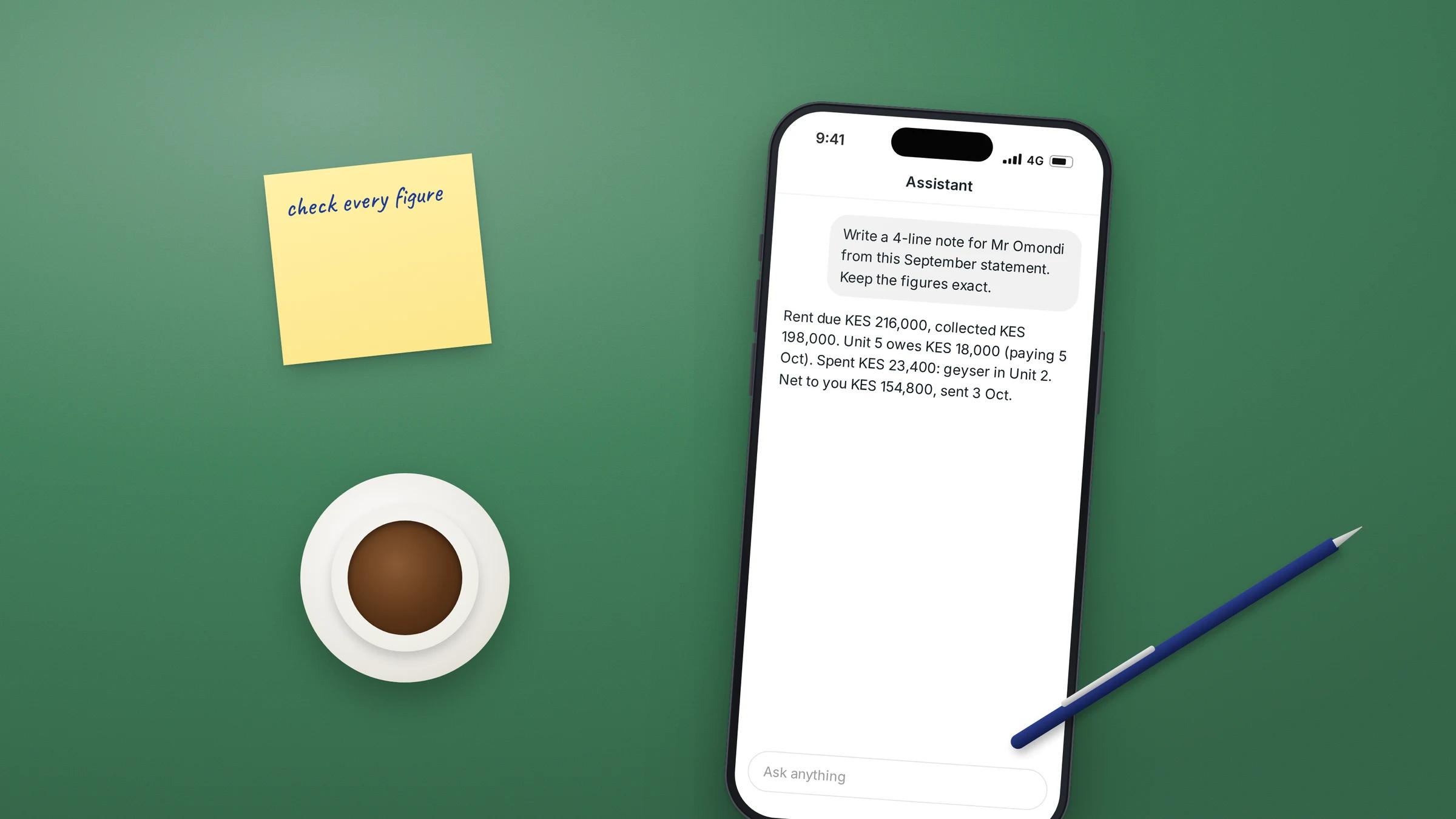
The figures come from records. Where AI earns its place, at Stage 2 of the NGAZI ladder, is reading the finished statement and drafting the short note that goes on top, the part owners actually read on their phone:
September: 11 of 12 units paid in full. Unit 5 is KES 18,000 behind and has agreed to pay on 5 October. The only expense was a geyser repair in Unit 2. KES 154,800 was sent to you on 3 October. Unit 9's lease ends in December; I will ask the tenant about renewal this month.
Give the assistant the statement, ask for four or five lines in plain English with the figures exactly as written, and nothing that is not in the statement. Then check every figure in the note against the statement before sending. The note is a summary; if it disagrees with the table, the table is right and the note is rewritten.
What to do this week#
Take last month's statement for your largest landlord and read it as they would, on a phone, in five minutes. Can you answer the five questions from the first page? If not, rebuild it in the four-block layout, add a five-line note at the top, and send it with a message asking whether this is easier to follow. Their answer will tell you whether to change it for everyone.