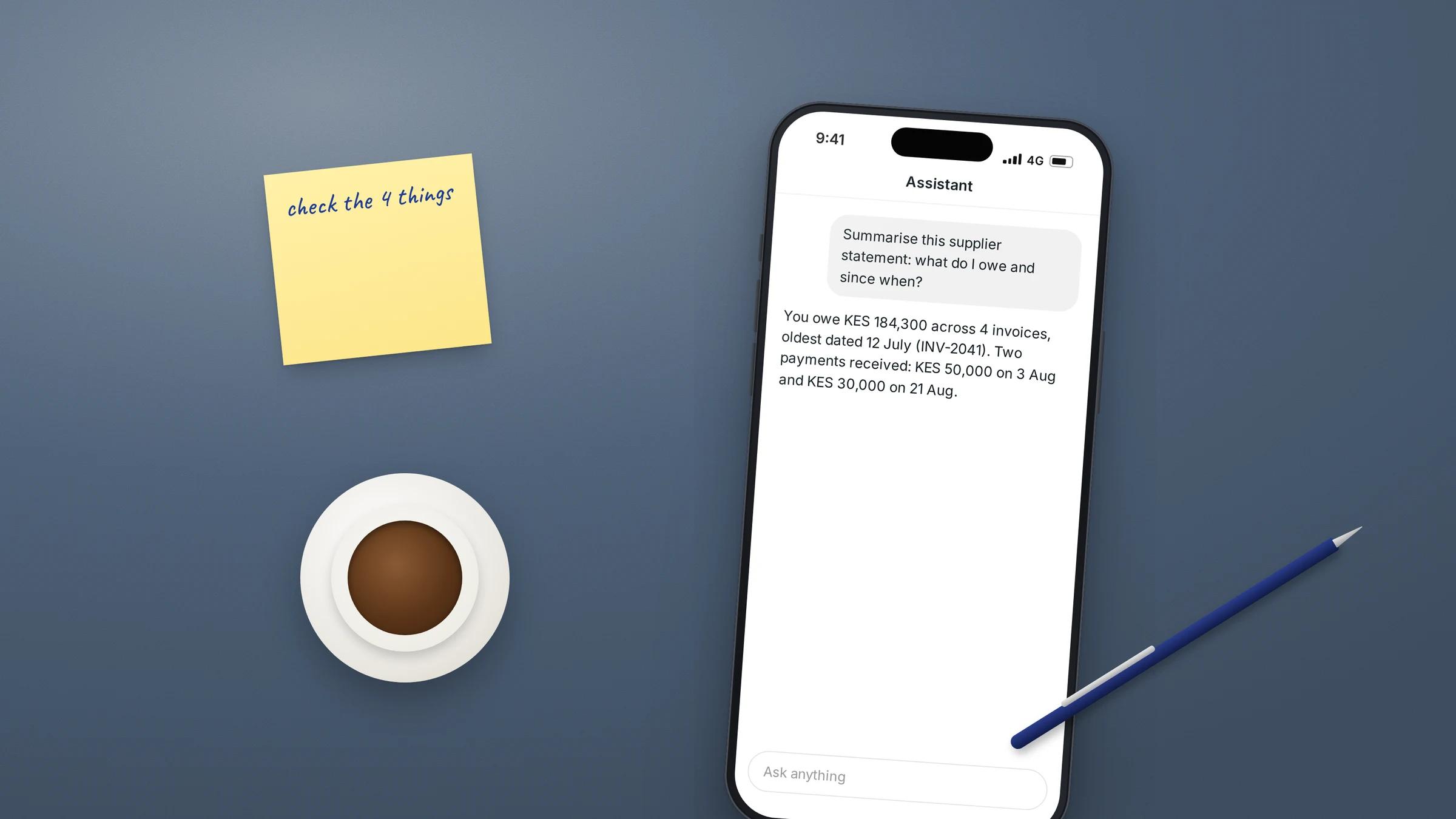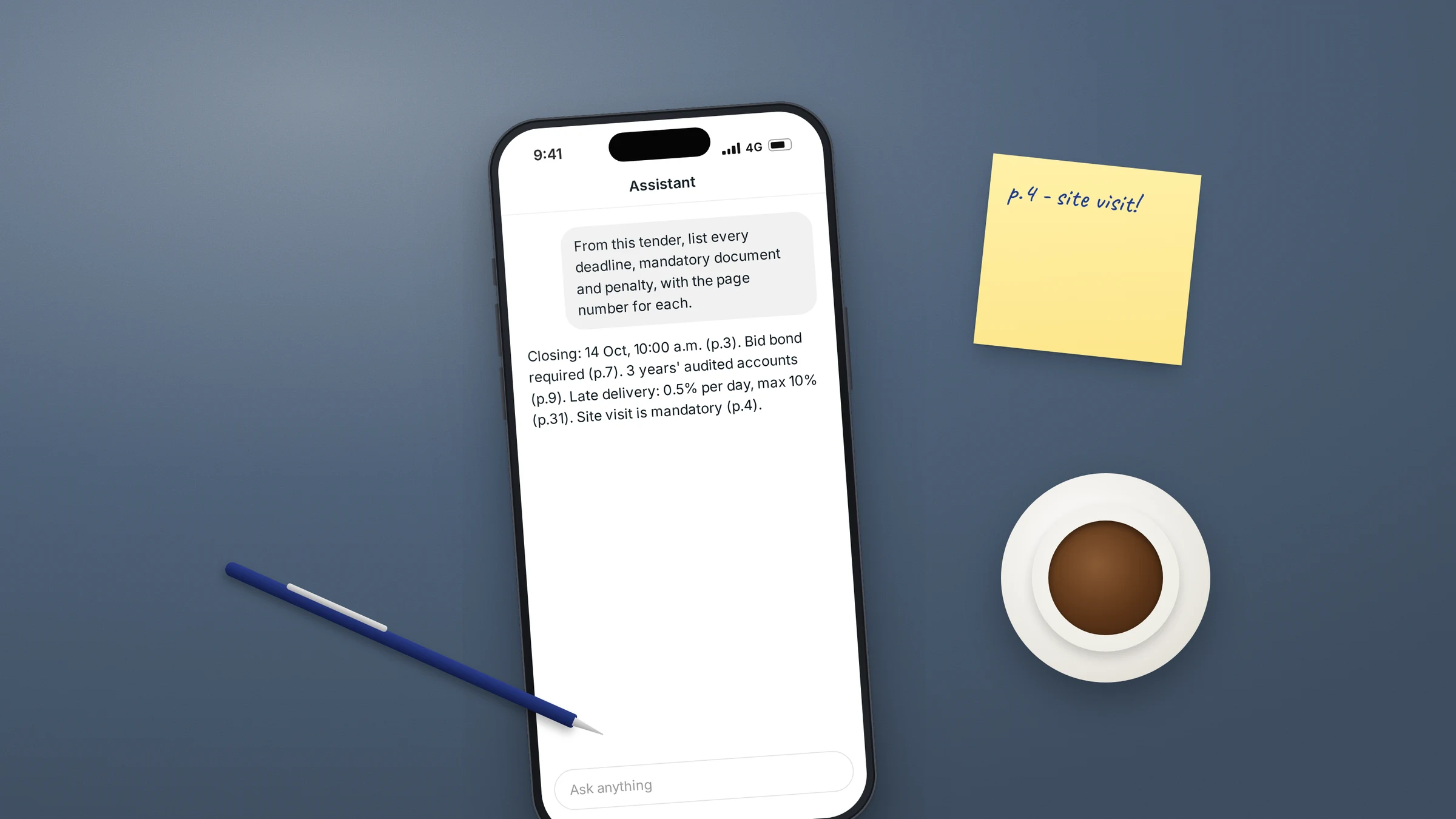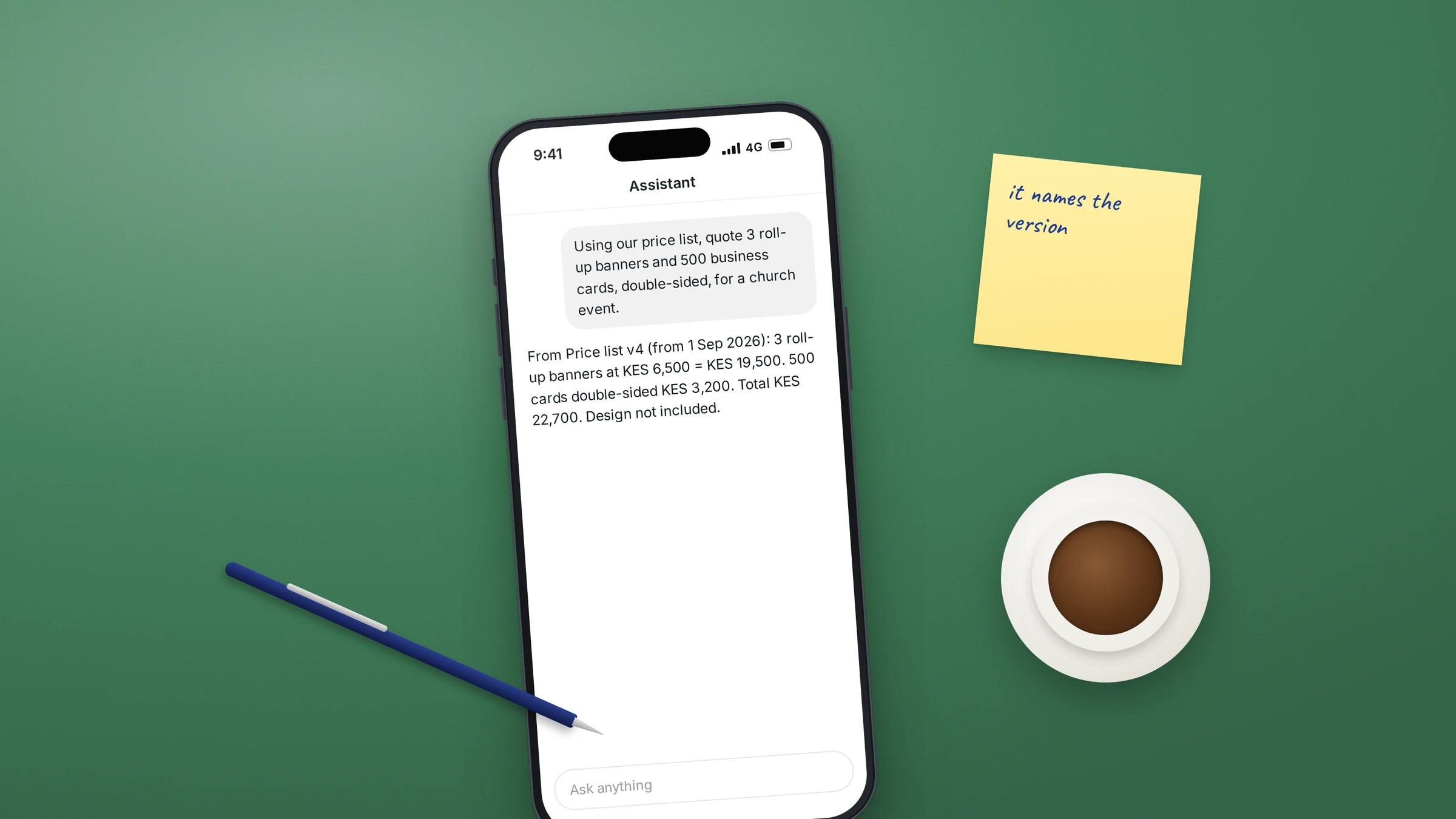
Here is an illustrative example. A pharmacy owner in Nyeri, call her Nyambura, uploaded her supplier's new price list and asked an assistant which items had gone up by more than 10%. The answer came back neatly: seven items, each with the old price, the new price and the percentage. It looked exactly like the work of a careful clerk. Two of the seven were wrong. One item had not changed at all. Another had changed by 4%, not 14%.
Nothing in the answer hinted at the mistake. The wrong lines had the same format, the same decimal places and the same calm tone as the right ones. That is the hard part about AI errors: confidence is not a signal. An assistant sounds just as sure when it is guessing as when it is reading. So you need other signals, and fortunately there are some.
We explained why this happens in why AI gives you confidently wrong numbers. This article is the practical side: how to catch it.
Six warning signs#
None of these proves an answer is wrong. Each is a reason to check before you act.
1. No source given. The answer states a fact about your document but does not say where it found it: no page, no clause, no line. Reading tools usually can point to where something is, if asked.
2. Numbers that are too round, or too neat. "Exactly 10%", "about KES 50,000" from a document full of odd figures. Real documents produce messy numbers.
3. The answer covers more than you gave it. You uploaded twelve pages and it describes a clause, a total or a name you do not remember seeing. It may have filled in what such documents "usually" contain.
4. Arithmetic in the middle. Any answer that adds, subtracts or calculates percentages along the way. General assistants read well and calculate less reliably, especially with long lists.
5. It agrees too quickly. You suggest "so the deposit is refundable in 30 days?" and it says yes, with more detail. Assistants lean towards agreeing with the person asking.
6. Everything is equally certain. A careful human reader says "I think" about the unclear parts. An answer with no hesitations about a blurred photo or a long contract has probably smoothed over something.
Ask for the source, every time#
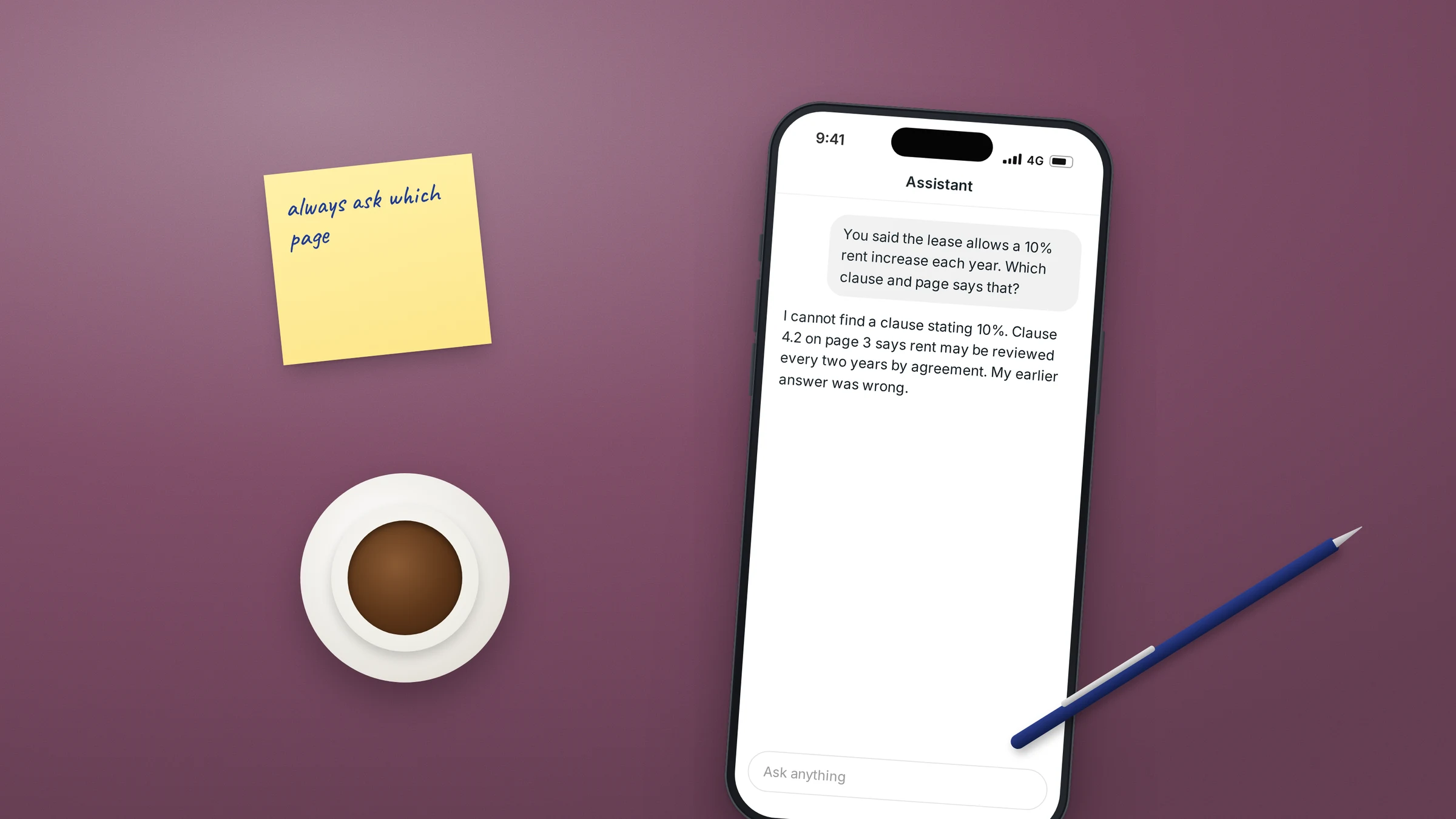
The single most useful habit is a follow-up question: "Which page, clause or line did that come from? Quote it exactly."
Three things can happen:
- It quotes the exact text, and the text says what it claimed. Good. Check the quote against the document yourself, which takes seconds now that you know where to look.
- It quotes text that does not quite say what it claimed. You have found the error.
- It cannot find a source, or admits the earlier answer was wrong. You have found the error, and so has it.
Asking for a quote turns a vague claim into something checkable. It also changes the assistant's behaviour: an instruction at the start such as "only state what is in the document, quote the line for every figure, and say 'not found' if it is not there" produces fewer invented answers.
You do not have to know whether an answer is right. You only have to know where to look to find out.
The quick cross-check#
For any answer you will act on, cross-check in one of three ways, depending on the kind of answer:
- Spot check two lines. For a list, such as Nyambura's seven price increases, pick two at random and check them against the original document. If both are right, check one more. If any is wrong, check all of them.
- Check one total another way. If it says your expenses for the month were KES 184,300, add up the three biggest items yourself. If those alone exceed the total, something is off.
- Ask the question differently. In a new chat, ask "which items went up by less than 10%?" The two answers should fit together without overlap or gaps.
We set out a fuller routine in how to check an AI answer in under a minute.
Make checking proportionate#
Not every answer needs the same care. A suggested wording for a WhatsApp message needs a read-through. A figure you will use to change prices, pay a supplier or sign a lease needs a source and a cross-check. A useful rule: the more money or trust that rides on the answer, the more checks it gets, and anything about tax, law or health goes to a professional, not an assistant.
This is stage 2 on the NGAZI ladder: AI working on your documents. The documents give you something to check against, which is exactly what makes this stage safe when you use it well.
What to do this week#
Take one document you know well, such as a supplier invoice or your lease. Ask an assistant three questions you already know the answers to, and for each, ask "which line did that come from?" Notice which answers came with a correct quote and which did not. Ten minutes of this teaches you more about how far to trust the tool than any article can.