Take Hassan, an example wholesaler who supplies sodas, cooking oil and flour to about sixty kiosks around Kayole and Umoja. Most pay cash on delivery. About twenty buy on credit, settling at the end of the week or the month. Hassan keeps track in a counter book, one page per customer, and for years it worked.
Then two things happened in the same month. A kiosk that had always paid moved away owing KES 31,000, and when Hassan added up the book properly he found that his credit customers together owed him more than the stock in his store was worth. None of them were bad customers. He had simply never said no, and never sent anyone a statement.
Credit is a product, so give it terms#
When you let a customer take goods and pay later, you are lending them money. That is a fine thing to do for good customers; it keeps them loyal. But a loan needs terms, and most shops never set them. Three are enough:
- A limit. The most this customer may owe you at any time. Start low for new customers, say a week's typical purchases, and raise it as they pay well.
- A period. How long until each invoice is due: 7 days, 14 days, end of month.
- A rule for when they pass either. For example: no new credit until the oldest invoice is paid.
Write them down, tell the customer, and put them in your system against the customer's name. The conversation is easier when the rule was agreed in advance.
Record every credit sale as an invoice#
The counter book's weakness is that it records a running total, and running totals cannot be checked. When a customer says "I paid you KES 5,000 on Tuesday", you need to see which invoices that payment settled.
So every credit sale is an invoice with a date, and every payment is matched to the invoices it pays. A retail system built on ERPNext, like UpeoRetail, does this with an accounts receivable report that ages each customer's balance: what is current, what is over 30 days, what is over 60.
That ageing view is the most useful single screen for a business selling on credit. The total owed tells you how much. The ageing tells you how worried to be.
Statements customers can check#
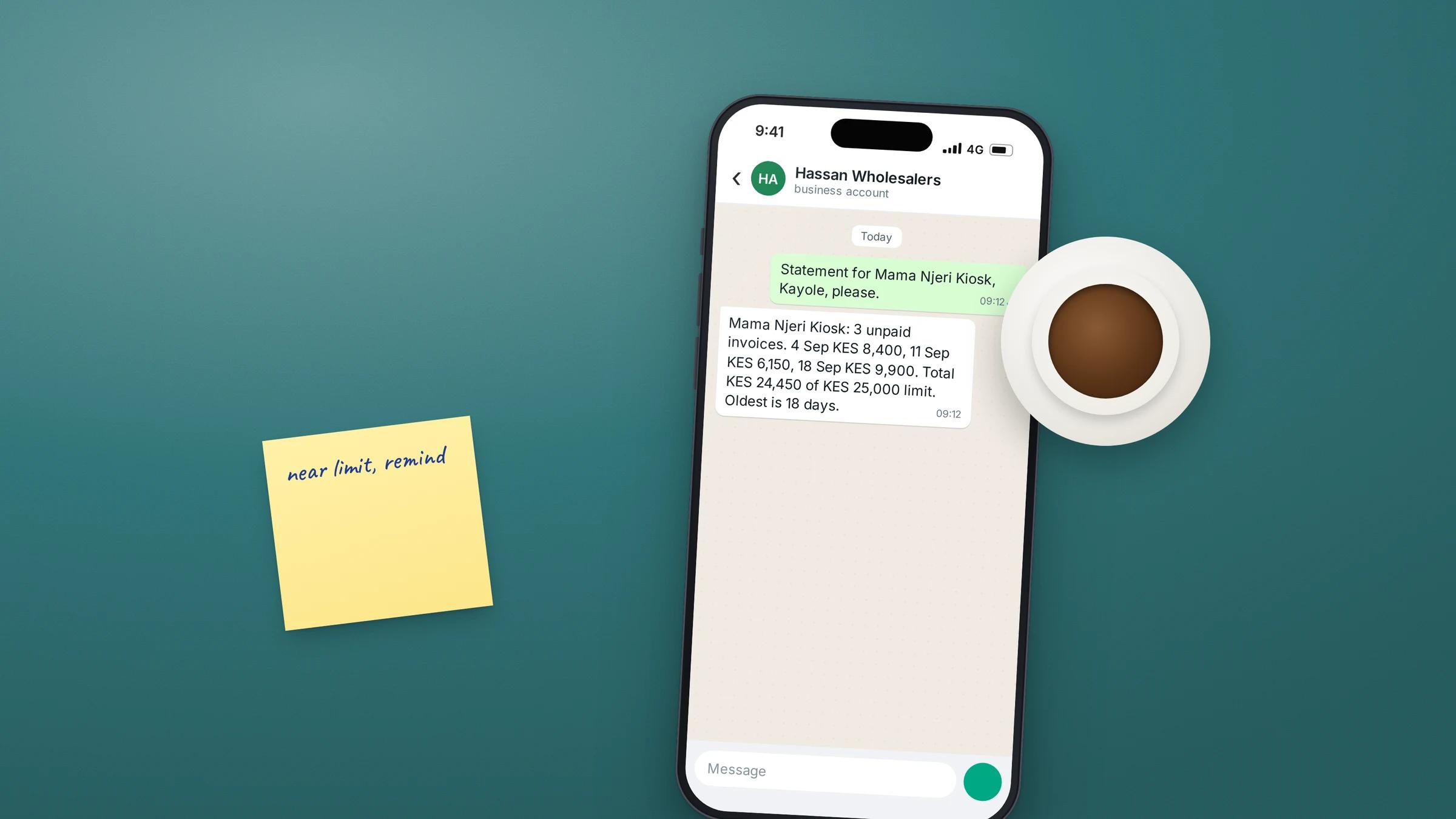
A statement is a list of unpaid invoices with dates and amounts, and the total. Send it regularly, not only when you want money. Once a week works for kiosks; once a month for larger customers.
Two things make a statement useful to the customer:
- Invoice dates and amounts they can match to their own delivery notes.
- Payments already received, so they can see you counted their Tuesday payment.
Most disputes are not refusals to pay. They are a customer who does not recognise a figure. A clear statement settles those before they become arguments.
Reminders that keep the customer#
This is where Stage 3 of the NGAZI ladder helps: the system sends the routine reminders on schedule, and a person handles anything that needs a conversation.
A schedule that is polite and firm:
| When | Message |
|---|---|
| 2 days before due | Friendly heads-up with the invoice and amount |
| On the due date | Statement, with how to pay |
| 7 days overdue | Polite reminder; mention the credit rule |
| 14 days overdue | A call from you, not a message |
The tone matters. Use the customer's name, list the invoices, thank them for their business, and give them an easy way to pay: your till or paybill number, the account reference to use. An assistant can draft these in English or Swahili from the statement, and you check them before they go. If you want a ready prompt, a debt follow-up letter in one prompt has one.
The 14-day step is deliberately a person. By then something has changed for the customer, and a machine reminder will not find out what.
What to do this week#
Open your credit book or system and list every customer who owes you money, with the amount and the date of the oldest unpaid sale. Sort by the oldest date. For the top five, prepare a statement and send it with a friendly message. Then write a limit next to every name, based on what they usually buy in a week or two. From Monday, check that limit before every credit sale.