Take Grace, who runs a cereals and pulses wholesale in Kitengela (an illustrative example), and about half her customers prefer to be written to in Swahili. When she started using a chat assistant for her notices, she was pleased with how natural most of it sounded. Then one notice went out telling customers the delivery lorry left at "saa mbili", which a customer read as 8 o'clock in the morning. Grace had meant 2pm. Three customers missed the lorry.
The Swahili was fluent. The time was wrong. That is a fair picture of where general AI assistants are with Swahili today: good enough to be genuinely useful for everyday business writing, with a handful of predictable weak spots. Know the weak spots and you can use the strengths safely.
What works well#
For standard, everyday Swahili, current assistants are strong at:
- Short business messages. Opening hours, delivery notices, payment reminders, thank-you notes. These are common, simple, and they come out clear.
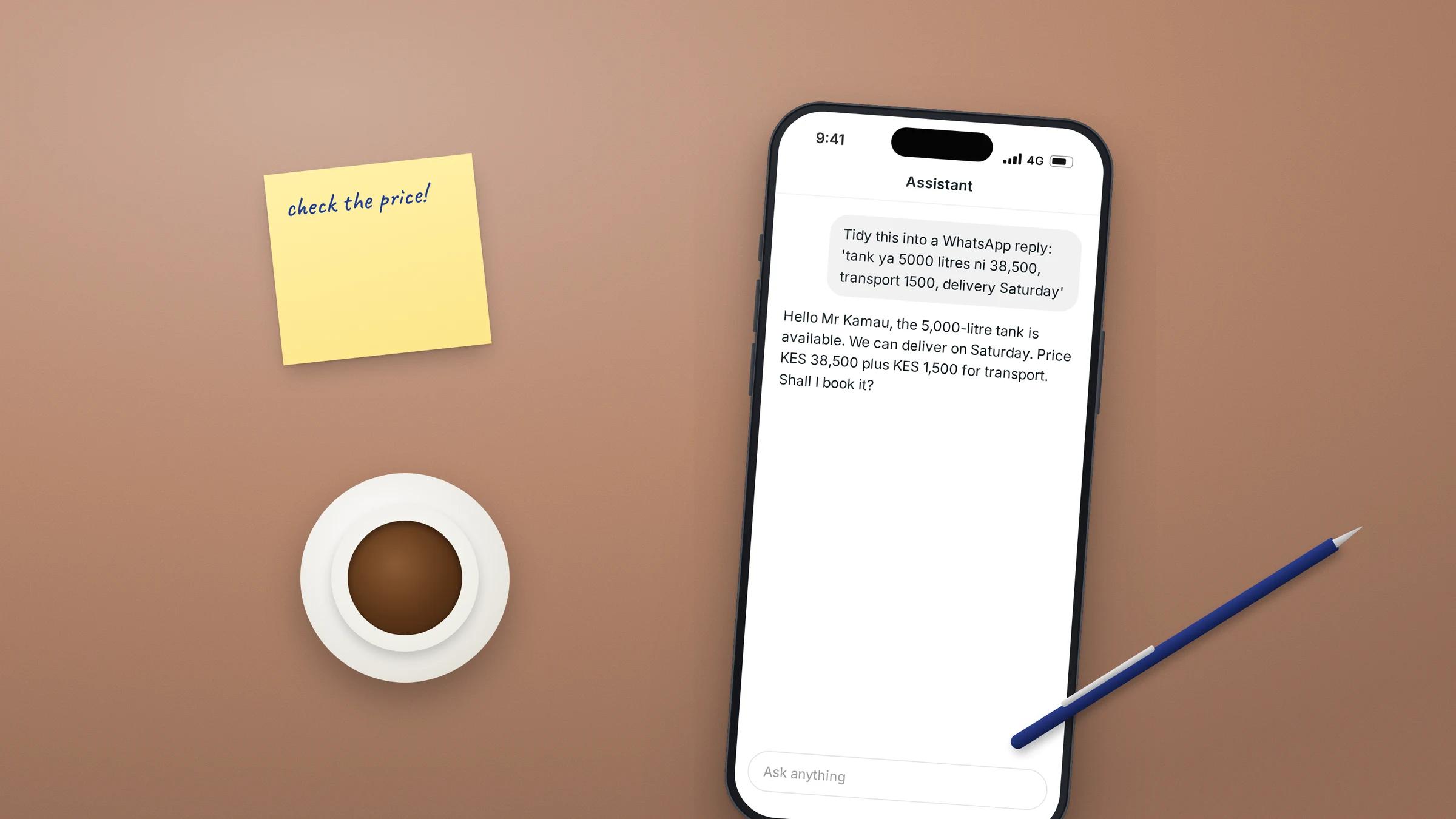
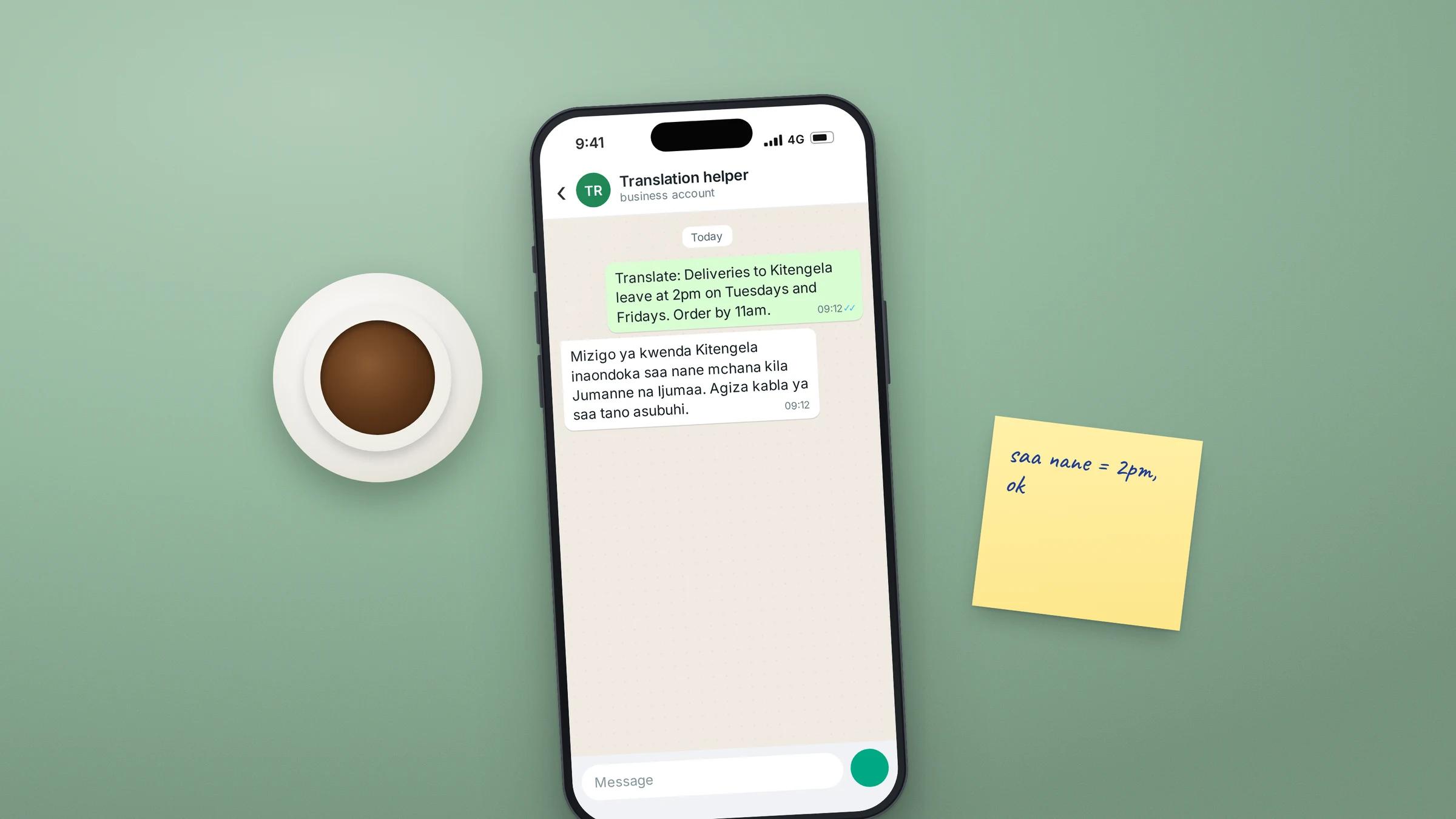
- Translating your English draft. Write what you mean in English, ask for Swahili, and you will usually get something a customer understands easily.
- Understanding what customers write. A message in Swahili, or a mix of Swahili and English, is usually understood well enough to summarise or draft a reply to.
- Adjusting register when asked. "Make it more polite, for an older customer" or "make it warmer, less formal" generally works.
For a shop, that covers a great deal of the daily writing.
Where it still trips#
These are the spots to watch. None of them is a reason to stop; all of them are reasons to read before sending.
Time. Swahili time counts from sunrise, so 8am is "saa mbili asubuhi" and 2pm is "saa nane mchana". Assistants sometimes translate the English number directly, turning 2pm into "saa mbili". This is the single most damaging mistake, because the sentence looks right. Always check the time, and add the part of day (asubuhi, mchana, jioni, usiku).
Numbers and money. Large amounts written in words can come out wrong or clumsy. Keep money as figures: "KES 12,500", not words.
Too formal, or oddly formal. Some output reads like a government notice or a textbook, with words your customers would never use. If it sounds stiff when you read it aloud, ask for "simple everyday Swahili, the way a shopkeeper in Nairobi would write".
Sheng and local words. Sheng changes fast and differs by area. Assistants may understand common Sheng in a customer's message, but writing in Sheng often sounds forced or dated. Unless you know your customers want it, reply in plain Swahili.
Product and trade names. Local names for items ("mabati", "debe", "gunia") are usually handled, but check that a translated product description has not swapped your item for something similar.
If you are building Swahili and Sheng into a product rather than writing messages, the engineering side is covered in handling Swahili and Sheng in production.
A two-minute check for every translation#
Before sending a Swahili message to customers, do this:
- Read it aloud. Your ear catches stiffness and strange words faster than your eye.
- Check every time, date and amount against what you meant. Times need the part of day.
- Ask for a translation back. In a new chat, paste the Swahili and ask for an English translation. If the English does not match your original meaning, something drifted.
- For anything important, ask a person. A notice about price changes, a debt reminder, or anything with legal weight should be read by a fluent colleague before it goes out.
Where this sits on the ladder#
Everything above is stage 1 on the NGAZI ladder: using a general assistant like a capable person who writes for you, with you checking. When an assistant answers customers directly from your records, the language questions do not go away, they just matter more, because no one reads each message before it is sent. We wrote about one such case in an analyst that answers on WhatsApp in Sheng.
What to do this week#
Take your three most common customer messages: hours, delivery, payment reminder. Ask an assistant for a Swahili version of each. Run the two-minute check on all three, fix what needs fixing, and save the final versions somewhere easy to copy. Write your glossary as you go. Next time, you start from checked text instead of from scratch.