Take Brian, an example owner of an electronics shop on Luthuli Avenue. A customer walks in with a 43-inch TV that will not switch on. He says he bought it here seven months ago and it is under warranty. He has no receipt; it was lost in a house move. Brian sells about thirty TVs of that model a year, from two suppliers.
Is this one of his? When was it sold? Is it within warranty? Which supplier does he claim from? Without serial numbers in his records, he has two bad options: argue with a customer who may be honest, or accept a claim that may not be his, at his own cost.
Why serials and not model numbers#
A model number tells you what kind of item it is. A serial number tells you which one. In a shop that sells thirty identical TVs a year, the model number cannot answer "is this the one we sold to this customer?" The serial can.
That difference matters in three situations:
- Warranty claims from customers. Is it ours, and when did the warranty start?
- Claims to suppliers. Which supplier did this unit come from, and when, so you know if their warranty still covers it?
- Problems. A customer claims a unit bought elsewhere is yours, or a batch from one supplier starts failing and you need to know which customers have units from it.
Record it twice#
On arrival. When stock comes in, scan or type the serial of every unit against the supplier's delivery. That ties each serial to a supplier, a delivery date and a purchase price. Do not skip this when the van is waiting; it is the part that lets you claim from the supplier later.
On sale. At the till, the serial of the unit going out is recorded on the sale, with the customer's name and number. That ties the serial to a customer and a sale date, which is when your warranty starts.
With both, the stock record knows where every unit is: in the store, sold to a named customer, returned, or sent back to the supplier. Our walkthrough of what a shop must record before AI helps shows this in practice in a full shop day.
The warranty claim, step by step#
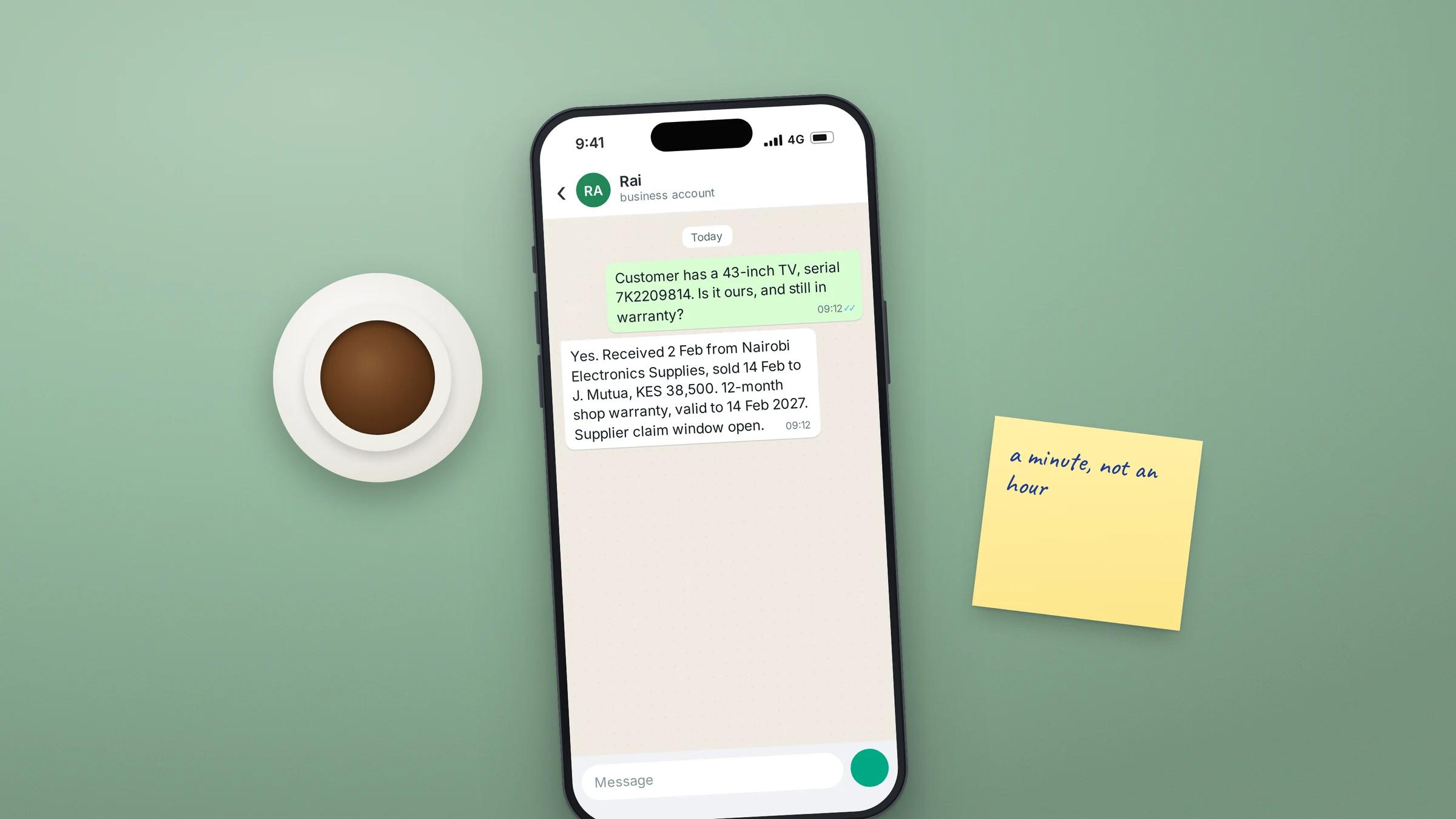
Back to Brian's counter, now with serials recorded. He reads the serial off the back of the TV and looks it up:
- Received on 2 February from his main supplier.
- Sold on 14 February to the customer, by name and phone number, for KES 38,500.
- Shop warranty of 12 months, so valid until 14 February next year.
- The supplier's warranty to the shop is also still open.
Now the decision is easy. He accepts the claim, gives the customer a job card, and sends the unit back to the supplier under their warranty. If the serial had not been in his records, he would know that too, politely and with evidence.
The terms of your shop warranty and the supplier's are set by your own policy and your agreements, and consumer law may set minimums; check with a professional if you are unsure what you must offer.
Where an assistant fits#
This is a Stage 3 job on the NGAZI ladder: AI working inside the shop's process. In UpeoRetail, that is Rai, the analyst built first for electronics, hardware and spare-parts shops because serial numbers and warranty windows decide so much of their margin. Staff can ask in plain language, "is serial 7K2209814 ours, and still in warranty?", and get the answer from the records with the dates behind it.
Rai can also help with the supplier side: listing units under claim, or units received in one batch that have come back faulty. Anything that would change the records, such as a return entry, is drafted for a person to approve, never saved on its own. We explained why in no silent writes.
What to do this week#
Start recording serials on arrival for your highest-value category, TVs or phones or laptops, from the next delivery. Then add serials to every sale in that category. Put the serial on every receipt.
Within a few months, every new claim in that category will be a lookup. For the units already sold without serials, keep a simple list as they come back, so the gap closes over time.